
Mobile Phone Extinction Emerges in China, Replacements Already on Sale Everywhere
Jakarta, CNBC Indonesia — Advances in technology have sparked speculation about the future of smartphones. Currently, modern humans rely on mobile phones for daily activities, from accessing information and interacting with others to consuming entertainment content.
However, executives from major US technology companies have already predicted the emergence of electronic devices that will replace smartphones in the future. Meta CEO Mark Zuckerberg has forecasted that smartphones will be replaced by new devices by 2030.
Previously, SpaceX CEO Elon Musk also touched on the potential obsolescence of smartphones. Unlike Zuckerberg, who believes the smartphone replacement will be wearable devices such as smart glasses that become increasingly multifunctional, Musk has predicted that the smartphone replacement will be a chip implanted in the brain.
In a recent post on X, Musk bluntly stated “in the future there will be no more smartphones, only Neuralink,” according to DeccanHerald. For context, Neuralink is Musk’s startup focused on developing brain chip technology, also known as brain-computer interface (BCI).
Despite their differing views, both Zuckerberg and Musk agree that new devices will eventually replace smartphones. This innovation is not coming only from the US technology industry, but China is also rapidly catching up.
Smartphone Replacements Emerging in China
Although US tech executives have long talked about smartphone replacements, China has actually moved faster in experimenting with various device innovations that could replace smartphones in the future.
According to CNBC International in late 2025, China’s artificial intelligence (AI) device market is expanding rapidly. China has an advantage over the US because of its expertise in hardware manufacturing.
“China’s advantage comes from fundamental strength in manufacturing,” said Dr Kai-Fu Lee, CEO of 01.AI and Head of Sinovation Ventures, to CNBC International.
“Currently, competition is still in the software, models, agents, and applications sectors. However, competition will soon shift to the devices sector,” he said.
Meta has already sold millions of smart glasses since first introducing them in 2023. However, China now has more than 70 companies creating competing products.
AI-based smart glasses from Chinese companies such as Inmo and Rokid are already being sold globally. Devices from Xiaomi and Alibaba, which so far have only been sold in China, are also widely available and based on each company’s AI systems.
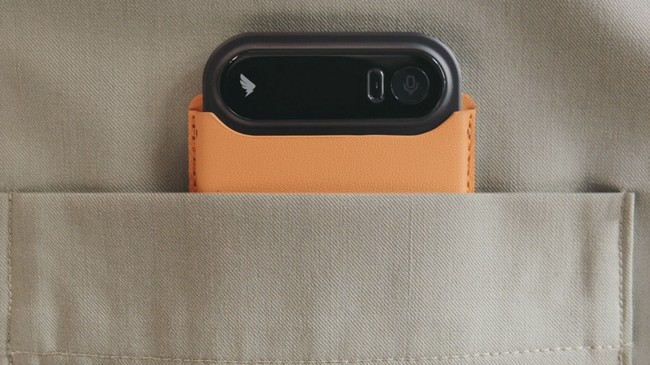
Alibaba’s DingTalk, a short messaging platform for the workplace, released an AI device the size of a credit card this year to help workers record important information.
The DingTalk A1 device can be used for transcription, summarisation, and analysis of speech from up to 8 metres away. This device is similar to Plaud Note available in the US.
Many Chinese companies are experimenting with new AI-based electronic devices. The startup Le Le Gaoshang Education Technology recently launched the “Native Language Star,” a translation device for parents wanting to teach English to their children.
The device is based on iFlyTek AI technology from Tencent and allows parents with minimal English proficiency to speak like a native speaker.
The proliferation of AI-based devices targeting specific needs in China is seen as an early stage of adoption that makes people increasingly familiar with AI. This also encourages companies to collect data needed to create more advanced and multifunctional devices in the future.
“When you hear people outside China talking about the future of AI devices, the market has already been developed in China,” said technology consultant Tom van Dillen from Greenkern.
“This creates good feedback for making AI more sophisticated in the future,” he said.
However, China’s progress in creating AI devices does not necessarily mean it will win against the US. If China only focuses on itself without spreading its wings to the global market, its technology could remain a domestic phenomenon.
“China must take an iPhone-like approach to truly win the race,” said Lee.
“In my view, China’s advantage in creating devices similar to the iPhone in the AI era is complete capabilities, ranging from engineers to entrepreneurs and others. However, there will still be competition,” he said.