
MKMK urges objective and transparent Constitutional Court judge selection to avoid public uproar
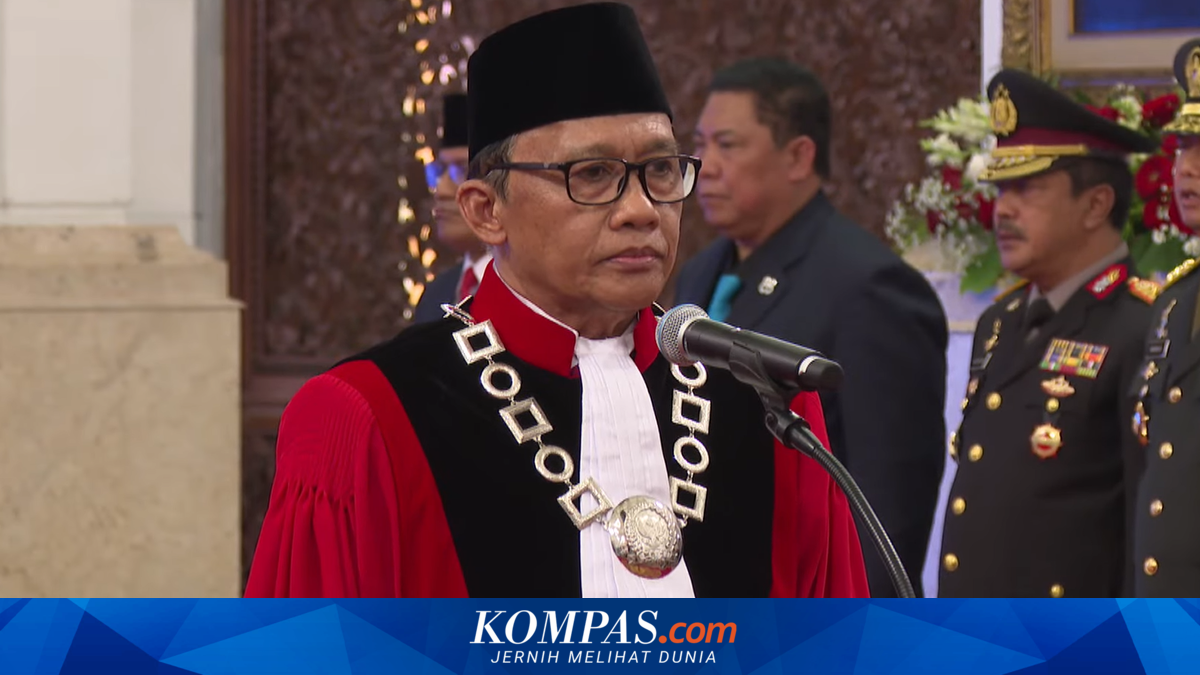
JAKARTA — The Majelis Kehormatan Mahkamah Konstitusi (MKMK) has reminded that the process of selecting Constitutional Court (MK) judges must be conducted objectively, accountably, transparently, and openly. This was stated by the MKMK as it read the decision on a report alleging ethical violations by MK Judge Adies Kadir. ‘Elaboratively, it is determined that the process of selecting Constitutional Court judges from the three branches of government shall be conducted through a selection process that is objective, accountable, transparent, and open, in accordance with Article 20(2) of the Constitutional Court Law,’ said MKMK member Ridwan Mansyur at the session in the MK building, Jakarta, on Thursday 5 March 2026. MKMK reminded the three institutions to prioritise these principles so that the recruitment of MK judges does not cause public uproar. ‘If the process for selecting Constitutional Court judges does not observe these principles within reasonable bounds of reasoning, it can be assured to generate uproar in public spaces,’ Ridwan said. Ridwan cited a number of academic literatures that note it is a given that there will always be attempts by other branches of power to restrain and weaken the judiciary by varying means, including the mechanism for filling vacancies of Constitutional Court judges. ‘Regardless of whether this issue falls within the authority of the Honours Council or not, this stance should be regarded as part of legitimate public oversight and should not be positioned as hostility toward the institution that the constitution vested with the authority to nominate Constitutional Court judges,’ he said. Ridwan added that if the rules of the recruitment process do not prioritise objective and transparent principles, it could potentially place a psychological burden on neither the nominating state institutions nor the judge in question. Therefore, Ridwan emphasised that MKMK stresses the importance for each state institution empowered to nominate Constitutional Court judges to observe the principles of objectivity, accountability, transparency, and openness in the candidate and selection processes for Constitutional Court judges. ‘Thus the public will see and there will be no doubt that a person chosen as a Constitutional Court judge is someone who has truly met all the required criteria and has undergone the due process of selection as defined, so that the person can be accepted by the public as a Constitutional Court judge,’ Ridwan said. In today’s session, the MKMK decided that the three reports were not within the MK’s remit. ‘The Honours Council is not authorised to examine, adjudicate, and decide on the reports in question,’ said Chairman of the MKMK, I Dewa Gede Palguna.