
Mistaken for Elephant, Whale Identified 70 Years Later
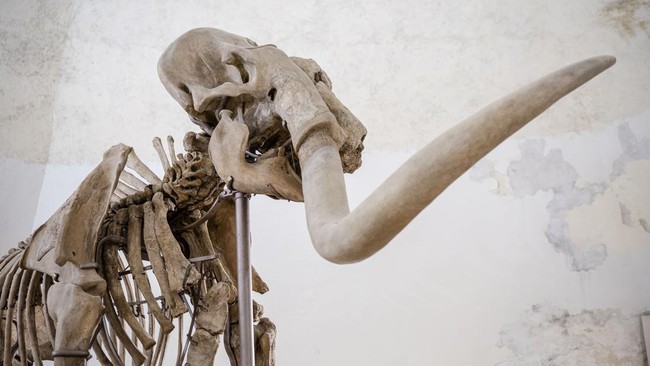
Archaeologist Otto Geist discovered bones believed to be from a mammoth in 1951. However, the analysis was only proven wrong 70 years later.
Geist found them during an expedition in inland Alaska, a prehistoric geographical region known as Beringia.
Based on their appearance and location, Geist initially concluded the bones belonged to a woolly mammoth. This seemed plausible given the discovery site and spinal structure resembling elephant bones.
The bones were later housed at the University of Alaska’s Museum of the North. It was only decades later, after the museum conducted radiocarbon dating, that the true identity was revealed.
Analysis showed carbon isotopes in the bones dated back 2,000-3,000 years, meaning the animal lived more recently than mammoths, which went extinct 13,000 years ago.
Further testing revealed higher levels of nitrogen-15 and carbon-13 isotopes compared to grass-eating animals like woolly mammoths.
While the findings do not rule out a land-based origin, the isotope levels are typically found in marine animals.
“This is our first indication that the specimen originated from a marine environment,” said University of Alaska Fairbanks biogeochemist Mathhews Wooler and his team, cited from Science Alert on Friday, 29 May 2026.
The most likely explanation is that the bones came from a whale.
Researchers then extracted mitochondrial DNA for comparison with North Pacific right whale (Eubalaena japonica) and common minke whale (Balaenoptera acutorostrata) DNA.
The team also uncovered another mystery: how whale remains over 1,000 years old ended up over 400km from the nearest coastline in inland Alaska.
One possibility is that whales intruded inland via ancient bays and rivers, though this is unlikely given the species’ size and the small water bodies in the area.
Another theory is that ancient humans transported the bones from the coast. Researchers also acknowledged the possibility of scientific error.