
Mismatch Risks Behind OCBC's Ambition to Acquire HSBC's Retail Business
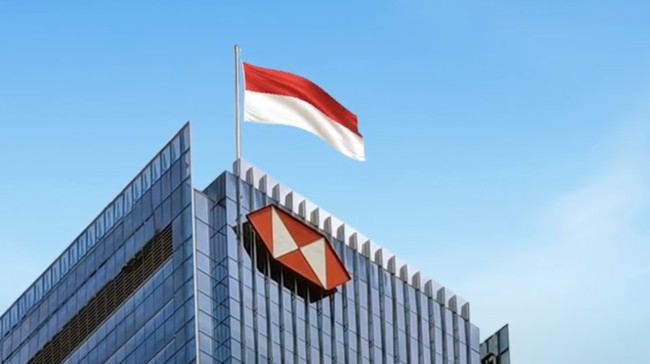
Jakarta, CNBC Indonesia - Market rumours are circulating widely that HSBC plans to sell its consumer banking unit in Indonesia, with OCBC emerging as a strong contender. The valuation is estimated to exceed Rp6 trillion.
If this plan materialises, OCBC’s position in Indonesia will be further strengthened as the third-largest private bank. In Indonesia, OCBC’s business entity is PT Bank OCBC NISP Tbk. (NISP), or OCBC Indonesia, one of the leading listed banks that has been operating since 1941.
Moreover, OCBC Indonesia has experience in acquiring other banks. In September 2024, OCBC Indonesia effectively acquired PT Bank Commonwealth (PTBC) for a value of Rp2.2 trillion. PTBC is said to complement the consumer and SME (retail) customer segments.
Looking at the Q4-2025 financial report, OCBC Indonesia appears to have room for non-organic growth. The KBMI III bank has not been aggressive in lending, with last year’s growth reaching only 4% year-on-year (yoy).
The loan-to-deposit ratio (LDR) is also loose at 70.4%, below the range set by Bank Indonesia (BI). From a capital perspective, the Capital Adequacy Ratio (CAR) has also increased to 24.5% from 23.6% the previous year.
Signs of expansion intent are further supported by the bank’s decision to reduce more than half of this year’s dividend payout. The Annual General Meeting of Shareholders (AGMS) of OCBC Indonesia agreed to distribute cash dividends for the 2025 fiscal year amounting to Rp1.03 trillion or equivalent to Rp45 per share, with a dividend payout ratio of 20.42% of the 2025 net profit of Rp5.06 trillion. This amount is a drastic decrease from last year’s Rp2.43 trillion or Rp106 per share, with a previous year’s dividend payout ratio of 50% of the 2024 fiscal year net profit.
OCBC Indonesia’s President Director, Parwati Surjaudaja, responded without denying or confirming the news. She stated that the bank is always open to various opportunities available.
“What we can say is that OCBC is always open to various opportunities, while continuing to evaluate potentials that align with the Bank’s strategy. If there is an opportunity deemed in line with the strategy and the company’s interests, the information will be disclosed to the public in accordance with applicable regulations,” said Parwati in her statement to CNBC Indonesia on Monday (20/4/2026).
High Risk, High Reward
Nevertheless, there are various risks associated with the plan to acquire the consumer business of the British bank. Based on the Q3-2025 financial report, HSBC Indonesia recorded a decline in bottom line and top line performance. This poses a risk of diluting return on equity (ROE) for OCBC Indonesia.
In addition, the acquisition will create burdens from the process of merging HSBC Indonesia’s retail business with OCBC Indonesia. Not to mention the differences in preferences of HSBC Indonesia’s customers, who come from the affluent segment, or wealthy clients.
Advisor at the Banking and Finance Development Centre (BFDC), Amin Nurdin, described the news of the acquisition of HSBC Indonesia’s retail business as “high risk, high reward.” He acknowledged that strategically, it makes sense and aligns with HSBC’s global trend of rationalising its retail business and focusing more on wealth and wholesale banking.
“However, in my view, this is a strategically attractive transaction, but high risk-high reward. The key to its success is not the acquisition itself, but the post-merger integration discipline,” said Amin when contacted by CNBC Indonesia on Monday (20/4/2026).
He stated that OCBC must be able to maintain the quality of service for existing HSBC customers, execute seamless integration, and optimise synergies without excessively sacrificing short-term profitability.
“Thus, in the medium term, this transaction could become value accretive, and vice versa if not, the risk of ROE dilution and loss of premium customers becomes very real,” explained Amin.
In agreement, the Head of the Macro Economics and Finance Centre at the Institute for Development of Economics and Finance (INDEF), M. Rizal Taufikurahman, assessed that OCBC’s acquisition of HSBC Indonesia’s consumer unit is strategically rational. Especially in the context of non-organic expansion in a market with a large middle-class base.
“OCBC indeed has room to grow from a capital perspective and tends to be more conservative in credit expansion, so this step could accelerate penetration in the retail and wealth management segments,” said Rizal when contacted by CNBC Indonesia on Monday (20/4/2026).
However, he noted that the main risk lies in the integration phase, from merger costs, organisational cultural differences, to potential customer attrition, considering that HSBC customers are generally from the premium segment with high service expectations.
From a performance perspective, Rizal mentioned that potential short-term ROE dilution is a concern, especially if the acquired unit’s profitability is declining. Additionally, differences in customer profiles between HSBC and OCBC NISP risk creating a “mismatch” in business strategy if not managed properly.
“In other words, the success of this transaction greatly depends on the quality of post-merger integration execution in maintaining customer loyalty and improving efficiency. If successful, this could be a strategic leap; however, if not, cost burdens and profitability pressures will be significant consequences,” stated Rizal.
Other Acquisition Plans
OCBC Indonesia is also preparing capital to acquire two entities owned by its parent company, OCBC Bank. This is in fulfilment of its role as the financial conglomerate holding company in accordance with the Financial Services Authority (OJK) regulations.
Therefore, the OCBC Indonesia AGMS on 9 April 2026 has agreed to the takeover of shares in PT OCBC Sekuritas Indonesia and PT Great Eastern Life Indonesia.