
Misbakhun Criticises JK on Fuel: Data Inaccurate, Do Not Heat Up the Situation
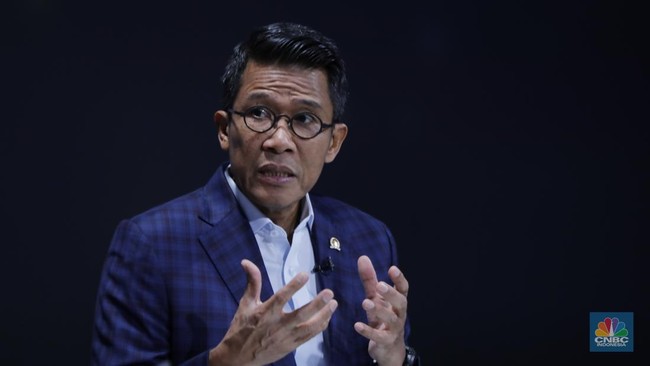
Jakarta, CNBC Indonesia - Mukhamad Misbakhun, Chairman of DPR RI’s Commission XI, hopes that Jusuf Kalla (JK), the former Vice President of RI, will be more prudent in understanding and conveying Indonesia’s current situation, particularly regarding global oil prices and fiscal resilience.
The war in the Middle East has caused a surge in global oil prices. Many countries have chosen to raise domestic Fuel (BBM) prices. In contrast, the Indonesian government is holding prices steady to safeguard public purchasing power and the national economy.
JK has proposed that fuel prices in Indonesia must rise to prevent the state budget (APBN) from collapsing due to the excessive burden of subsidies, which risks increasing government debt.
“The data on subsidised fuel presented by Jusuf Kalla is not up to date. This may be because Mr JK no longer has access to the latest data on fiscal conditions and the APBN, so the global oil price increase should not be used to heat up the situation in Indonesian society with issues forcing a fuel price hike in Indonesia,” Misbakhun stated in a written remark on Thursday (9/4/2026).
The government has calculated the risks of rising global oil prices to the APBN. If the average annual global oil price rises to US$100 per barrel, the government would need to add Rp100 trillion in subsidies. Considering increased revenues from rising mining and plantation commodity prices, the budget deficit remains below 3% of GDP.
“President Prabowo’s directive not to raise subsidised fuel prices is supported by careful calculations that consider the available fiscal space. This is also to maintain and protect public purchasing power from inflation due to price increases,” he explained.
By the end of March 2026, state revenues reached Rp574.9 trillion, growing 10.5% year-on-year. Taxation contributed Rp462.7 trillion (14.3%), with the largest share from income tax at Rp394.8 trillion (20.7%). Customs duties amounted to Rp67.9 trillion (-12.6%).
Non-tax state revenues were collected at Rp112.1 trillion (-3%), and grants Rp100 billion (2.8%).
State expenditure has been realised at Rp815 trillion (31.4%). The central government disbursed Rp610.3 trillion (47.7%), and transfers to regions Rp204.8 trillion (-1.1%). Thus, the deficit is recorded at Rp240.1 trillion or 0.93% of Gross Domestic Product (GDP).
On the other hand, Bulog’s food reserves are at a historic high for national food stocks, at 4.4 million tonnes stored in Bulog warehouses across Indonesia. Supplies of energy such as fuel and LPG are also sufficient to meet public consumption.
“It is very concerning if inaccurate analysis from former Vice President Jusuf Kalla on fuel prices is used to raise subsidised fuel prices. As a national figure, the discourse presented by Jusuf Kalla to force his will by raising fuel prices is inappropriate and imprudent, even misleading, because it is inaccurate in terms of data and analysis,” he stated.
Misbakhun hopes that JK’s position as a national figure can build a calming narrative that embraces all elements of society to work together with the government in facing the increasingly unpredictable global geopolitical situation due to the Iran war against the US and Israel.
“In the current situation, where geopolitics is experiencing uncertainty due to the war in the Middle East, national figures should stand in one line with the government to strengthen national unity so that the political situation remains conducive and the people can continue their daily activities calmly and well, without being heated by various issues on fuel price hikes and basic necessities that could trigger social unrest in society. Especially Jusuf Kalla heating up the political temperature with predictions of riots. This is truly inappropriate and imprudent as a national figure.”