
‘Miracle’ Plant Found in Abundance in Indonesia, Secretly Becoming a Foreign Target
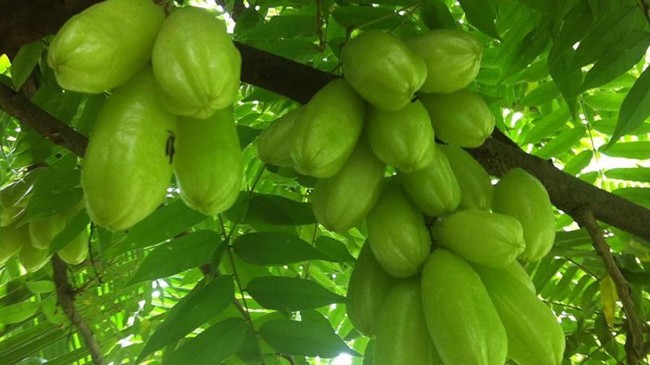
Star fruit leaves, previously known as a traditional herbal supplement, are now entering the export market with unusual growth. The Central Bureau of Statistics (BPS) reported a sharp increase in Indonesian star fruit leaf exports throughout 2024, driven by new demand from the Dominican Republic.
The Caribbean nation has suddenly emerged as the largest buyer of Indonesian star fruit leaves. Throughout 2024, the Dominican Republic imported approximately 6,000 kilograms with a value of US$52,900. In the period 2019-2023, there were almost no shipments to that country.
This surge in purchases has boosted Indonesia’s total star fruit leaf exports to the highest level in recent years. BPS recorded the value of star fruit leaf exports reaching US$62,576 with a volume of 8,769 kilograms in 2024. The previous year, the value was only US$5,400 with a volume of 2,125 kilograms.
This means that the export value increased by more than 1,000% in just one year. The increase in volume also indicates that this is not a small, one-time transaction, but rather the beginning of a more stable market demand.
Looking back, trade in star fruit leaves had actually been dormant for quite some time. In 2019, exports were recorded at US$1,728 with a volume of 568 kilograms. The figure fell again to US$572 in 2021 with a volume of only 152 kilograms. Recovery began to be seen in 2022 and 2023, although on a limited scale.
The change in 2024 occurred as the global herbal market is growing rapidly. Consumers in many countries are starting to look for natural ingredients for supplements, herbal teas, and health product mixtures. Star fruit leaves have also entered this trend because they are known to have antioxidant content and are often used in traditional medicine.
The demand from the Dominican Republic also shows a shift in Indonesia’s export market direction. So far, Indonesian herbal products have mostly entered countries in Asia or the Middle East. Now, non-traditional markets in the Caribbean are starting to open up new demand for tropical raw materials.
This condition provides opportunities for the domestic herbal industry, especially farmers and small businesses that have not been widely involved in the export market. If demand continues, star fruit leaves can develop into a niche commodity with higher added value compared to the sale of ordinary raw materials.
However, the biggest challenge remains the consistency of supply and quality standards. The global herbal market tends to be strict about product safety, pesticide residues, and traceability of raw materials. As demand begins to grow, the ability to maintain quality will determine whether Indonesia can maintain this market or lose momentum.
At the same time, opportunities for expansion are still wide open. The Latin American and Caribbean regions are starting to actively seek herbal ingredients from Southeast Asia.