
Ministry of Women Empowerment Pushes Strengthening of Women's Political Education in Indonesia
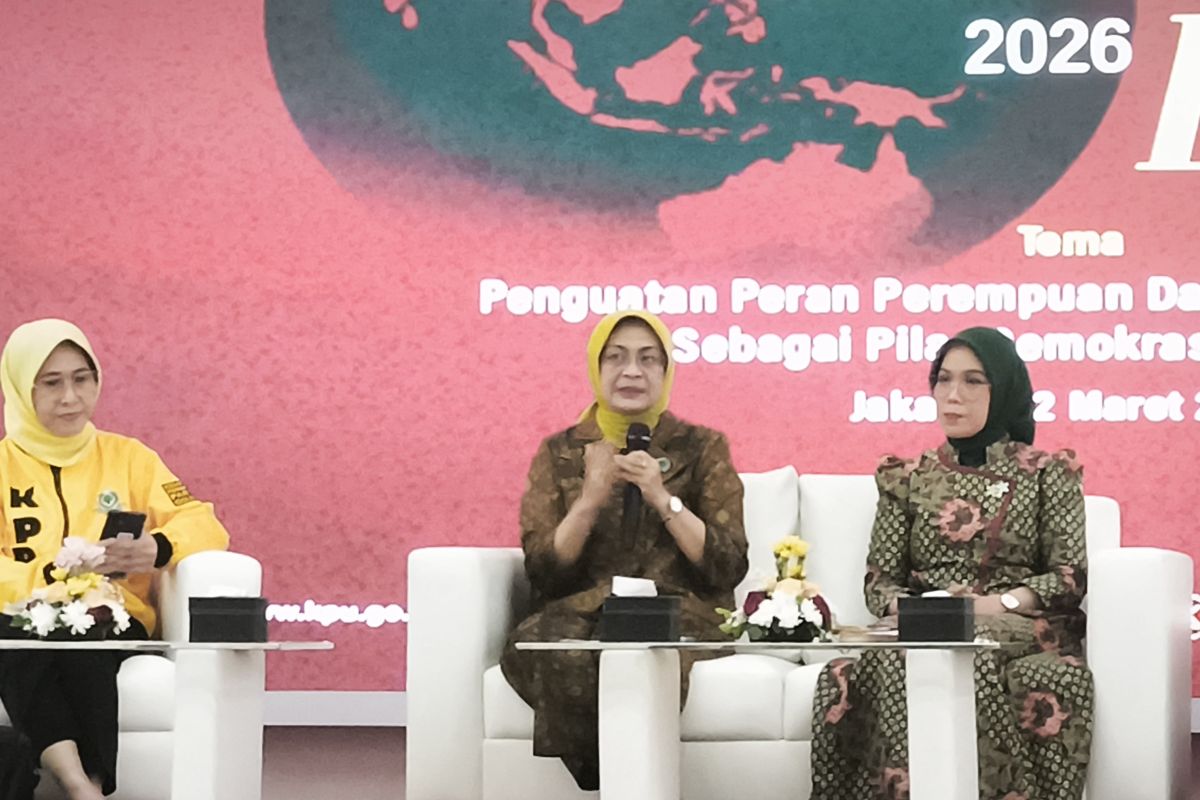
The Ministry of Women Empowerment and Child Protection (KemenPPPA) is urging the strengthening of political education, affirmative action policies, and reform of the political system to increase women’s representation in political processes and legislative institutions in Indonesia.
Amurwani Dwi Lestariningsih, Deputy for Gender Equality at KemenPPPA, stated that women possess considerable capacity to participate in politics, including at regional level.
“Women from regions are also able to demonstrate their capacity. Even without significant support, we have already seen how women can enter political representation, including becoming legislative members,” said Amurwani during a seminar by the Indonesian General Elections Commission (KPU) marking International Women’s Day, with the theme “Strengthening Women’s Role in Electoral Processes as a Pillar of Substantive Democracy” in Jakarta on Thursday.
However, she acknowledged that various studies indicate that women’s representation in parliament still faces structural and social challenges.
Over the past two decades, affirmative action policies to increase women’s representation have been implemented at various levels of legislative institutions, from the House of Representatives to district and municipal legislatures. Nevertheless, implementation is considered uneven.
Data highlighted by KemenPPPA shows that only approximately 25 electoral districts have succeeded in achieving the minimum target of 30 per cent women’s representation in elections. Meanwhile, approximately 16 districts still have no female legislative representatives whatsoever.
“The distribution of women’s representation across electoral districts remains uneven. This raises the question of whether the system used in elections needs to be adjusted or if there are other factors at play,” she said.
She also highlighted the candidate nomination mechanism within political parties, including the placement of female candidates on legislative candidate lists, which often occupy less strategically favourable position numbers, thereby reducing their chances of election.
Beyond systemic factors, Amurwani said that gender stereotypes and social pressure remain obstacles to women’s active participation in politics.
“Women often do not receive sufficient structural support, even from their own families,” she said.
According to her, improving the quality of education is a key factor in strengthening women’s participation in politics and public life.
“If we look at our gender development index, there is still a considerable gap between women and men,” she said.
She explained that the gender development index is measured from three main aspects: education, health, and economy, which are interrelated. Inequality in education is seen as capable of affecting women’s ability to access economic opportunities and strategic positions.
Therefore, Amurwani emphasised the importance of education, not only formal education but also political education, so that women possess knowledge and awareness in making rational political choices.
“When women have this knowledge and awareness, they will not be easily influenced by pragmatic considerations in making political choices,” she said.
She added that increasing women’s representation cannot depend solely on formal rules, but also requires changes to the political system and culture to be more inclusive through collaboration between government, political parties, electoral organisers, and civil society.