
Ministry of Transportation Urges Operators and Transport Crew to Prioritise Safety During 2026 Lebaran Return Flow
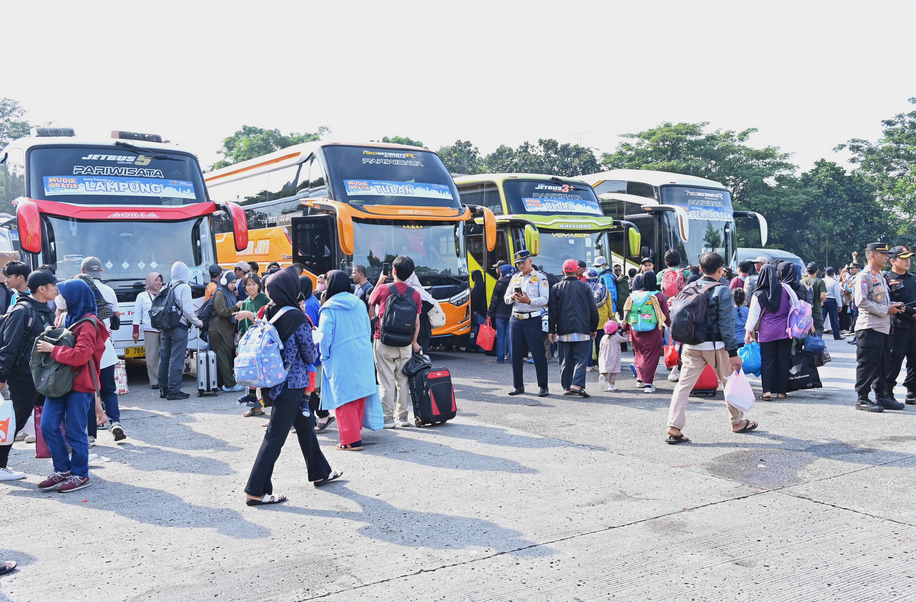
The Ministry of Transportation (Kemenhub) has urged all transport operators across all modes to prioritise safety in facing the 2026 Lebaran return flow, by ensuring the operational fitness of facilities and infrastructure, the readiness of vehicle crew, and increasing vigilance against potential adverse weather conditions.
Transport Minister Dudy Purwagandhi stated that safety must always be the top priority, especially during the return flow period which has the potential for a surge in public movement.
“We ask all operators to ensure that fleets are in operational condition, comply with safety standards, and pay attention to weather conditions along the routes. In addition, the physical condition and health of vehicle crew must be properly maintained to remain optimal in providing services to the public,” said Dudy, quoted from a press release received on Tuesday (24/3) in Jakarta.
He also specifically reminded the importance of fulfilling work hour and rest time regulations for drivers as an effort to prevent fatigue that risks journey safety. Drivers are urged to rest sufficiently in accordance with regulations, not to force themselves when tired, and to utilise available rest areas.
For long-distance journeys, operators are also required to ensure the availability of backup drivers for trips with travel times exceeding 8 hours or drivers must rest for at least 1 hour before continuing the journey to ensure periodic driver rotations so that conditions remain optimal during the trip.
As a concrete supervisory measure for safety, the Ministry of Transportation has conducted massive ramp checks and inspections across all transport modes. Up to 23 March 2026, 60,946 public vehicles in land transport modes, 836 ships have undergone seaworthiness tests, while for ferry transport, 232 ships have been inspected, with 91.34% meeting standards.
For air transport, 372 aircraft fleets are recorded as serviceable out of a total of 564 units (65.9%), and in the railway sector, 3,679 facilities have undergone ramp checks with a fitness rate of 99.78%. This data indicates the readiness of transport facilities in serving the return flow while still prioritising safety aspects.
Kemenhub, continued Dudy, also urges the public to actively monitor the latest information related to return flow conditions through official government channels, including traffic developments and transport operations at various journey nodes.
In addition, Dudy also asked the public to pay attention to weather forecast information from the Meteorology, Climatology, and Geophysics Agency (BMKG) as a basis for journey planning, to anticipate potential extreme weather that can affect safety and smoothness of travel.
“With good collaboration between government, operators, and the public, it is hoped that the 2026 Lebaran return flow can proceed safely, securely, and comfortably,” concluded Dudy.