
Ministry of Transport Highlights Domestic Flight Tickets Routed via Foreign Transit
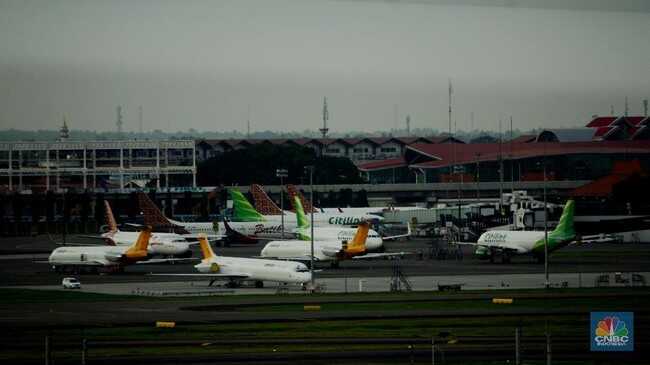
Jakarta – The Ministry of Transport is pushing for stricter enforcement or an outright ban on the practice of selling domestic flight tickets by Online Travel Agents (OTA), particularly for routes initially routed through foreign countries. This practice is considered to create public confusion whilst potentially violating aviation cabotage regulations.
The Ministry of Transport’s Director of Air Transport, Agustinus Budi Hartono, explained that in principle, transit is not problematic so long as it remains within Indonesian territory. Problems arise when domestic flight routes are deliberately “diverted abroad” first within a single ticket.
“Transit within the country is fine, but transit abroad with just one ticket is what needs to be regulated. The public often only sees the price in the initial display, for example a Makassar-Jakarta route suddenly appears to cost 4-5 million rupiah. But after clicking, it turns out the flight transits first, for instance to Surabaya. That’s actually not a problem as long as it stays within the country,” Agustinus explained to CNBC Indonesia.
He believes public misunderstanding is often triggered by the initial price display in OTA applications which does not immediately show route details. This situation leads the public to think the ticket is expensive, when in fact the route is not direct and involves additional transit.
According to him, the violation occurs when domestic routes are sold on a single ticket but routed through a foreign country first before returning to the domestic destination.
“What is not permitted is if a domestic route is diverted abroad first, for example Cengkareng-Medan but transiting through Malaysia first with one ticket. That violates cabotage regulations and is not allowed,” he stated firmly.
The Ministry of Transport acknowledged it has repeatedly conveyed this to OTAs and the Ministry of Tourism. The algorithm of the ticketing system is considered to sometimes display unusual route combinations that confuse prospective passengers.
“If they really want to sell to abroad, the tickets should be separated. For example, a Cengkareng-Kuala Lumpur ticket separately, then a Kuala Lumpur-Medan ticket separately. Don’t sell it as if it’s a direct route but divert it abroad first,” Agustinus said.
On another note, the government has also highlighted rising ticket prices that often occur during peak seasons such as Christmas and New Year holidays or Lebaran. According to Agustinus, several factors drive increases in airline operational costs, whilst tariff regulations have not changed much since 2019.
“During peak season prices appear expensive because of the dollar exchange rate, fuel prices, and operational costs rising, whilst the Basic Tariff (TBA) since 2019 has not changed. Previously the TBA calculation used an exchange rate of around 14,100 rupiah per US dollar, now it is much higher. Fuel also used to be around 10,000 rupiah, now it has risen. It is reasonable if aircraft operational costs increase,” he explained.
Regarding seat availability, in many cases during peak season, flight seats are indeed nearly sold out so the remaining prices appear high. The government has already requested airlines add extra flights during busy periods, but the decision to add seats or extra flights remains with the airlines.
“We have asked airlines to add extra flights. Last Christmas we issued more than a thousand extra domestic and international flights. But airlines also consider operational factors, because it’s possible that the outbound flight is full but the return flight is empty and unprofitable,” he said.