
Ministry of Trade optimises Warehouse Receipt System as seaweed exports reach China
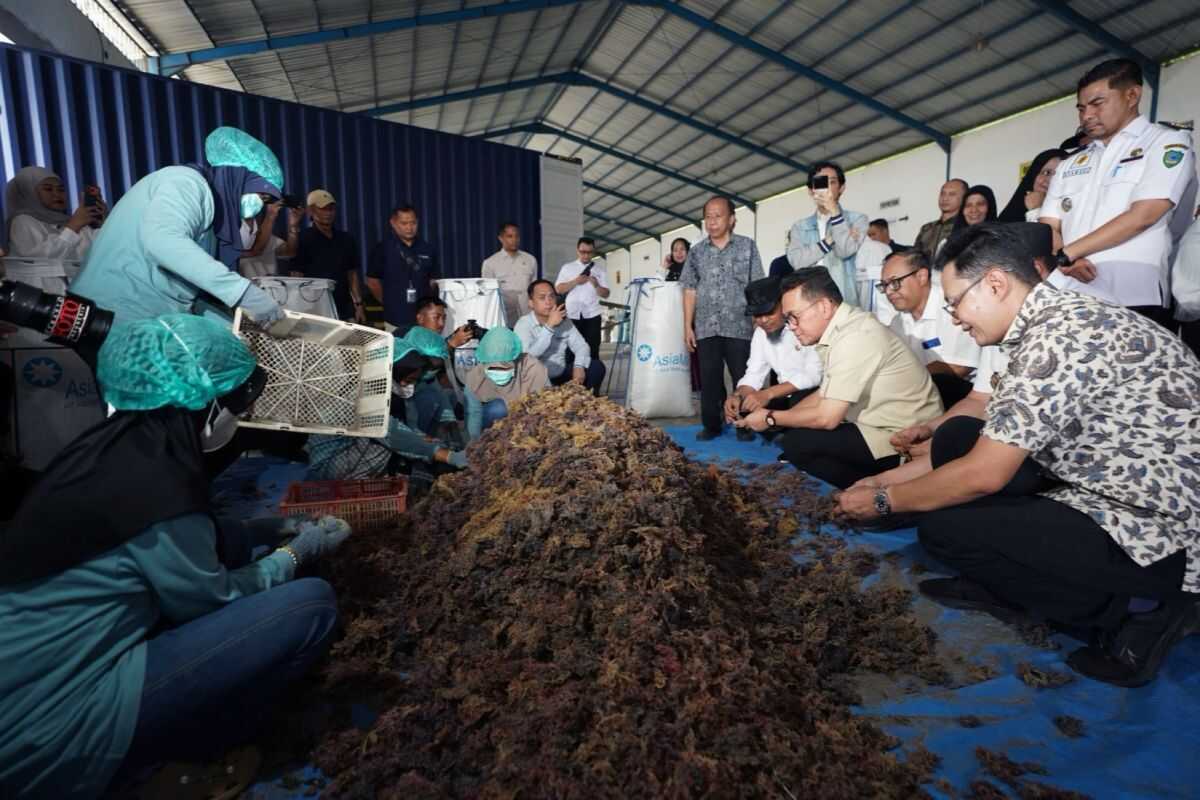
The Warehouse Receipt System (WRS) plays a strategic role in supporting exports of flagship commodities across Indonesia. In Jakarta on Thursday, Trade Minister Budi Santoso said the utilisation of the Warehouse Receipt System (WRS) is being optimised to support exports of commodities to global markets, noting that one result is the successful export of 75 tonnes of Eucheuma cottonii seaweed valued at US$100,215 (equivalent to Rp1.7 billion) to China. The export was conducted through the WRS warehouse of PT Asia Sejahtera Mina (AsiaMina) in Maros, South Sulawesi. This warehouse is one of seven warehouses managed by PT Wahana Pronatural, Tbk (PT WAPO). The Ministry of Trade (Kemendag) broadens access to international markets through synergy with local governments, financing institutions, warehouse operators and exporters. In addition, the WRS will be integrated with the Desa Bisa Ekspor (DBE) program, which can be utilised by business actors, including farmers. “Access to markets for commodities stored in the WRS warehouses is also broadened through pitching and business matching activities facilitated by the Trade Attaché of the Republic of Indonesia and the Indonesia Trade Promotion Center (ITPC) in 33 countries,” Budi said. Through DBE, products such as seaweed produced by farmers or fishermen in various villages can be stored in the WRS warehouses and sold when market prices are favourable. The DBE programme aims to strengthen the village export ecosystem through six pillars: strengthening export human resources, product development, productivity and technology, logistics, financing, and promotion and access to markets. Amid global trade challenges and falling commodity prices, Indonesia continues to strive to boost exports to various countries. The government also continues to take anticipatory measures against the dynamics and uncertainties of the global geopolitical situation to maintain national trade stability. According to Budi, in addressing these challenges and opportunities, the WRS is not only a mechanism for deferring sales. The utilisation of WRS also opens market access; provides information on availability, distribution, quality and value of commodities, and offers greater confidence and security in trade transactions. The Head of the Commodity Futures Trading Supervisory Agency (Bappebti), Tirta Karma Senjaya, said that Indonesia’s seaweed exports to the world in 2025 are projected to reach US$317.55 million. Main destinations include China, the United States, Spain, Japan, and the Netherlands. “The WRS plays a strategic role in supporting exports of flagship commodities across Indonesia. In addition, operators of WRS warehouses have opportunities to enhance competence and communication, enabling them to broaden export market access for the products they manage,” Tirta said.