
Ministry of Trade: Minyakita DMO Realisation to SOEs Reaches 42 Per Cent
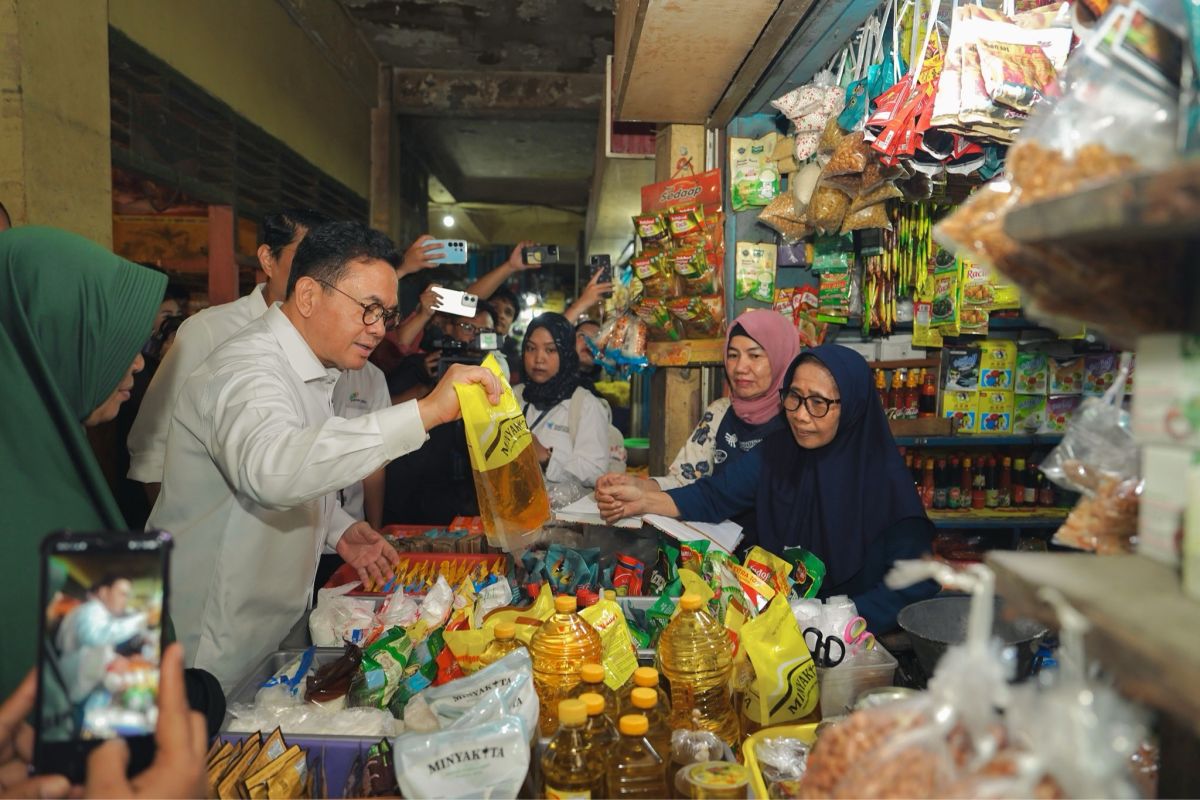
The Ministry of Trade (Kemendag) has reported that realisation of the domestic market obligation (DMO) for Minyakita to state-owned food enterprises has reached 42 per cent since the enforcement of Commerce Minister Regulation (Permendag) Number 43 of 2025.
During a regional inflation control meeting in Jakarta on Monday, Nawandaru Dwi Putra, Director of Domestic Market Development at Kemendag, stated that this achievement has exceeded the minimum threshold set at 35 per cent.
According to him, the achievement demonstrates the commitment of palm oil producers in meeting supply obligations for domestic needs, particularly for state-owned enterprises implementing the government’s food assistance programme.
“For DMO realisation to D1, primarily to state-owned enterprises, it has been recorded since the enforcement of Permendag 43 at 42 per cent. This means it has already exceeded the target, which is a minimum of 35 per cent,” said Nawandaru.
He explained that from January to February there was pressure on distribution realisation as producers and state-owned enterprises were still in transition to adjust their business-to-business (B2B) cooperation model.
Nevertheless, government support through the allocation of palm oil to producers is considered helpful in increasing supply to food state-owned enterprises.
Such support includes letters from the Agriculture Minister and Head of the National Food Agency encouraging producers to increase supply distribution to support the food assistance programme.
Kemendag has also recorded that approximately 75 per cent of palm oil producers have met the minimum DMO threshold of 35 per cent. Meanwhile, approximately 25 per cent of other producers are expected to soon follow in meeting this requirement by March 2026.
Nawandaru conveyed that smooth Minyakita distribution also requires active participation from producers and state-owned enterprises through direct cooperation between business actors.
On another front, the government is also monitoring several distribution obstacles reported by Perum Bulog, particularly in distributing Minyakita to retail traders in markets.
These obstacles include administrative requirements such as ownership of a Business Identification Number (NIB) for retail traders.
To address this, Kemendag has sent a circular letter to regional trade offices to encourage mentoring and facilitation for traders in obtaining the NIB.
He emphasised that NIB application for micro business operators has actually been simplified, so the obstacles that occur are largely caused by lack of information among traders.
“We hope this becomes our shared commitment from the start, to help one another and resolve problems together,” said Nawandaru.