
Ministry of Tourism and Labuan Bajo Flores Authority Push for Enhanced Maritime Tourism Safety in Labuan Bajo
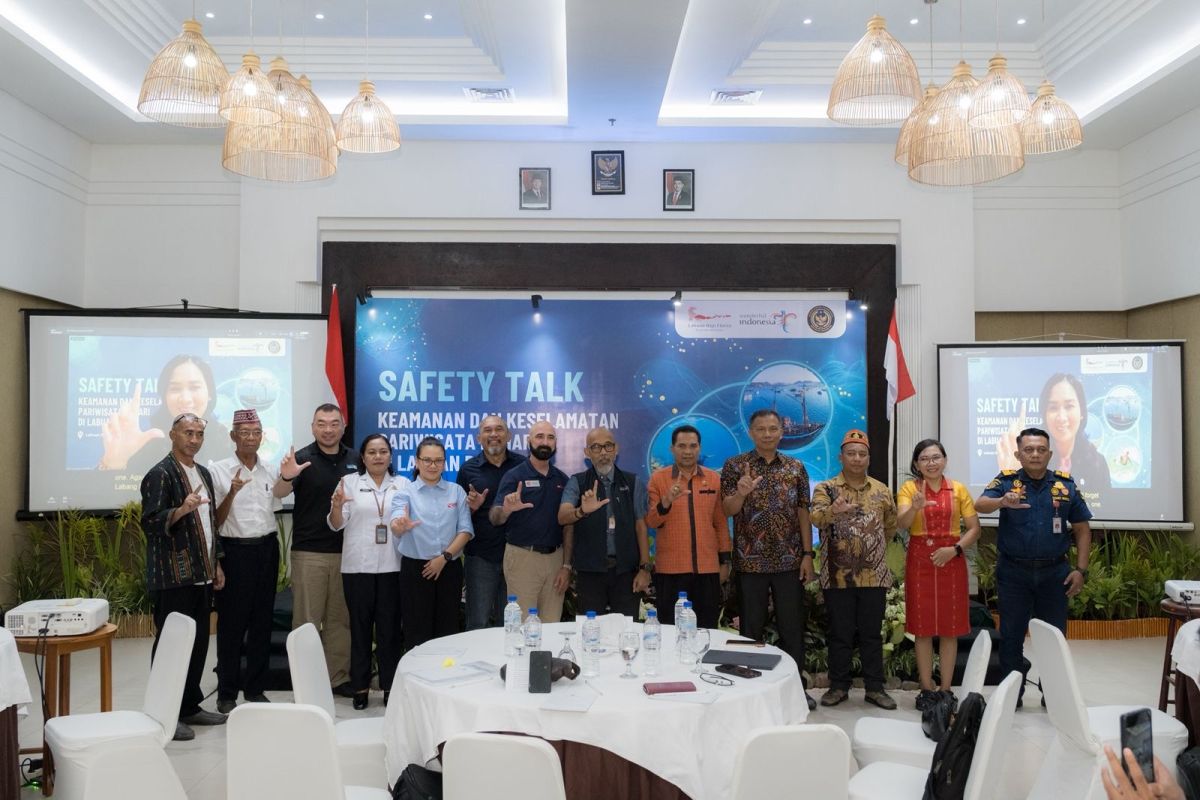
Jakarta (ANTARA) - The Ministry of Tourism (Kemenpar) together with the Labuan Bajo Flores Authority Executive Body (BPOLBF) is promoting improvements in safety and comfort aspects of maritime tourism, particularly in Labuan Bajo, East Nusa Tenggara. Deputy Minister of Tourism Ni Luh Puspa, in an official statement received in Jakarta on Friday, emphasised that safety and security are the primary factors in tourism activities, including maritime tourism. To this end, Kemenpar has taken policy steps, including Ministerial Regulation No. 7 of 2016 on Guidelines for Implementing Recreational Diving and Ministerial Regulation No. 6 of 2025 on Standards for Business Activities in the Implementation of Risk-Based Business Licensing for the Tourism Sector, specifically for Domestic Sea Transport for Tourism. Kemenpar is also managing maritime tourism destinations through socialisation and cross-sector coordination to promote the implementation of risk and disaster management modules in maritime tourism destinations, as well as various other modules. “These efforts are carried out because safety and security in maritime tourism are fundamental aspects of tourism,” said Ni Luh Puspa. This activity also serves as an implementation of the Ministry of Tourism’s flagship programme, namely enhancing tourism safety, which includes efforts to improve the quality of maritime tourism products as one of Indonesia’s leading tourism sectors. Assistant for Government and People’s Welfare of West Manggarai Regency, Agustinus Gias, stated that tourist confidence, especially from abroad, greatly depends on safety and security guarantees from multi-stakeholder collaboration. The tourist boat accident that once occurred in Labuan Bajo must become a momentum for collective improvement. According to him, pride in Labuan Bajo tourism will be complete if service safety becomes the main pillar that cannot be compromised again. “Safety and security of tourism in Labuan Bajo is a shared responsibility between the government, port authority, security apparatus, and business actors who must work hand in hand,” said Agustinus. Assistant Deputy for Tourism Product Development of Kemenpar, Itok Parikesit, conveyed that safety aspects are the main foundation in developing quality and sustainable maritime tourism. This includes strengthening cross-sector collaboration through effective coordination, forming crisis management teams, preparing more applicable field steps, and ongoing evaluation. In this “Safety Talk” event, Kemenpar’s Expert Staff for Crisis Management, Fadjar Hutomo, encouraged the formation of a Tourism Crisis Management Team involving all stakeholders. Especially in areas where tourism is the main economic driver, such as Labuan Bajo. Fadjar said it is important for tourism service providers to pay attention to Law No. 29 of 2014 on Search and Rescue related to the Tourism Sector. “In this law, tourism service providers organising high-risk activities are required to provide human resources with competency certificates in Search and Rescue,” said Fadjar. Meanwhile, the Head of the Manpower, Transmigration, Cooperatives, and SMEs Office of West Manggarai Regency, Theresia Primadona Asmon, conveyed matters regulated in Government Regulation No. 50 of 2012 on Occupational Safety and Health Management System (SMK3), including rights and obligations for workers and employers. “OHS is not a one-way responsibility because workers also have a central role as both subject and object of protection. And Labuan Bajo needs strict and comprehensive OHS implementation for maritime tourism actors,” emphasised Theresia. This “Safety Talk” also discussed handling safety and security in maritime tourism. Chief Executive Officer (CEO) of Divers Alert Network (DAN), Cliff Richardson, stated that risks in diving activities and maritime tourism cannot be eliminated. Mitigation is carried out through the application of SOPs, Emergency Action Plans (EAP), as well as safety and first aid training. Also, the readiness of human resources and the availability of safety equipment are very important to ensure quick and effective emergency handling,” said Cliff. Director of Preparedness of Basarnas, Noor Isrodin Muchlisin, presented data on SAR operations in tourist areas across Indonesia from 2023 to 2025, showing an increase in tourism accidents. One of them is the tourist boat accident of KM Putri Sakinah in Labuan Bajo. Basarnas encourages a paradigm shift from previously focusing tourism safety on post-incident handling, to a preparedness-based system and risk mitigation where safety is built from the start through standards, supervision, and integrated planning. “This preparedness preparation is carried out with risk identification for tourist shipping, obligations for safety equipment readiness, passenger briefing, and synergy in supervision between operators, port authorities, and Basarnas,” said Noor. Chairman of the Komodo Professional Divers Association (P3KOM), Marselinus Betong, said that regulations and supervision related to maritime tourism in Labuan Bajo are still lacking. Marselinus mentioned several real challenges in emergency response, including medical crises in remote tourist locations, weather and sea condition uncertainties, unorganised initial coordination, and the unavailability of a special command centre. “There is a need for a quick, structured, and proactive emergency response system to address various types of risks faced in maritime tourism activities,” said Marselinus.