
Ministry of Social Affairs: People's School Recruitment Without Academic Selection
Jakarta (ANTARA) - The Ministry of Social Affairs has affirmed that recruitment for the People’s School (Sekolah Rakyat) does not employ academic selection, but rather relies on the fulfilment of administrative requirements and field verification to confirm that prospective students come from poor and near-poor families.
“There is no academic selection. The point is that these are poor people. If they are poor, they deserve to enter the People’s School. If they are ill, the Ministry of Social Affairs must treat them first, and once they have recovered, enrol them in the People’s School,” said Deputy Minister of Social Affairs Agus Jabo Priyono in Jakarta on Thursday.
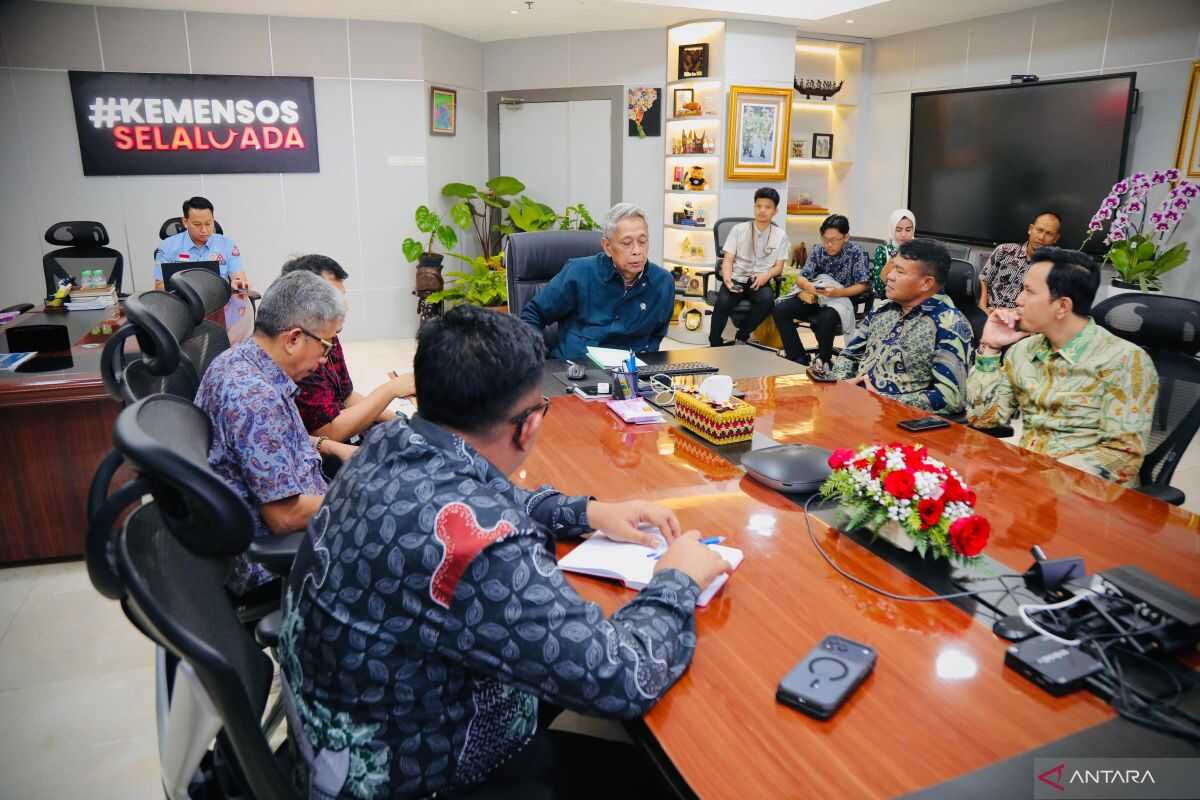
The statement was made during an audience with Brebes Regional Legislative Council (DPRD) Chairman Mohkhammad Taufiq and Deputy Chairman Iqbal Tanjung at the Ministry of Social Affairs office.
He explained that the selection process is conducted through outreach to children from poor families in deciles 1 and 2 of the National Social and Economic Unified Database (DTSEN).
The policy is in line with President Prabowo Subianto’s directive to dignify disadvantaged communities and ensure the recruitment process is free from nepotism.
“The Chairman must not make referrals, the Deputy Chairman must not make referrals, and I myself must not make referrals either. However, if there are many poor people in your area, please propose them. The Ministry of Social Affairs will be the one to decide. Once the data comes in, we conduct field checks to verify it,” Agus explained.
The People’s School is a boarding school programme covering primary, junior secondary, and senior secondary levels with comprehensive facilities, ranging from sports fields and libraries to classrooms, as well as three nutritious meals per day. Each student receives eight sets of uniforms and a laptop to support their learning.
To date, pilot People’s Schools have been established at 166 locations, accommodating 15,954 students across primary, junior secondary, and senior secondary levels. The programme is supported by 2,218 teachers and 4,889 education staff. Meanwhile, construction of permanent People’s Schools is underway at 104 locations, targeted to be operational by 2026.
Agus added that if a People’s School is established in Brebes, the students admitted must originate from Brebes, and teachers and headteachers would also be prioritised from the local area.
“If it is in Brebes, the students must be from Brebes, from deciles 1 and 2. The teachers would also be prioritised from Brebes, including the headteacher. Each city and regency will eventually have its own,” he said.
Beyond academic and character education, the People’s School provides continued mentoring for students, whether for progressing to higher education or entering the workforce. The Ministry of Social Affairs has established cooperation agreements with various ministries, including the Ministry of Higher Education, Science and Technology, the Ministry of Manpower, and BP2MI.
“So, if they have graduated from senior secondary school and do not yet wish to continue to higher education, they can go straight to work to help lift their parents out of poverty. We simply ensure that upon completing senior secondary school, they must either continue their education or enter employment,” said Agus.
In response, Brebes DPRD Deputy Chairman Iqbal Tanjung expressed support for the establishment of a People’s School in his region.
“Our hope is that with the People’s School, children who are disadvantaged but have potential can be developed further. We at the DPRD will consult further regarding the People’s School programme,” he said.