
Ministry of Social Affairs Collaborates with Baznas to Empower Parents of People's School Students
The core concept of the programme is not only to school the children but also to empower their parents so that after the children graduate, the family’s economic condition also improves.
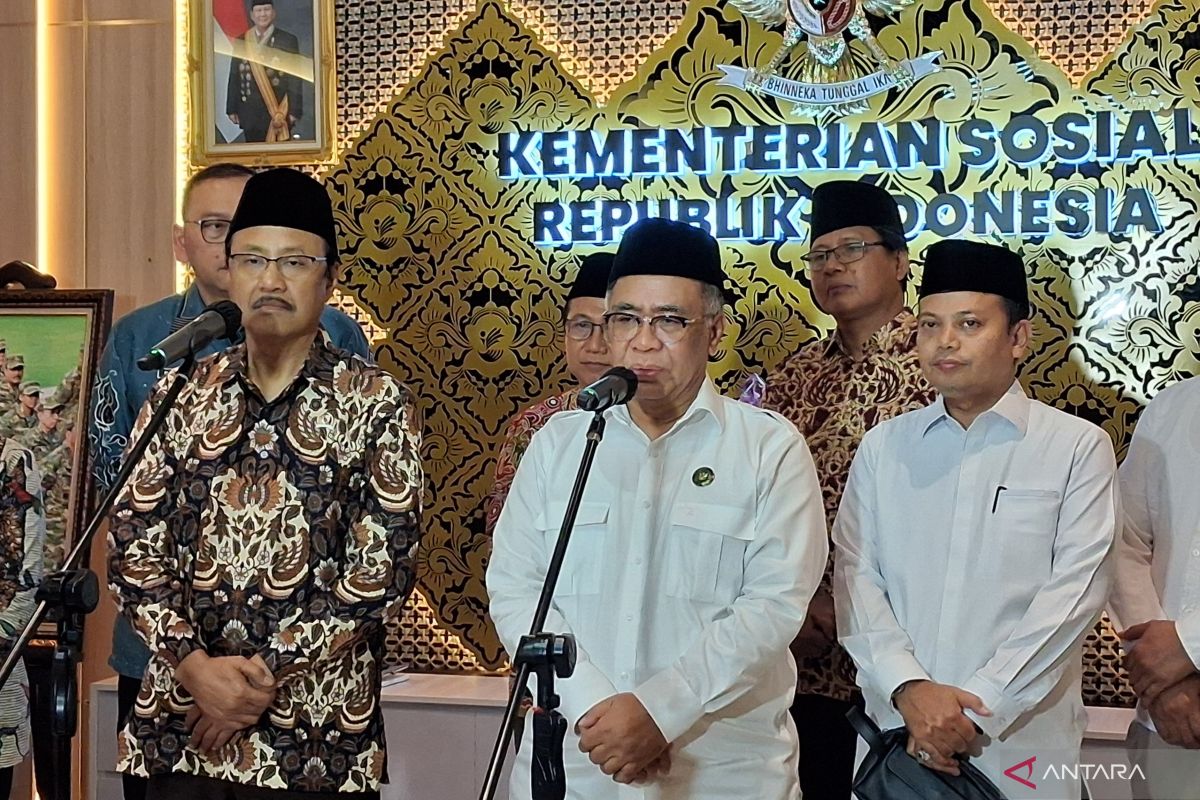
Jakarta (ANTARA) - The Ministry of Social Affairs (Kemensos) is collaborating with the National Amil Zakat Agency (Baznas) to empower the parents of People’s School students in order to enhance the welfare of Indonesian families.
“The core concept of the programme is not only to school the children but also to empower their parents so that after the children graduate, the family’s economic condition also improves,” said Social Affairs Minister Saifullah Yusuf (Gus Ipul) in Jakarta on Thursday.
In the empowerment scheme, People’s School student families will be connected to various strategic government programmes, such as assistance for uninhabitable houses, and various other forms of cooperation are also being developed to provide real impact for the community.
“So far, there have been obstacles because some families live on land that is not their own, so government assistance cannot be utilised. Therefore, Baznas is expected to help intervene in cases like this through more flexible assistance schemes,” said Gus Ipul.
Meanwhile, Baznas Chairman Sodik Mudjahid stated that the meeting with Kemensos is a strategic moment because both institutions have the same task of improving community welfare and addressing poverty.
“Baznas’s zakat, infaq, and sedekah management programmes have many overlaps with Kemensos programmes. Therefore, in the future, the programmes of both institutions will be more coordinated and focused, not limited to charitable aid distribution (compassionate), but directed towards programmes with long-term impact and institutionalisation,” he said.
Sodik explained that the management of zakat, infaq, and sedekah is carried out based on sharia provisions regarding beneficiaries (asnaf), which are then translated into several programme focuses, including education, school construction, teacher and student scholarships, health, healthy homes, polyclinics, small business development, da’wah, and humanitarian programmes.
In the discussion, several priority programmes to be worked on together include the housing sector, education, food, and other basic needs. For the People’s School programme, all education costs are indeed covered by the government, but Baznas will assist in possible aspects, such as renovating parents’ homes to make them more habitable.
All collaboration programmes will refer to the National Single Socio-Economic Data (DTSEN), which is now the government’s sole official reference in implementing social interventions and assistance programmes.
“Baznas has also collaborated with the Central Statistics Agency (BPS) and obtained permission to use DTSEN as a work guideline. With the use of the same data, assistance programmes are expected to be more on target and well-coordinated,” said Sodik.