
Ministry of Social Affairs Clarifies Child Adoption Procedures, Warns Against Illegal Routes
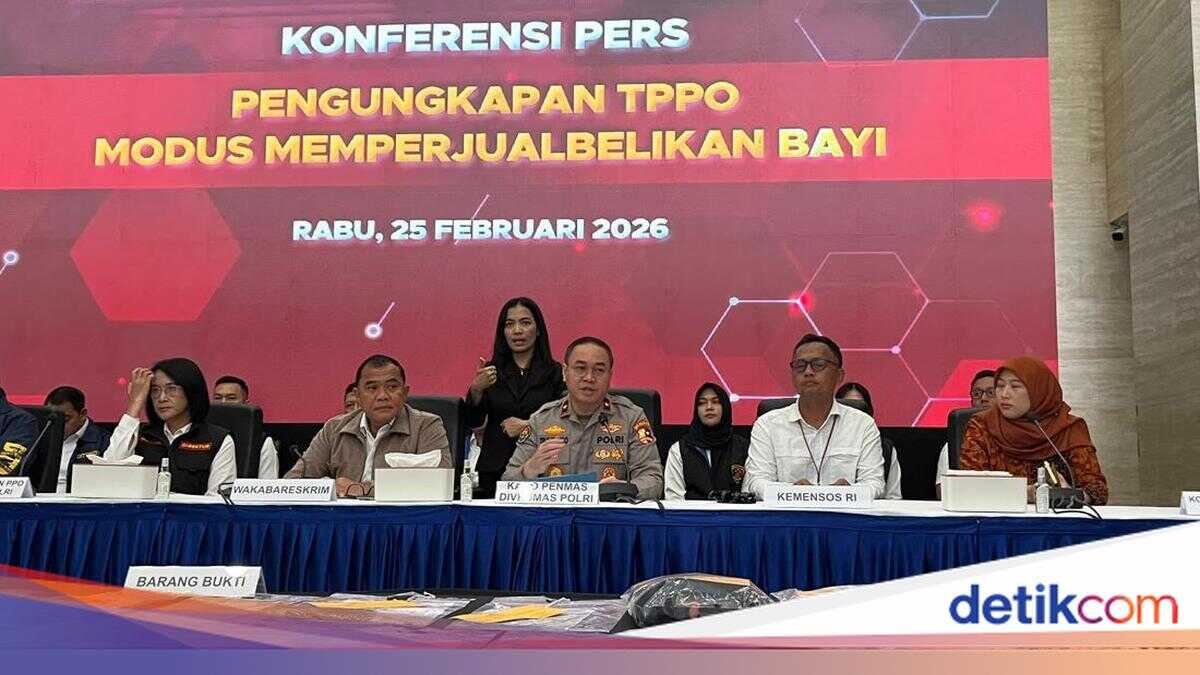
The Ministry of Social Affairs (Kemensos) has clarified the procedures for child adoption in Indonesia, responding to recently exposed illegal baby trafficking operations disguised as unauthorised adoptions.
Agung Suhartoyo, Director of Child Rehabilitation at Kemensos, stated that the adoption process is not complicated. He urged the public to follow official channels to ensure the safety and welfare of children.
“We want to explain the child adoption process in accordance with Government Regulation No. 110 of 2007. In fact, the child adoption process is neither complicated nor difficult,” Agung said during a press conference at National Police Criminal Investigation Headquarters in South Jakarta on Tuesday, 24 February 2026.
Agung explained that many parties are violating regulations. However, prospective adoptive parents need only register with the District or City Social Services office.
The main requirements that must be met include:
Prospective adoptive parents must be aged between 30 and 55 years.
The family must be in good physical and mental health.
They must have no children or a maximum of one child.
The child to be adopted is recommended to share the same religion as the prospective adoptive parents.
“So they simply need to register with the District or City Social Services office for processing. The provisions and requirements are also not difficult,” Agung emphasised.
After registration, the documents will be forwarded to the Provincial Social Services office to be reviewed by the Child Adoption Consideration Team (Tim PIPA). Subsequently, a home visit will be conducted by social workers to ensure the suitability of the prospective adoptive parents.
“Social workers will conduct home visits to ensure that the child can be legally adopted. It is not a direct handover; during a six-month period the child remains under the supervision of our social workers,” he explained.
On this occasion, Kemensos also appreciated the steps taken by the National Police Criminal Investigation Headquarters, which successfully uncovered a human trafficking (TPPO) syndicate involved in baby trafficking.
“The Ministry of Social Affairs expresses the highest appreciation for the exposure of various matters related to baby trafficking or suspected baby trafficking. We provide full support to the law enforcement process,” Agung stated.
Currently, Kemensos is conducting assessments of children who are victims to determine whether they can be legally adopted or must be returned to their families. During the legal process, these children remain in state custody.
“We ensure that the children are in a safe situation and their needs are met, including all their rights,” he concluded.
Police Uncover Baby Trafficking Case
Previously, the National Police Criminal Investigation Headquarters exposed a human trafficking syndicate that traded babies through TikTok and Facebook platforms. In this case, police have identified 12 suspects consisting of intermediaries and adoptive parents.
They conducted baby trafficking operations in the areas of Jakarta, Banten, Yogyakarta, West Java, Central Java, East Java, South Sulawesi, Jambi, Bali, East Kalimantan, Kalimantan, Riau Islands, and Papua.
“Twelve individuals have been identified as suspects, comprising eight intermediaries and four adoptive parents,” said the Deputy Director of Special Crimes, Brigadier General Nurul Azizah.
Seven babies were rescued from the perpetrators. The 12 suspects are being charged under Article 76F in conjunction with Article 83 of Law No. 35 of 2014 on Child Protection, which carries a sentence of 3–15 years imprisonment and a fine of Rp 60–300 million.
Furthermore, they are charged under Article 6 of Law No. 21 of 2007 on the Eradication of Human Trafficking, which carries a sentence of 3–15 years imprisonment and a fine of Rp 120–600 million, and Article 455 in conjunction with Article 20 of Law No. 1 of 2023 on Human Trafficking, which carries a sentence of 3–15 years imprisonment.