
Ministry of Social Affairs' Braille Printing Facility Provides Free Books, Magazines, and Qur'an
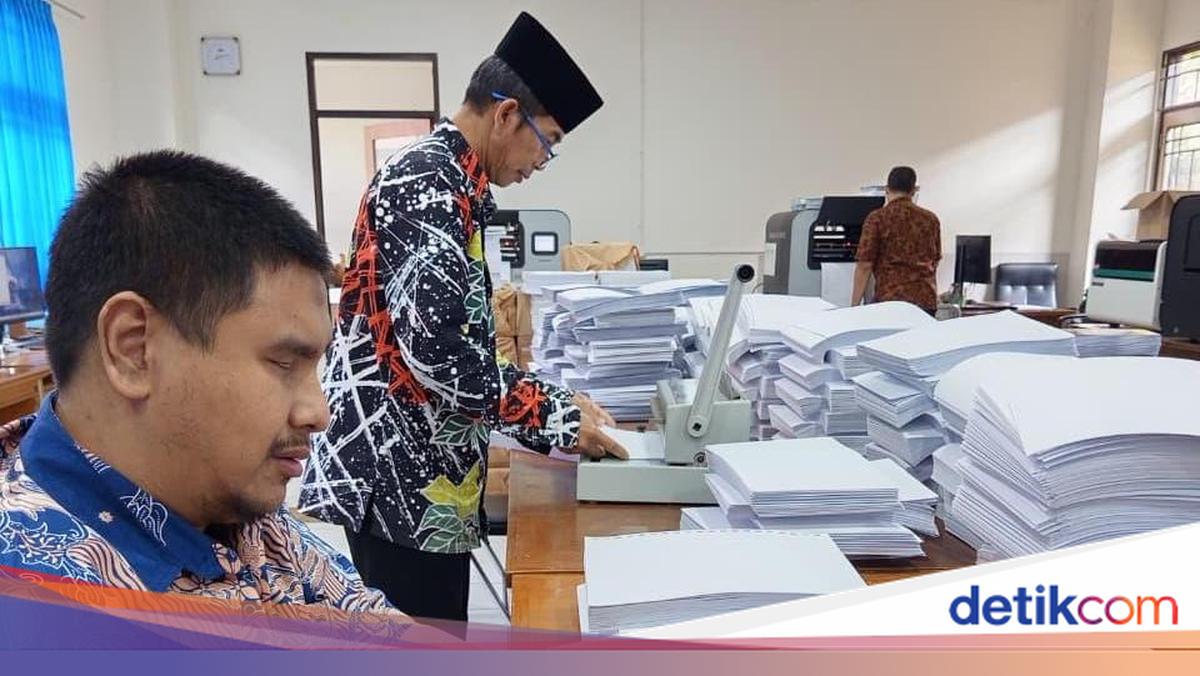
The Braille Literacy Printing facility at Sentra Wyata Guna Bandung, under the Republic of Indonesia’s Ministry of Social Affairs (Kemensos), plays a vital role in advancing Braille literacy for visually impaired individuals across Indonesia. This facility is the only one producing free Braille books for visually impaired people throughout the country.
Several routinely printed materials include the Braille Al-Qur’an, Braille Al-Kitab, and general knowledge books for schools.
“The complete and free ones are only available here. Other foundations might have specific donors, but they charge fees to those foundations for distribution,” explained Braille Transcription Officer Yunna Nursyalamah in a written statement on Wednesday (18/3/2026).
“The essentials are the Al-Qur’an and Al-Kitab. Then general knowledge books, skills books, religious books. These must be available, knowledge books from primary school, junior high, senior high levels, or even university lessons,” she added.
Other interesting printed products include the Gema Braille magazine. Published every two months per edition, this magazine features writings by visually impaired individuals or submissions from other writers, aligned with the theme of that edition.
“We get the core content from visually impaired people or friends who share their inspiration through writing. It’s then collected by us, discussed in the Editorial Board, and we select what fits the theme for that month,” Yunna explained.
Every day, this printing facility produces approximately 30 Braille books. For the Braille Al-Qur’an specifically, the process is longer; one juz is printed as one book, meaning a full set of the Braille Al-Qur’an consists of 30 volumes.
“This year, we’re printing only 50 sets of the Al-Qur’an,” said Yunna.
In a year, the facility produces around 50 sets or 1,500 books that must be printed, checked, and bound one by one with utmost care.
Before entering the printing machine, every Braille book undergoes strict editing to ensure every letter and punctuation mark is accurate.
All books, scriptures, or magazines produced by Braille Literacy are sent to beneficiaries, whether individuals, special needs schools (SLB), campuses, or subscribed institutions across Indonesia.
“For visually impaired friends in Indonesia who are subscribed, we send them automatically. Routinely every two months, we send the magazine, and if a book is published that month, we send it automatically,” said Yunna.
Braille Literacy also produces custom books ordered by external parties such as local governments (pemda), private sectors, or individuals.
Free Braille transcription services for books are a primary effort of the printing facility. Interested parties can contact Braille Literacy via the WhatsApp Center. The next procedure is to send a transcription request letter.
In addition to distributing Braille books, Braille Literacy produces audio books or voice-converted books for visually impaired individuals. In this regard, the facility collaborates with reader communities in the voice transcription process.
“What’s unique here is that the voice transcription is done by a reader community. It includes housewives who donate their voices, and not just reading for charity—they even have talent,” said Yunna.
The distribution of audio books to individual beneficiaries or SLB is free, via flash drives or previously CDs and cassettes.
“It’s also for visually impaired friends. Now it’s optional for SLB as well; SLB children are enthusiastic about listening to voices and stories,” said Yunna.
Long History Since 1952
Quoted from the Braille Literacy profile, the long history of education for the visually impaired in Indonesia began in 1952, when the Chairman of the Concerned for the Visually Impaired Association, Mr Heymen, and HA Malik Udin established the management of the Indonesian Language Braille Library.
In the same year, HA Malik Udin was appointed as Head of the Indonesian Braille Office.
In 1961, based on the Decree of the Minister of Social Welfare of the Republic of Indonesia, the Indonesian Braille Publishing and Library Institution (LPPBI) was established as a technical implementing unit of the Directorate of Child and Youth Welfare, located at Jalan Pajajaran No. 52, Bandung City.
At the end of 1989, this Braille publishing institution moved from Bandung City to Jalan Kerkhof No. 21, Leuwigajah, South Cimahi. Previously, LPPBI had undergone a name change to the Indonesian Braille Publishing Centre (BPBI).
In Cimahi, BPBI continued to contribute to the development of Braille literacy in Indonesia. Until 2018, after several name changes and transfers of Technical Implementing Units (UPT), BPBI became the Indonesian Braille Literacy Centre (BLBI) ‘Abiyoso’ under the Directorate General (Dirjen) of Social Rehabilitation of Kemensos.
“It originally started in Abiyoso Cimahi, moved here (Bandung) in 2022,” said Yunna.
After operating for quite some time in Cimahi, in 2022, BLBI ‘Abiyoso’ became Braille Literacy and moved back to Jalan Pajajaran No. 52, Bandung City.
Under Sentra Wyata Guna Bandung, Braille Literacy continues to produce Braille books as learning resources for visually impaired individuals in Indonesia.
This literacy service not only opens access to information but also plays a crucial role in enhancing reading and writing skills in Braille and promoting the independence of beneficiaries.