
Ministry of Social Affairs and National Nutrition Agency Finalise Scheme for Free Nutritious Meals for the Elderly and People with Disabilities
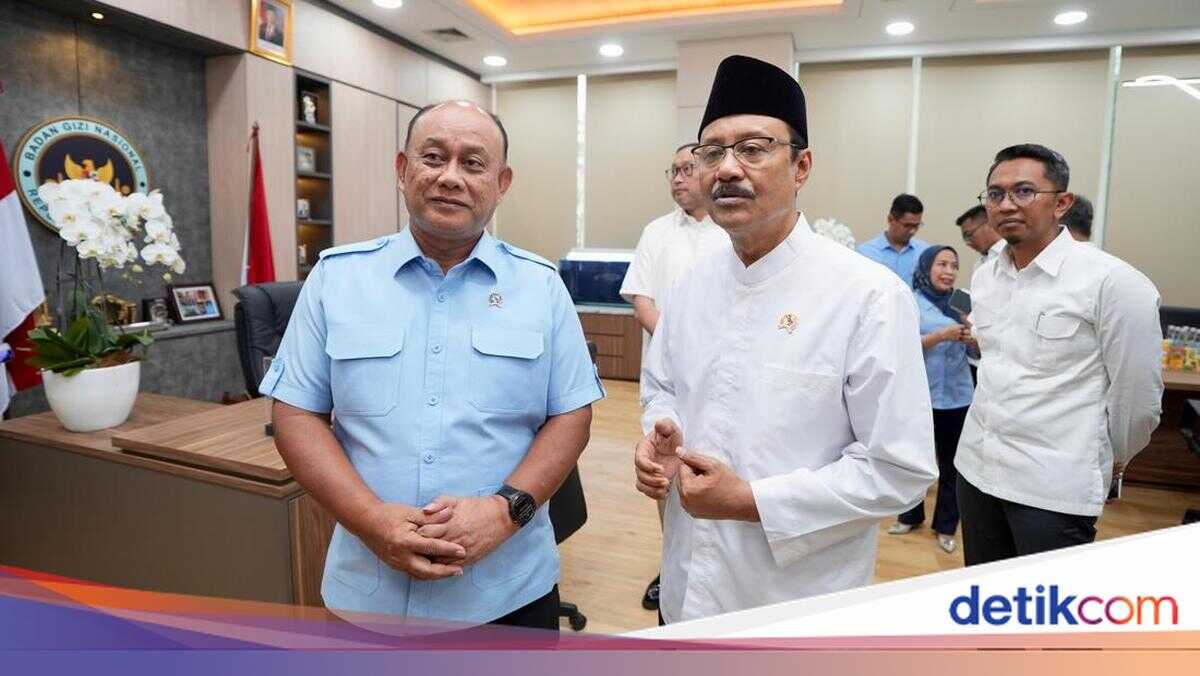
The Ministry of Social Affairs, together with the National Nutrition Agency (BGN), continues to refine the implementation scheme for the Free Nutritious Meals (MBG) programme for the elderly and people with disabilities. This effort is being made to ensure that the national programme can reach vulnerable groups more broadly with measurable nutritional standards.
This was revealed in a meeting between Minister of Social Affairs Saifullah Yusuf, also known as Gus Ipul, and Head of the National Nutrition Agency Dadan Hindayana at the BGN office in Central Jakarta on Wednesday (25/2).
“Thank God, today I coordinated with the Head of the BGN, Professor Dadan, to refine the free nutritious meal programme specifically for the elderly and people with disabilities. I am grateful because the concept is becoming more mature and we have roughly figured out what the form of cooperation will be,” said Gus Ipul, in a written statement on Wednesday (25/2/2026).
This MBG programme for the elderly and people with disabilities is a development of the Food Provision programme that has been run by the Ministry of Social Affairs. Previously, ready-to-eat food assistance for the elderly and people with disabilities was distributed through social workers and community groups (Pokmas) in the regions. In the future, the national MBG scheme will be integrated to broaden its scope and standardise its nutritional quality.
Gus Ipul explained that the provision of food will utilise the BGN’s Nutritional Service Units (SPPG) which are spread across various regions. Meanwhile, outreach and distribution to beneficiaries will continue to be carried out through the Kemensos’ existing social service mechanisms.
“Later, the service will still be provided by the SPPG, while the delivery will be done by Pokmas or caregivers,” explained Gus Ipul.
The target of this programme is the elderly and people with disabilities who are recorded in the National Socio-Economic Data (DTSEN), specifically the 1st to 5th decile groups. Priority will be given to vulnerable elderly people and people with severe disabilities who have difficulty meeting their basic daily needs, thus requiring direct nutritional support.
“Thank you, Professor Dadan, for guiding us in developing a concept, so that this is now integrated with the MBG as a whole,” added Gus Ipul.
Meanwhile, Head of the BGN Dadan Hindayana said that the synergy between the BGN and the Kemensos will facilitate service reach for vulnerable groups, given that the SPPG network is available in various regions of Indonesia.
“I think what has actually been the task of the Minister of Social Affairs will be made easier with the presence of the SPPG in every region, because the SPPG is in every region of Indonesia with an average radius of 4 km,” said Dadan.
He added that the clear division of roles between the BGN and the Kemensos will make the process of providing food to distribution more effective.
“Food provision can be taken from the SPPG, and then the delivery will still be done by staff from the Ministry of Social Affairs, namely Pokmas or caregivers. So this is a good synergy to optimise the facilities,” he explained.
The meeting was also attended by Secretary General of the Kemensos Robben Rico, staff and expert staff of the Minister of Social Affairs, and BGN Expert Staff Arief Nur Rakhman.