
Ministry of Social Affairs and Ministry of Villages Collaborate on DTSEN Update in Serang Regency
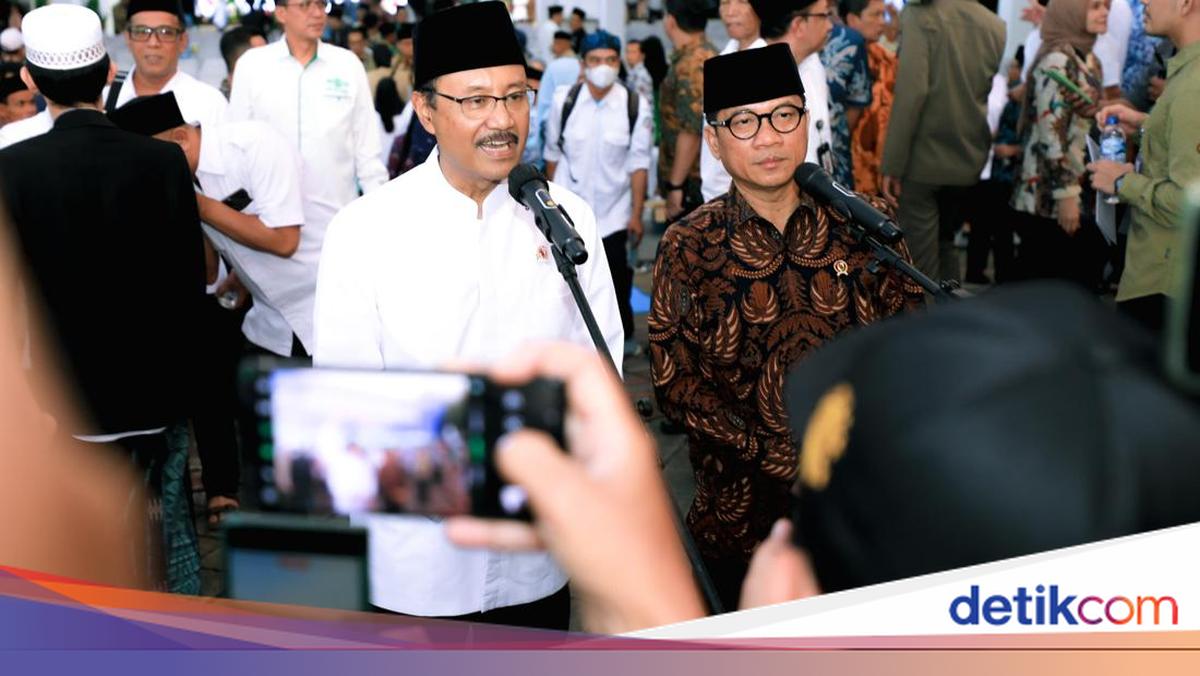
Cross-ministerial and institutional collaboration continues to strengthen for updating the National Single Socio-Economic Data (DTSEN). One such effort involves cooperation between the Ministry of Social Affairs (Kemensos) with the Ministry of Villages and Underdeveloped Region Development (Kemendes PDT), the Statistics Bureau (BPS), and local government authorities to ensure targeted social assistance distribution.
This statement was conveyed by Minister of Social Affairs, Saifullah Yusuf (Gus Ipul), during DTSEN socialisation at Pondok Pesantren Bai Mahdi Sholeh Ma’mun in Serang, Banten, Thursday (12 March). Also present at the event were Minister of Villages and Underdeveloped Region Development, Yandri Susanto, and Serang Regent, Ratu Rachmatuzakiyah.
“Affirmative advocacy can begin from anywhere. But one of the most strategic points is to start with correct data. This is a mandate from the President (Prabowo Subianto),” said Gus Ipul in his statement on Thursday (12 March 2026).
Gus Ipul explained that based on Presidential Instruction Number 4 of 2025 concerning DTSEN, both Kemensos and Kemendes act as parties assisting in data updates. Meanwhile, the Statistics Bureau (BPS) manages the data itself.
“Updates are submitted to BPS. Then BPS will present the update results in the form of rankings. So we already have Deciles 1 through 10,” explained Gus Ipul.
“Remember, not everyone can determine rankings or Deciles. Only BPS determines this. Operators and all of us assist in updating,” he added.
In the data update process, Kemensos and Kemendes are assisted by village heads, sub-district/neighbourhood levels, village operators, and Hope Family Programme (PKH) facilitators. Gus Ipul invited all these parties to play an active role in updating data according to field realities.
“Therefore, I want to emphasise that our data depends on all of you,” he stressed.
Gus Ipul also expressed gratitude to Yandri for following up on Presidential Instruction Number 4 of 2025 concerning DTSEN through ministerial regulations that serve as guidelines for stakeholders at all levels in updating data.
“With correct data, we hope our programmes become integrated. If programmes are integrated from the central level down to the village level, for example, the impact will be tangible for communities. With unified data, it is hoped that there will no longer be sectoral ego, but rather collaboration,” explained Gus Ipul.
Meanwhile, Yandri stated that he had instructed all village heads, sub-district/neighbourhood leaders, health cadres, women’s welfare cadre leaders, village facilitators, and village operators to ensure no data is lost. He emphasised that data must always be updated and be verifiable.
“By doing so, the data will, God willing, become increasingly accurate each day and approach perfection. With this, whatever we do—whether it is development affirmation, social assistance, empowerment, and so forth—it will, God willing, reach the right targets,” said Yandri.