
Ministry of Social Affairs and Agrinas Discuss Absorption of PKH Recipients into Merah Putih Cooperatives
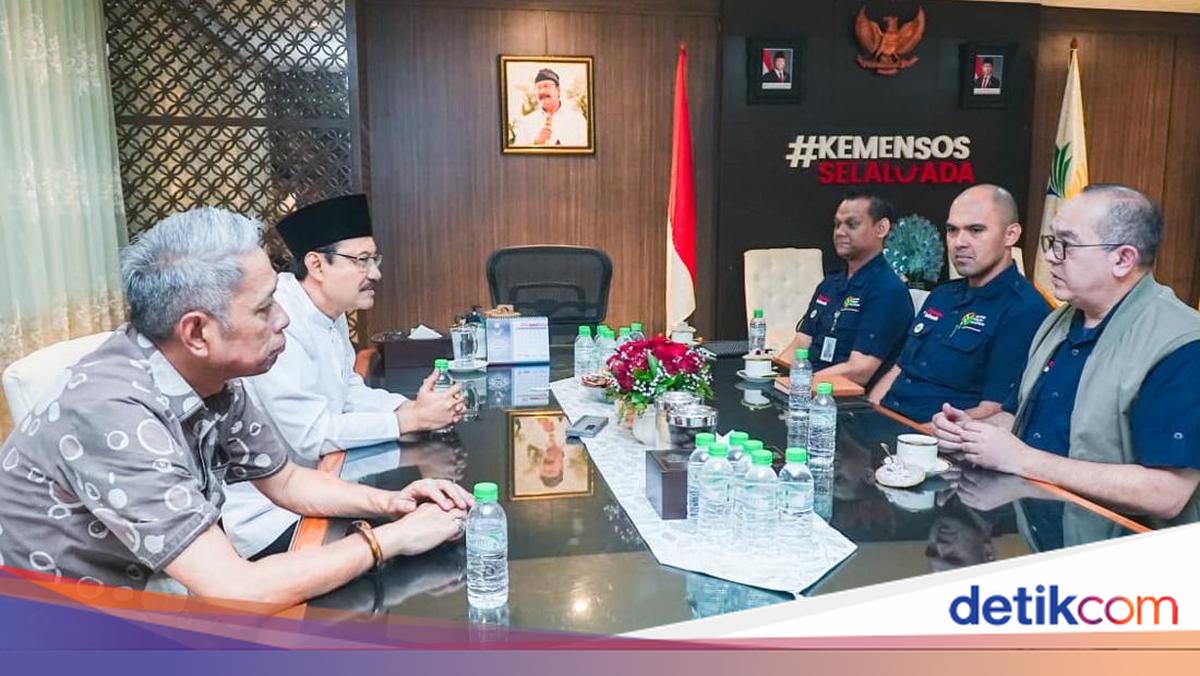
Social Affairs Minister Saifullah Yusuf (Gus Ipul) met with the President Director of PT Agrinas Pangan Nusantara, Joao Mota. The meeting discussed strengthening the Merah Putih Village Cooperatives, including the absorption of PKH social aid recipients as workers.
In the meeting, which was also attended by Deputy Minister of Social Affairs Agus Jabo Priyono, they discussed the readiness for implementing the programme, from institutional schemes, recruitment, training, to distribution systems and digitalisation of village cooperatives.
Gus Ipul emphasised that the programme must be carried out honestly and realistically in accordance with field conditions.
“The most important thing is to work maximally, be honest with the available capabilities, and continue to provide solutions so that this programme is truly felt to be beneficial by the community,” said Gus Ipul in a written statement on Tuesday (14/4/2026).
He also appreciated the concept of the Merah Putih Village Cooperatives, which he considered simple yet functional, with a design that allows utilisation as a warehouse, distribution outlet, and village economic activity centre.
Joao Mota explained that PKH recipients are the top priority in recruiting cooperative workers.
“We go directly to the community and dialogue with PKH recipients. The most important thing is honesty and basic experience. This programme opens opportunities for them to be empowered,” Joao explained.
Recruitment is focused on local villagers with qualifications adjusted to operational needs. Positions such as sales assistants, cashiers, and logistics staff can be filled by residents with a minimum junior high school education and basic work experience.
To support operations, Agrinas is preparing tiered training. Each cooperative will have two deputy unit heads who receive intensive training for 10-12 days, then train around 15-16 operational staff at the village level.
“This system is digital-based with measurable operational standards. Performance will be monitored, so the cooperatives remain optimal and accountable,” Joao added.
Systematically, the management of goods flow is controlled from Agrinas’ head office, which connects producers with distribution centres, then channels them to village cooperatives for sale to the community. The cooperatives also function as aggregators of local production such as harvests, thereby cutting long distribution chains and lowering prices at the village level.
From an institutional perspective, all villagers become participatory members of the cooperative. The majority of profits are returned to the village, while Agrinas provides assistance for two years of transition before full management is handed over to the village cooperatives.
Agus Jabo stated that several regions have shown infrastructure readiness.
“In some areas, cooperative buildings are already ready. This becomes an important capital so that the programme can run immediately and provide benefits,” said Agus Jabo.