
Ministry of Religious Affairs Holds Isbat Session for Ramadan Today; Muhammadiyah to Begin Fasting on 18 February
The government, through the Directorate General of Islamic Community Guidance at the Ministry of Religious Affairs, held an isbat session on Tuesday (17 February) evening to determine the start of Ramadan 1447 H at the Ministry’s offices on Jalan MH Thamrin, Jakarta.
Through the isbat session, the Ministry was to establish when Indonesian Muslims would begin observing the Ramadan fast this year.
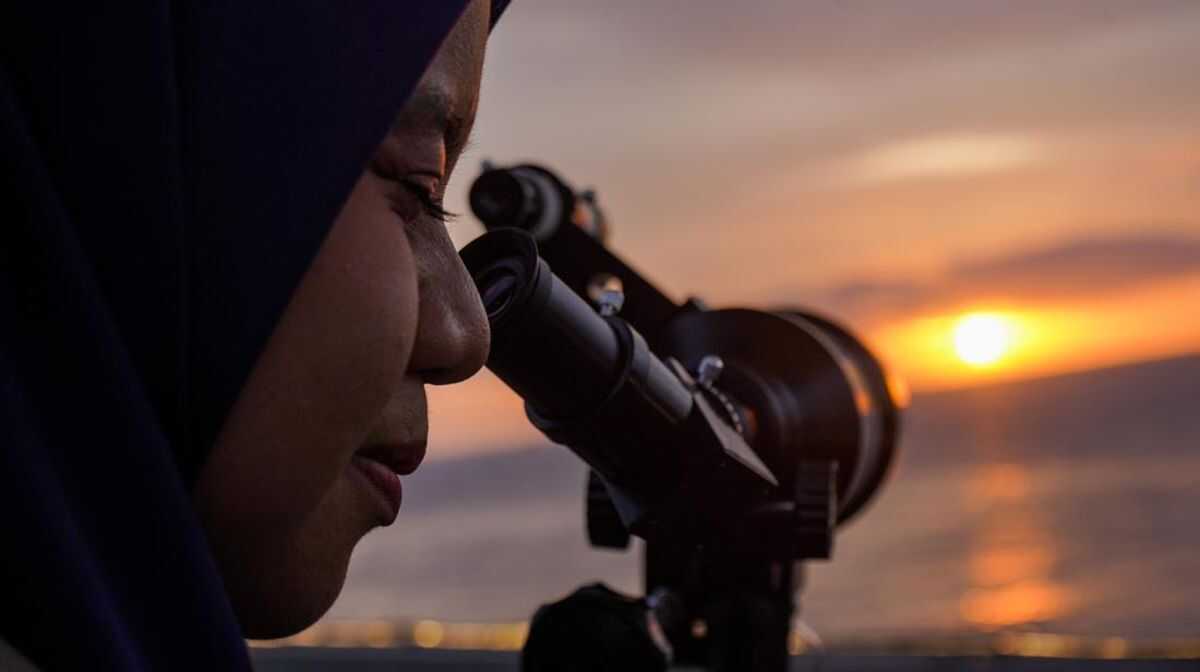
The session was conducted based on observations of the early crescent moon, or rukyatul hilal, at numerous points across Indonesia from Sabang to Merauke. The meeting began with a presentation of data from the Ministry’s hisab and rukyat (astronomical calculation and observation) team regarding the position of the hilal on Tuesday evening.
Following congregational Maghrib prayers at the venue, a joint decision on the determination of the start of Ramadan 1447 H was to be taken in a closed session. The decision would subsequently be announced at a joint press conference.
The session and press conference were led by Minister of Religious Affairs Nasaruddin Umar. Also in attendance were the Deputy Minister of Religious Affairs, leaders of Commission VIII of the House of Representatives, the Chairman of the Indonesian Ulema Council (MUI), the Ministry’s Hisab Rukyat Team, representatives of Islamic mass organisations, and ambassadors from friendly nations.
BRIN
Previously, researchers at the National Research and Innovation Agency (BRIN) predicted that the start of fasting this year in Indonesia could fall on different dates depending on the hilal observation criteria used — either 18 or 19 February 2026.
The Coordinator of the Astronomy and Observatory Research Group at BRIN’s Space Research Centre, Professor Thomas Djamaluddin, explained that the source of the discrepancy was not differing astronomical data but rather the criteria used in calculating the moon’s position.
Thomas explained that the majority of Islamic mass organisations and the Indonesian government use a local hilal approach, which requires the crescent moon to be visible within Indonesian territory.
He noted that the hilal’s position at Maghrib time on 17 February did not yet meet the MABIMS criteria — the standard agreed upon by the Ministers of Religious Affairs of Brunei Darussalam, Indonesia, Malaysia, and Singapore — which the government uses to determine the start of hijriah months.
At that time, the hilal’s position had not yet met the minimum altitude of 3 degrees and elongation of 6.4 degrees.
“The astronomical facts at Maghrib on 17 February 2026 in the Southeast Asian region show that the hilal’s position does not yet meet the MABIMS criteria — the criteria used by the government and the majority of Islamic mass organisations — namely the yellow curve, with a minimum altitude of 3 degrees and geocentric elongation of 6.4 degrees. This is fulfilled in the Americas, so in the Southeast Asian region, including Indonesia, the criteria are not yet met,” Thomas said in a video on his YouTube channel some time ago.
Nevertheless, Thomas noted that some Islamic mass organisations use the Turkish criteria. At that time, in the Americas, the minimum altitude of 5 degrees and elongation of 8 degrees had already been met.
In the Alaska region, Thomas said, the hilal’s position already met the Turkish criteria. Consequently, 1 Ramadan 1447 H would fall on 18 February 2026.
“So there is potential for a difference in the start of Ramadan — some will observe 19 February, and some 18 February,” he said.
Nahdlatul Ulama
Similar to the government, Nahdlatul Ulama (NU) awaited the results of the rukyatul hilal towards the end of Sha’ban to determine the start of Ramadan. Its session was held separately from the government’s, at the PBNU headquarters in Central Jakarta.
Given the possibility of a difference in the start of Ramadan this year, the government had previously urged respect for the differing methods used by each party.
Muhammadiyah
Meanwhile, Muhammadiyah had already determined that 1 Ramadan would fall on Wednesday (18 February). This was conveyed in an official Muhammadiyah proclamation. The determination was based on hisab hakiki (true astronomical calculation) with reference to the Unified Global Hijriah Calendar used internally by Muhammadiyah.