
Ministry of Religious Affairs Distributes Rp23.5 Billion Aid to 52,000 Orphans and Disabled Children
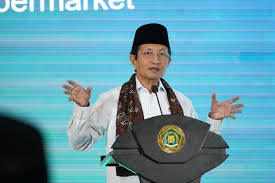
The Ministry of Religious Affairs, together with several philanthropic institutions and strategic partners, has distributed aid worth Rp23.55 billion to more than 52,000 recipients in commemoration of Lebaran Yatim and Disability Day 1448 H. The programme reached 50,113 orphans and 2,488 persons with disabilities across 34 provinces. Symbolically, the aid was handed over to 395 orphans and 55 persons with disabilities. The assistance was the result of collaboration between the Ministry of Religious Affairs and various partners, including BAZNAS, the Indonesian Waqf Board (BWI), Islamic banks, and several National Amil Zakat Institutions (LAZNAS). Minister of Religious Affairs Nasaruddin Umar stated that the 10th of Muharram commemoration should be a momentum to strengthen care for children in need, rather than merely an annual ceremony. ‘Let us make this 10th of Muharram a day of liberation for orphans and groups requiring attention. We free them from various life difficulties, anxieties, and the suffering they experience,’ said the Minister. According to Nasaruddin, attention towards orphans and persons with disabilities must be realised through sustainable steps, such as expanding access to education, developing self-capacity, and opening greater opportunities for them to participate in society. He also invited the public to make Lebaran Yatim a growing social tradition that strengthens solidarity while delivering benefits to vulnerable groups. Meanwhile, Director General of Islamic Community Guidance Abu Rokhmad explained that this year’s Lebaran Yatim and Disability Day adopted a broader concept beyond merely distributing charity. The activities were designed as an empowerment space for children to showcase their potential and creativity. ‘We want to provide a wider space for orphans and persons with disabilities to express their best potential. They are not just beneficiaries, but an important part of socio-religious development,’ said Abu. The concept was realised through five activity zones: the Growth Zone as an educational space, the Empowerment Zone for capacity and skills development, the Barokah Market showcasing empowerment products, the Expression Zone as a platform for art and creativity, and the Light Zone for auctioning works by fostered children. Abu stated that the programme’s implementation involved 14 institutions at the central level and took place simultaneously across Indonesia through 34 Regional Offices of the Ministry of Religious Affairs and hundreds of regencies and cities. According to committee data, the total aid collected and distributed reached Rp23,554,782,009. West Kalimantan was the province with the largest aid distribution value at Rp7,575,980,800, while Rumah Zakat was recorded as the institution with the largest distribution contribution in the collaborative programme. Abu affirmed that the programme’s success was inseparable from the synergy of various parties, from the government, zakat institutions, waqf bodies, the business sector, to the community. ‘The main strength of this programme is collaboration. When the government, zakat institutions, waqf bodies, the business sector, and the community move together, the benefits felt by the children become far greater,’ he said. He added that cross-sector collaboration is an important asset to expand the reach of aid for orphans and persons with disabilities in various regions.