
Ministry of Religious Affairs Confirms Viral Claim of Minister Banning Animal Sacrifice is Untrue
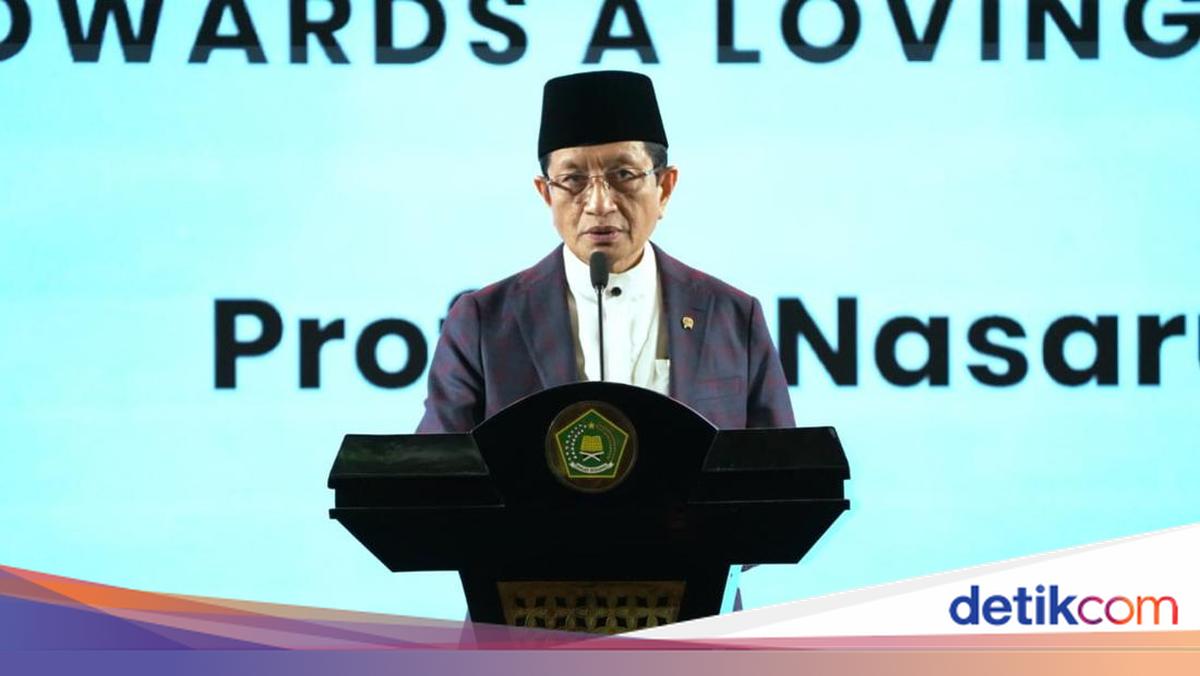
A clip of Minister of Religious Affairs (Menag) Nasaruddin Umar, narrated as prohibiting the slaughter of sacrificial animals and replacing it with money, has circulated on social media. The Head of the Public Relations and Communication Bureau of the Ministry of Religious Affairs, Thobib Al Asyhar, emphasised that the information is untrue.
Based on the video clip, Nasaruddin’s statement was made at the Peak Closing of the Islamic Finance Ramadan Gala 2026, organised by the Financial Services Authority on 2 April 2026. The Ministry stated that the video clip, titled ‘Eid Sacrifice, No Slaughtering Animals Allowed, Replace with Money’, has sparked misunderstandings and disinformation.
Thobib emphasised that the circulating narrative has strayed from the actual context of the statement. According to him, Nasaruddin was presenting an idea for more structured management of the sacrificial animal slaughter worship to provide broader benefits to the community, not to replace or eliminate the existing practice.
“The Minister’s statement must be understood in full, that what is being discussed is an initial idea for management to make it more structured and provide broad benefits. That does not mean replacing the ongoing worship practice,” said Thobib in his statement on Tuesday (28/4/2026).
“There is no statement from the Minister prohibiting the practice of sacrificial animal slaughter. The Ministry of Religious Affairs ensures that the worship practice continues as usual,” he stressed.
Thobib assessed that in that idea, there is an option for convenience for the public who wish to entrust the implementation of sacrificial animal slaughter worship to professional institutions, such as the National Zakat Amil Agency (Baznas) or other official institutions.
“For the public who desire convenience, they can entrust sacrificial animals to professional institutions like Baznas or provide funds equivalent to the value of the sacrificial animal provided by Baznas. Subsequently, the slaughtering process and distribution are carried out professionally by the central Baznas or regional Baznas,” he said.
The management of sacrifices by Baznas, he said, is supported by professional animal slaughterhouse facilities (RPH) that meet standards. The slaughtering process is carried out hygienically, in accordance with sharia, and considering animal health and welfare.
Thus, the quality of the meat is more assured, and its distribution is on target based on integrated data collection. “For the public who wish to slaughter sacrificial animals independently or in groups as usual, it is also not prohibited,” he added.