
Ministry of Public Works Continues to Accelerate Disaster Response in Sumatra
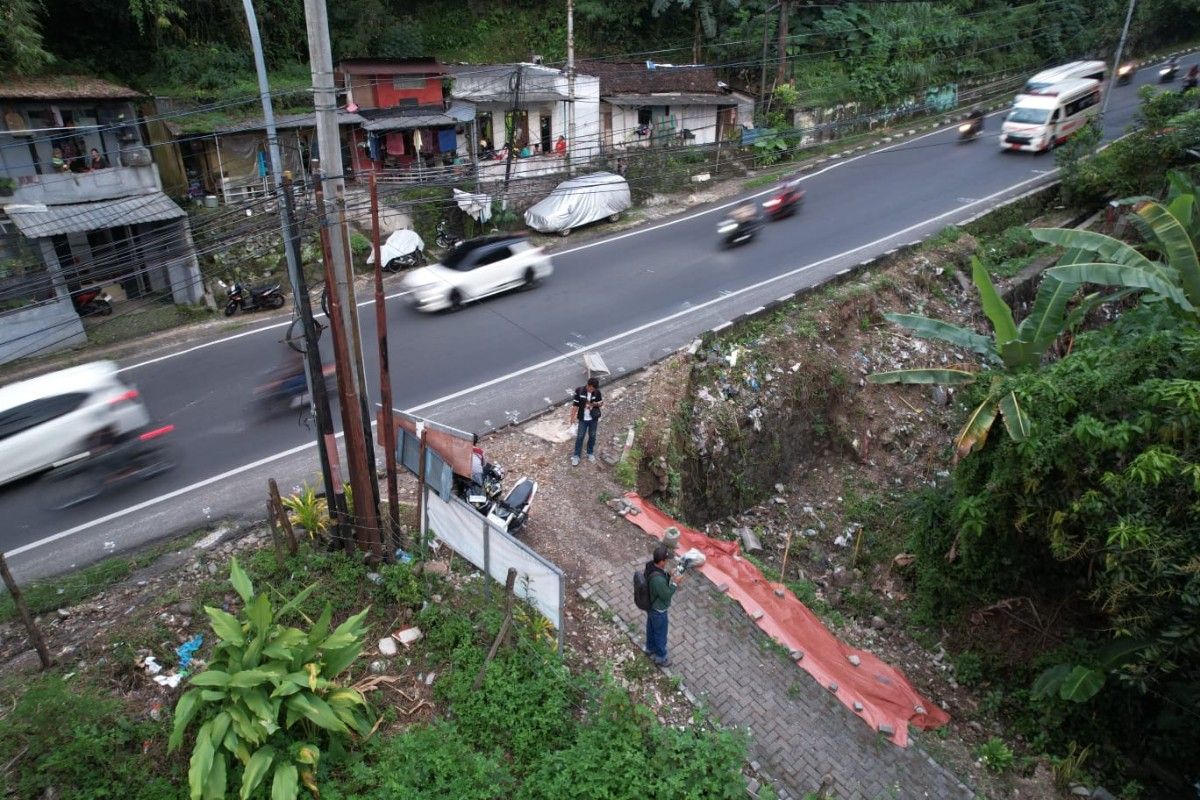
Jakarta (ANTARA) - The Ministry of Public Works (PU) continues to accelerate disaster response efforts on Sumatra Island, with the majority of connectivity infrastructure now back in operation and supporting public mobility and logistics distribution.
Public Works Minister Dody Hanggodo assured that the condition of national roads and bridges in the affected areas is generally free from significant issues.
“If there are no problems with national roads and bridges. There were indeed landslides, but they can be cleared in less than 24 hours,” Dody stated during a press conference in Jakarta on Sunday.
Based on data, 107 road segments and 43 bridges affected have been restored to 100% functionality. For local road networks, out of a total of 2,421 affected segments, 2,277 (94%) are now passable. Meanwhile, 792 bridges out of 1,181 units (67%) have resumed operations.
Nevertheless, the government continues to pay special attention to several areas still heavily impacted, particularly in Aceh Province, which faces challenges from high rainfall and mud deposits in downstream areas.
“Progress in Aceh—the main issue is actually mud, and it’s still raining today. Under these conditions, work must be accelerated,” Minister Dody said.
As a precautionary measure against further disasters, the Ministry of Public Works is hastening sediment control efforts, including the construction of sabo dams to hold back wood materials and sediment from upstream areas.
“I see that on the national road towards Gayo Lues, there is still a lot of wood. I’m afraid this will flow down to Tamiang again. So the Ministry of Public Works is starting work on the sabo dams even though it’s not yet scheduled,” Minister Dody stated.
In addition, the Ministry of Public Works is strengthening coordination with local governments and the Meteorology, Climatology, and Geophysics Agency (BMKG) in implementing weather modification, as well as accelerating the cleaning of residential areas through labour-intensive programmes, particularly in affected regions such as Pidie Jaya and Aceh Tamiang.
In the basic services sector, recovery also shows significant progress. Out of 176 affected drinking water supply systems (SPAM), 165 units (94%) have been restored to functionality. For raw water supply, deep borehole construction has reached 70 units (27%), while shallow boreholes have reached 34 units (86%).
Meanwhile, to support agricultural sector recovery, the Ministry of Public Works continues to coordinate with the Ministry of Agriculture to accelerate the cleaning of paddy fields from mud and ensure that primary and secondary irrigation networks are back in operation.
The Ministry of Public Works also ensures intensive field monitoring up to remote areas to confirm that emergency infrastructure needs, such as temporary bridges, can be promptly fulfilled without hindering logistics distribution.
“I have instructed the Project Planning and Control officers to frequently check remote areas. So if there is a place that needs a bridge, we can handle it immediately in collaboration with the Indonesian Army (TNI AD) to ensure logistics are not disrupted,” Dody said.
The Ministry of Public Works reaffirms its commitment to accelerating comprehensive disaster response through the build back better principle, ensuring that rebuilt infrastructure is more resilient and capable of supporting sustainable socio-economic recovery for communities.