
Ministry of Primary and Secondary Education Expands Access to Quality Education through Distance Learning
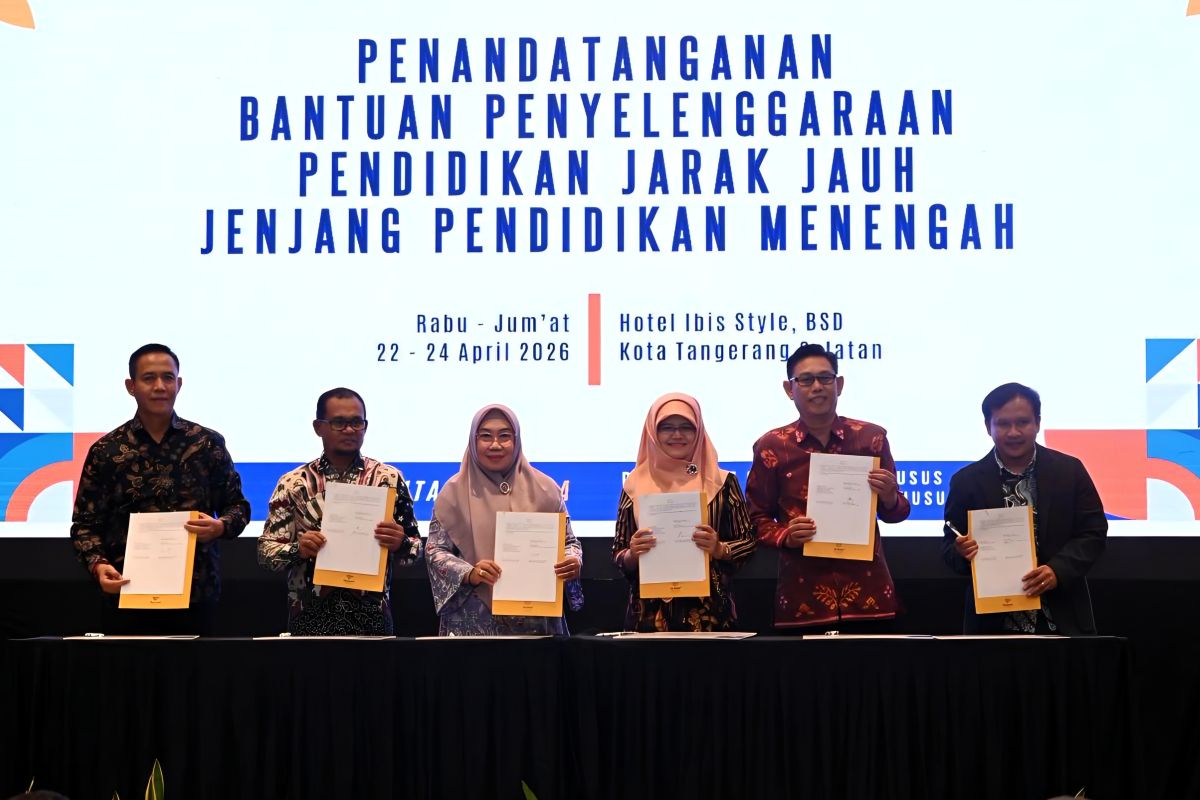
Jakarta (ANTARA) - The Ministry of Primary and Secondary Education (Kemendikdasmen) is expanding the implementation of distance learning (PJJ) for secondary education in 34 provinces, targeting 3,500 out-of-school children (ATS) to return to school and receive quality, inclusive, and equitable education.
Minister of Primary and Secondary Education Abdul Mu’ti stated that the programme is part of Kemendikdasmen’s commitment to ensure every Indonesian child receives quality education services, unhindered by geographical, economic, or other social factors.
“We must emphasise that education is no longer viewed solely as formal activities in classrooms, but as a learning process that can reach all layers of society. With this paradigm, we aim to reach those who are unreachable, making PJJ a real solution to the challenge of equitable access to education,” he said in a written statement in Jakarta on Saturday.
On that occasion, he also highlighted the importance of utilising digital technology in implementing this programme.
Kemendikdasmen continues to promote technology-based learning, including plans to build learning studios that allow the best teachers to teach live to students in various regions.
“The Rumah Pendidikan super app has been developed as part of learning digitalisation, accessible to anyone. Of course, PJJ implementation must also focus on character building and strengthening competencies. Thus, the role of teachers is very important, as well as maintaining a balance between knowledge, skills, and character aspects,” he said.
For the initial stage, he mentioned that 20 schools have been designated as partners and pioneers in implementing the PJJ programme.
“We hope these schools can serve as good practice models in organising distance education in Indonesia and also as a real solution in realising equitable, inclusive, and quality education services for all the nation’s children,” he stated.
This, he said, is particularly for access to those who require special education services, such as Indonesian children facing difficulties in the learning process due to geographical, social, economic, or other factors.
Based on data from the Centre for Data and Information Technology (Pusdatin) of Kemendikdasmen, the current number of ATS at the secondary education level is around 1.13 million out of a total of four million ATS for various reasons.
He said they need special education services, one of which is through PJJ.
“The priority for PJJ implementation is for disadvantaged, frontier, and outermost areas (3T), areas with high ATS, disaster-prone areas, and Overseas Indonesian Schools (SILN) with high numbers of children of Indonesian migrant workers. More broadly, PJJ is organised to reach ATS aged 16 to 18 years, with the main requirement being Indonesian children with ATS status,” said Tatang.