
Ministry of Primary and Secondary Education and BPS join forces to deliver more accurate education data
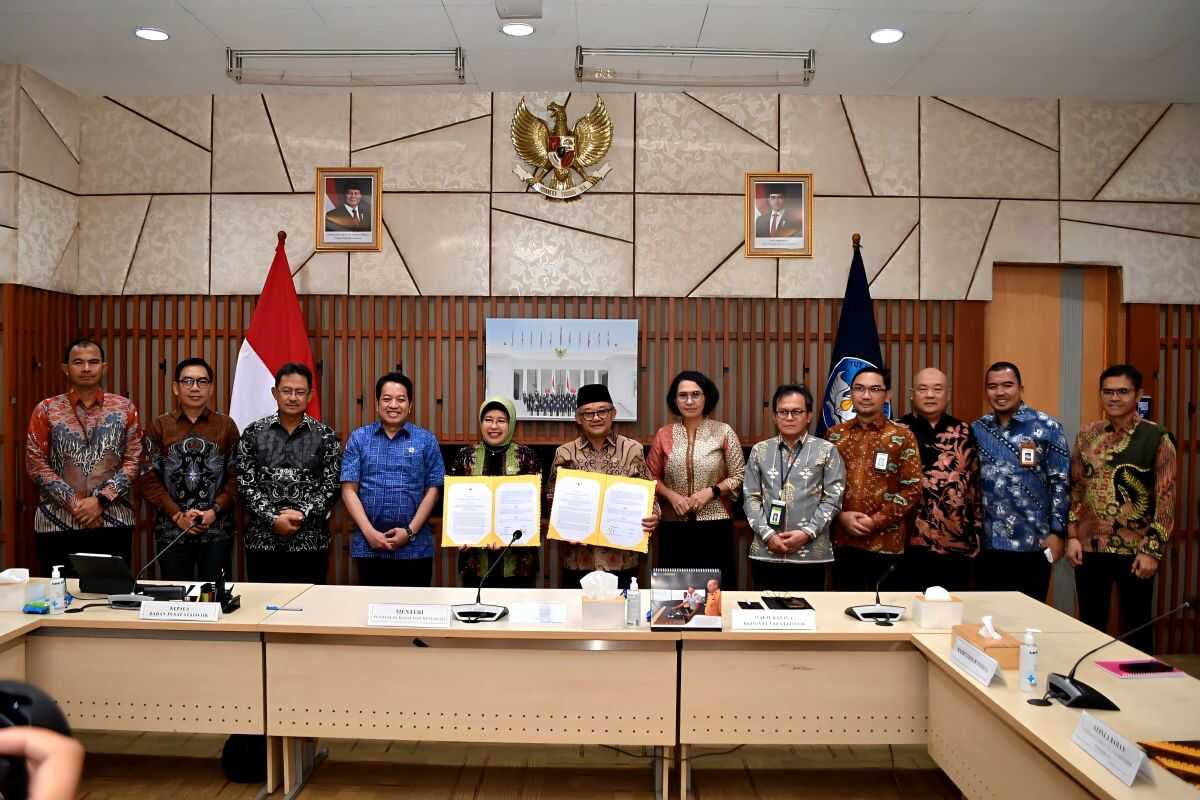
Jakarta — The Ministry of Primary and Secondary Education (Kemendikdasmen) has signed a memorandum of understanding (MoU) with the Central Statistics Agency (BPS) to strengthen the accuracy and updating of national education data.
Primary and Secondary Education Minister Abdul Mu’ti stressed that data forms the principal foundation in formulating targeted education policy, and therefore collaboration with BPS constitutes a strategic step to ensure the quality and validity of education data continues to improve.
“We are committed to working more intensively in the future to update education data. This forms part of our efforts to conduct a kind of periodic education census so that policies adopted are truly based on accurate data,” said Minister Abdul Mu’ti in Jakarta on Friday.
Through the Centre for Data and Information Technology (Pusdatin), which manages Primary Education Data (Dapodik), the ministry has been collecting and processing educational unit data throughout Indonesia. “Data uploads through Dapodik enable educational units to update regularly. This is important given the dynamic nature of school conditions, such as teachers reaching retirement age, staff transfers, and other data changes. Therefore, data integration and synchronisation with BPS is expected to minimise such discrepancies,” the minister explained.
He stated the collaboration represents a concrete step in strengthening the unified national education data system, whilst ensuring every policy — whether concerning teacher demand planning, budgeting, or education intervention programmes — is based on valid, current, and accountable data.
BPS head Amalia Adininggar Widyasanti expressed appreciation and full support for the memorandum of understanding between BPS and Kemendikdasmen. As a follow-up measure, BPS and Kemendikdasmen are prepared to conduct a comprehensive Dapodik evaluation through complete data collection of approximately 457,000 educational units ranging from early childhood education to senior secondary schools throughout Indonesia.
“By conducting a comprehensive evaluation of primary education data, we can simultaneously update the database that has served as the reference for various analyses and policy formulation,” she said. With BPS’s network across Indonesia, the data collection implementation is believed capable of reaching all educational units comprehensively.