
Ministry of Population: Community Planning Concept Aims to Build Quality Families
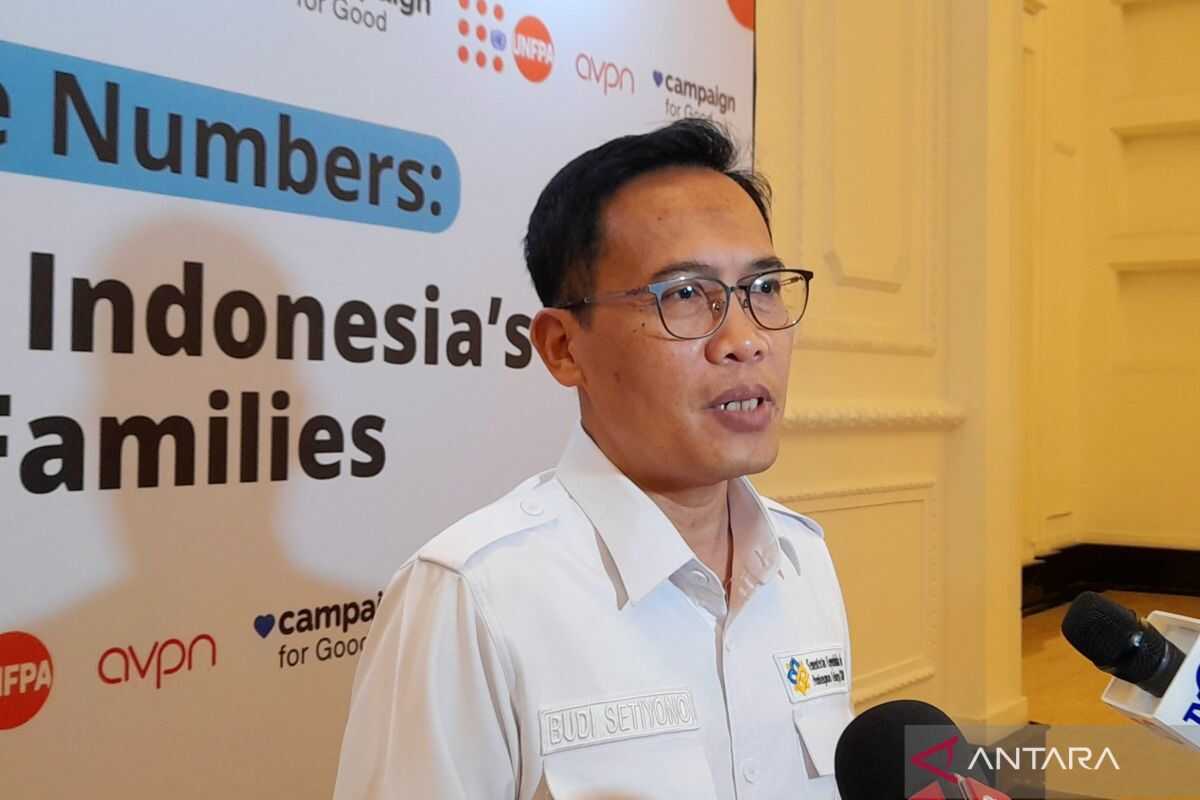
Jakarta (ANTARA) - The Ministry of Population and Family Development (Kemendukbangga)/BKKBN has introduced a new community planning paradigm to replace family planning in order to build quality Indonesian families.
Kemendukbangga/BKKBN Secretary Budi Setiyono explained that the concept of quality community planning is not solely about the number of births or the total fertility rate (TFR), but also about harnessing the outcomes of human development.
“In demographic balance, we must calculate precisely between labour supply and demand. We must not allow too many births resulting in a labour surplus, or conversely, a labour shortage that hampers industrial and economic growth. This is what is known as community planning,” he said in Jakarta on Monday.
He outlined six aspects of community planning: community economic resilience, access to healthcare and education services, family-friendly housing and infrastructure, and youth development and employment opportunities.
Additionally, gender equality and social support systems, as well as enhanced community-based reproductive health awareness, are key components.
“They are expected to have the capacity to understand demographic issues comprehensively. We must maintain balance so that we do not end up like China in the 1970s, which experienced a population explosion, nor like Japan today, which faces a labour shortage due to declining birth rates,” he said.
To address the phenomenon of younger generations increasingly reluctant to marry, Budi stressed the importance of social security, economic guarantees, and old-age provisions that support Indonesian families to develop and grow healthily.
“In principle, one of the main factors that makes people hesitant to have children is certainty about the future, both in terms of employment and old-age security. Therefore, the role of insurance — both government-provided social insurance and private insurance — must complement and strengthen each other,” he explained.
In the context of health insurance, he cited the example that the scheme provided by BPJS Kesehatan must operate optimally, whilst private insurance can supplement services not yet covered.
“The same applies to employment and pension guarantees. When government schemes are unable to cover all needs, private insurance plays a role in filling those gaps. To ensure government programmes are well-targeted, BKKBN continues to work across sectors, designing policies collaboratively, and involving the private sector to provide input for refining these policies,” said Budi Setiyono.