
Ministry of Population and Family Development: Return migration concentrated in major cities hinders demographic dividend
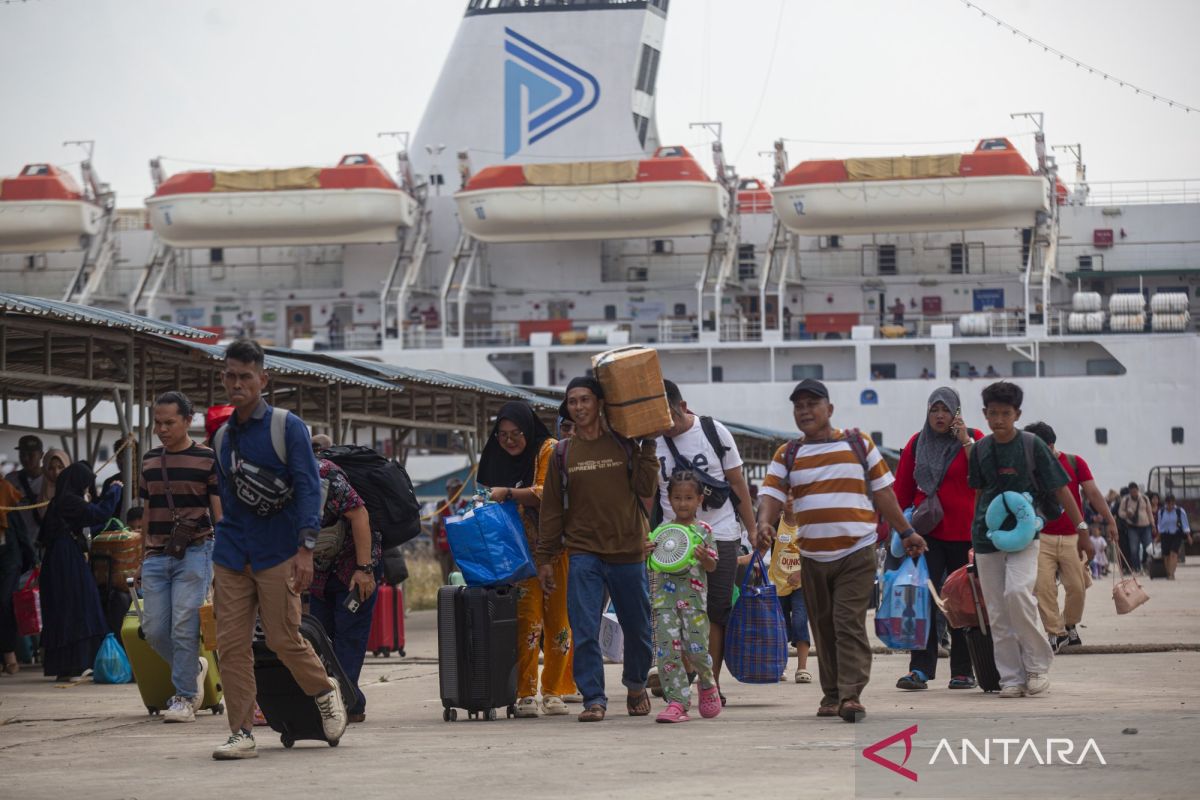
Major cities are a magnet for rural residents seeking employment and economic advancement. However, on the other hand, villages are losing their young generation, who should serve as the backbone of development and sustainability in their regions.
Jakarta (ANTARA) - The Ministry of Population and Family Development (Kemendukbangga)/BKKBN states that the phenomenon of return migration, which has so far been concentrated only in major cities, has the potential to hinder the demographic dividend.
Deputy for Population Control at Kemendukbangga/BKKBN, Bonivasius Prasetya Ichtiarto, said that the return flow, which is larger than the homecoming flow, is not merely a transportation phenomenon but also a reflection of existing structural inequalities.
“Major cities are an attraction for rural residents seeking jobs and economic progress. But on the other hand, villages are losing their young generation, who should be the backbone of development and sustainability in their areas. The impact is not only felt in economic aspects and social inequalities but also in ecological balance and environmental sustainability in rural areas,” he said when confirmed in Jakarta on Monday.
Referring to the Population Development Roadmap (PJPK) initiated by Kemendukbangga/BKKBN, indicators of the economy and employment show how complex this challenge is. The Open Unemployment Rate (TPT) does show a downward trend from 7.73 percent in 2020 to around 4.85 percent in 2025 (BPS), but the distribution is uneven.
The TPT in urban areas tends to be higher at 5.6 percent compared to rural areas at 3.6 percent. From Indonesia’s total workforce of 154 million people with a Labour Force Participation Rate (TPAK) recorded at 70.59 percent in 2025, around 59.12 percent work in the informal sector. Meanwhile, opportunities in the formal sector are greater in cities than in villages, thus this condition encourages significant migration to cities.
Bonivasius also highlighted the Gross Regional Domestic Product (PDRB) per capita, which shows inequality: Jakarta and East Kalimantan record PDRB per capita above Rp300 million, while many other provinces are still below Rp60 million.
“To turn the return flow into a development momentum, local governments through the Population Development Roadmap (PJPK) can prepare action plans directed at strengthening local economies, improving workforce quality, and managing migration sustainably. Villages must be positioned not as source areas for labour, but as centres of economic growth,” he stated.