
Ministry of Law's Services Now Available Through the Mobile App "PASTI"
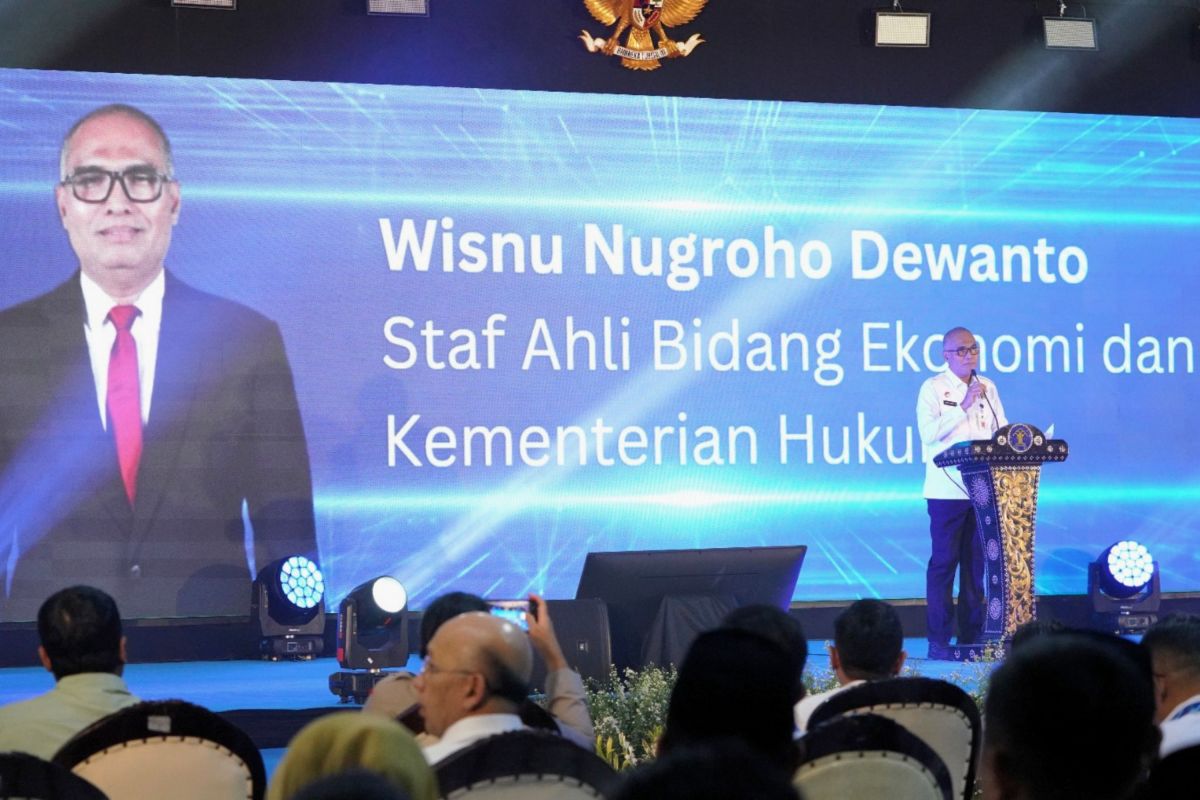
Jakarta (ANTARA) - The Ministry of Law has introduced a mobile phone application containing all public services of the Ministry of Law, named SuperApp Kemenkum “PASTI”, which can be downloaded on Android and iOS devices in Banten on Wednesday (8/4).
Special Staff to the Minister of Law for Economic and Social Affairs, Wisnu Nugroho Dewanto, stated that the presence of the PASTI application is an initiative by the Ministry of Law to deliver modern, integrated, and easily accessible legal services.
“This is not just an application, but a symbol of change in the way we work and serve,” said Wisnu, as quoted from a statement confirmed in Jakarta on Thursday.
He explained that Indonesian government bureaucracy is moving towards being faster, more open, and simpler. Therefore, digital transformation through the PASTI application will facilitate the public in obtaining legal services.
Wisnu emphasised that the Ministry of Law wants to ensure that the public can access legal services anytime and anywhere, without spatial or temporal limitations.
The Ministry of Law’s efforts to provide increasingly easy and close services to the public are also evident through the Pos Bantuan Hukum (Posbankum) programme.
Wisnu described Posbankum as a place to ask questions, complain, and find solutions to problems faced in a simple, quick, and affordable manner.
By April 2026, Posbankum has been present in all villages/sub-districts throughout Indonesia, or 100 percent coverage.
He said that Posbankum not only functions as a consultation centre but also as a space for resolving social conflicts and a means of legal education for the public.
“This is where the principle of people-centred justice is realised, that law is present for humans, not the other way around,” he stated.
In addition, Wisnu explained that one of the challenges in public services and legal justice is drug abuse, especially among the younger generation.
Therefore, he continued, the function of Posbankum has developed through collaboration with facilitators of Prevention and Eradication of Drug Abuse and Illicit Trafficking (P4GN).
Through this collaboration, Wisnu added, P4GN does not rely solely on law enforcement but also prioritises education, prevention, and active community participation.
He emphasised that the Ministry of Law wants to build collective awareness, making villages and sub-districts the first line of defence in protecting the community, especially the younger generation, from the dangers of narcotics.
“It requires the involvement of all parties, collective work, and strong commitment to safeguard the nation’s future,” said Wisnu.
Therefore, Wisnu conveyed that the presence of the PASTI application, Posbankum, and P4GN facilitators form a unified whole that demonstrates the state’s direct presence for the public, both through technology and direct presence in providing social roles within the community.
Thus, his side is no longer talking merely about procedures, but about impact, namely how the state is present when the public faces problems and how the law no longer feels distant but becomes part of the solution in everyday life.