
Ministry of Law: Transformation of Civil Legal Services as a Pillar Driving the Economy
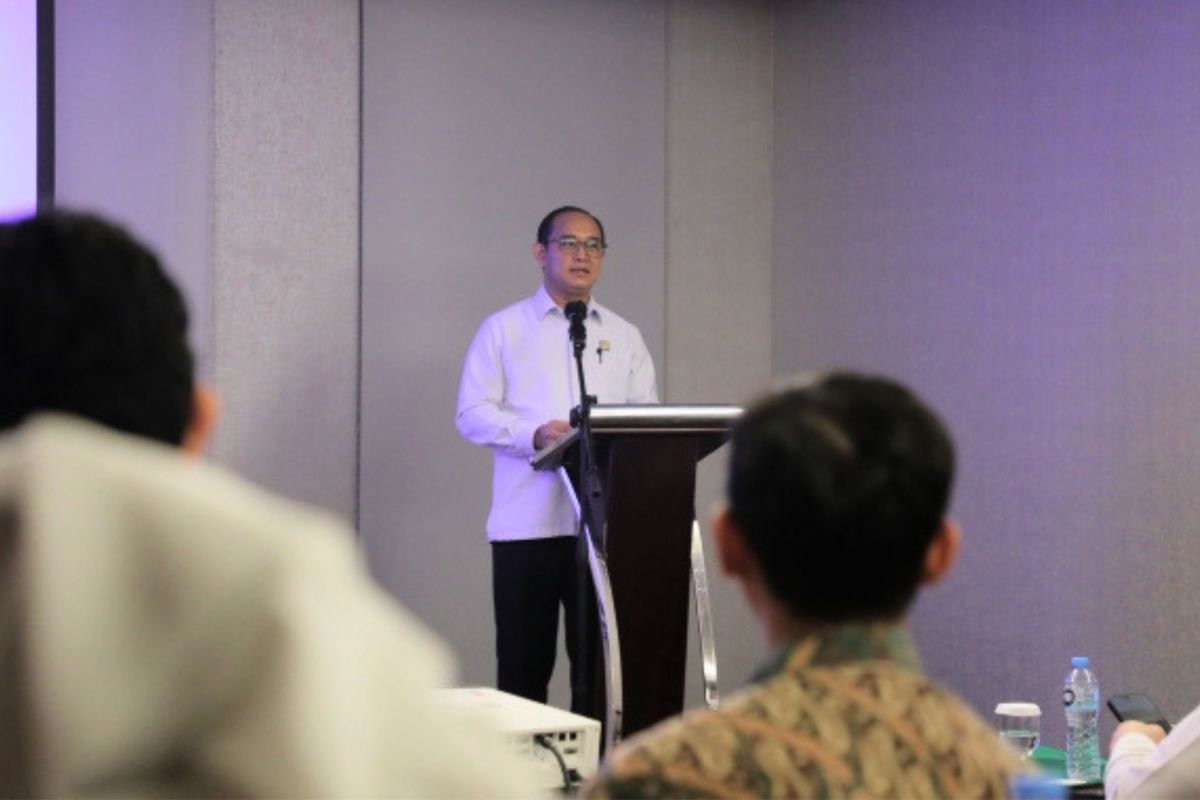
Jakarta (ANTARA) - The Director General of General Legal Administration (AHU) of the Ministry of Law, Widodo, has emphasised the importance of transforming civil legal administration services as a main pillar of legal certainty and a driver of the national economy.
At the opening of the Civil Services Coordination Activity in Jakarta on Wednesday (22/4), he highlighted the strategic role of fiduciary guarantees as the backbone of movable asset-based financing in Indonesia.
“This mechanism allows business actors to retain control of assets for operations, while creditors are protected through an integrated registration system,” Widodo stated, as quoted from a confirmed statement in Jakarta on Tuesday.
He noted that the high volume of transactions demands continuous innovation from the government. The Directorate General of AHU is strengthening the system through API-based technology integration to provide faster, safer, and more responsive services to public needs.
In addition to digitalising services, Widodo also paid special attention to strengthening the notary profession. As public officials who create authentic deeds, notaries are regarded as the foundation of societal legal relations.
He emphasised that the Central Notary Supervisory Council (MPPN) and the Central Notary Honour Council (MKNP) play a crucial role in maintaining professional integrity through transparent and effective oversight.
“We need to ensure that oversight mechanisms and enforcement of the code of ethics operate effectively, transparently, and are supported by adequate administrative systems to provide protection to both the public and the profession itself,” he asserted.
Adjustments to regulations are deemed urgent to respond to field dynamics, technological developments, and changes in government institutional structures.
The Director General of AHU hopes that revisions will not merely become formal documents but real solutions to on-the-ground challenges.
“I hope that all discussions do not stop at the conceptual level but are able to produce concrete, measurable policy recommendations that can be immediately followed up to meet public needs,” said Hermansyah.