
Ministry of Law targets 80,000 single-person limited companies registered by 2026
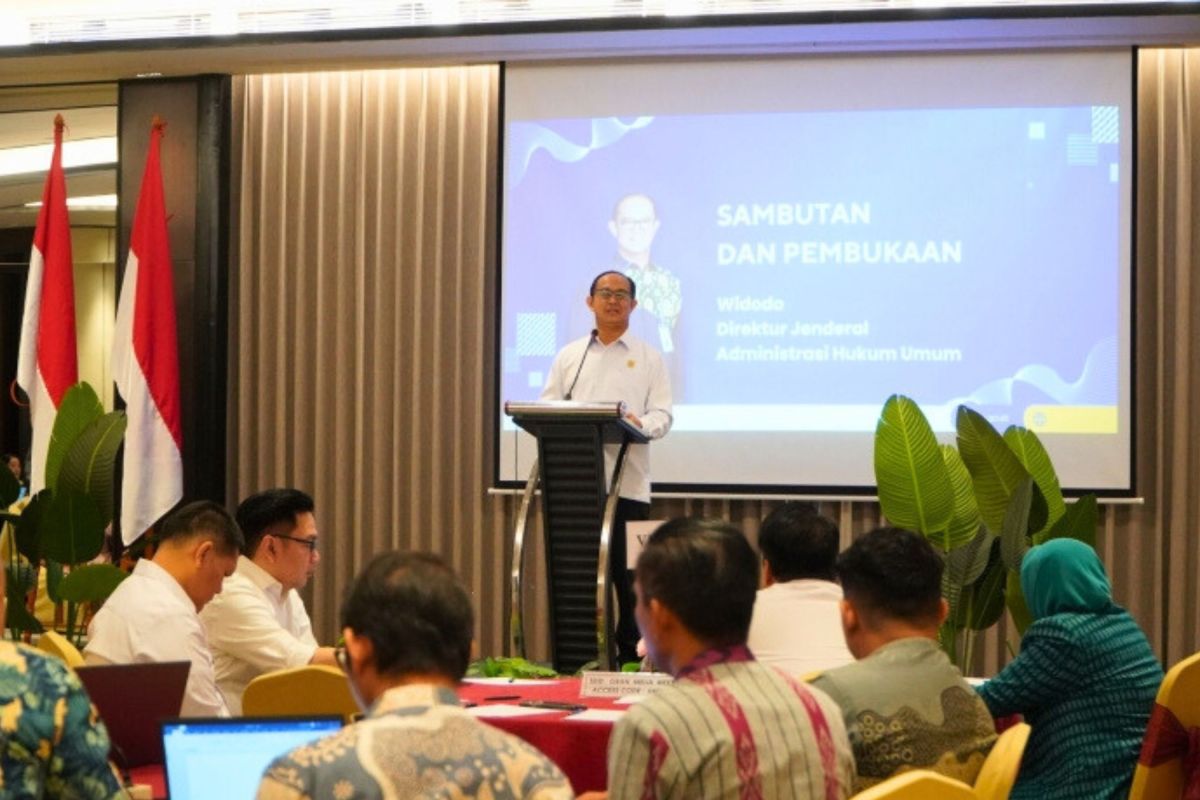
Jakarta — Indonesia’s Ministry of Law (Kemenkum) has set a target of 80,000 single-person limited companies (Perseroan Perorangan/PT Perorangan) registered with the Directorate General of General Legal Administration (AHU) by 2026.
During an interactive discussion in Jakarta on Wednesday (4 March), Director General of AHU Widodo stated that this target forms part of a strategy to accelerate national economic growth, requiring cross-ministerial and inter-agency collaboration.
“We have a grand vision to accelerate economic growth in 2026 through the formation of single-person limited companies. Our target is 80,000 registrations,” Widodo said, as quoted from an official statement confirmed in Jakarta on Wednesday.
A single-person limited company (PT Perorangan) is a legal entity established by a single Indonesian citizen (WNI) for micro and small enterprise (UMK) purposes, requiring no notarial deed but only a declaration of establishment, and offering limited liability (separate from personal assets).
Registration costs for a PT Perorangan are merely Rp50,000 through the official website ahu.go.id.
Widodo cited the successful establishment of the Koperasi Desa Merah Putih cooperative, which was completed in 2.5 months through collective effort and received recognition from President Prabowo Subianto. He argued that similar achievements could be realised through solid teamwork across all regions, demonstrating that business ecosystem strengthening is being conducted even in remote areas.
During the forum titled Usaha Ecosystem and Technical Guidance for Single-Person Company Services on the AHU Online application, Widodo emphasised the importance of data integration with the Directorate General of Taxation at the Ministry of Finance.
“Going forward, business reporting will be interconnected (mirroring) to ensure transparency and accountability,” he stated.
Additionally, he highlighted the need for synergy with the Ministry of Social Affairs regarding concerns among social assistance recipients hesitant to establish single-person companies for fear of losing their welfare status. He argued that micro entrepreneurs need to be encouraged to move up the value chain without losing existing support until they become truly self-sufficient.
Widodo also announced plans to launch a Super App for Ministry of Law services in mid-April. Of the 160 services already digitalised, single-person companies and apostille certification will serve as two primary exemplar services.
Furthermore, he encouraged the 33 regional offices to accelerate their achievement of the 2026 target and strengthen national collaboration.
“We must continue to work synergistically, improve performance, and strengthen unity. Digital transformation is underway and the results are becoming visible,” Widodo concluded.