
Ministry of Law says intellectual property should form part of primary and secondary school curricula
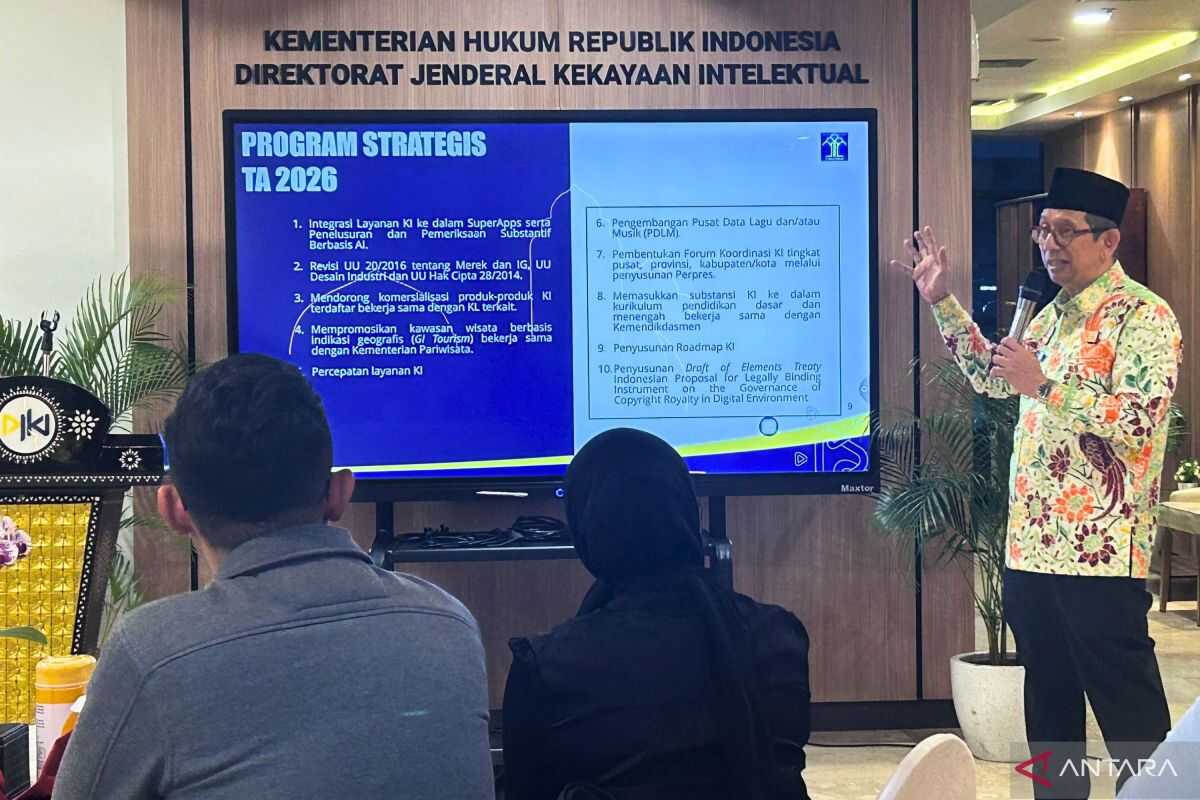
Even then, they feel that registering intellectual property is a burden, whereas it is an investment, said Hermansyah at a media gathering in Jakarta on Thursday. He noted that many people either do not understand or have only a limited understanding of intellectual property at present. Therefore, the Ministry of Law, in cooperation with the Ministry of Basic Education and Secondary Education (Kemendikdasmen), will include a curriculum on intellectual property in schools going forward. A lack of understanding of intellectual property, he said, has led some people to consider playing Western songs instead of Indonesian songs to avoid royalties. However, he added, if the World Intellectual Property Organization (WIPO) discovers international song broadcasts in Indonesia without royalties being paid, that would become a problem. Thus, Hermansyah stressed that no country can be developed if it ignores intellectual property. If a country wishes to be developed, it must care about intellectual property, which demonstrates that its citizens care about IP and that there is added value related to creative works, he stated. He also said IP protection does not only provide legal certainty for rights holders, but also opens up commercialisation opportunities and enhances the national economy’s competitiveness on a global scale. To that end, the DJKI invites the public, businesses, and creators to become more active in protecting their works and innovations through the intellectual property system. Looking ahead, the DJKI is preparing a number of strategic programmes for 2026, including the integration of intellectual property services into AI-based SuperApps, revisions of several IP-related regulations, and the development of the Song and/or Music Data Centre (PDLM).