
Ministry of Law Records Rising Trend in Foreign Nationals' Applications for Indonesian Citizenship; 700 Foreigners Still in Processing
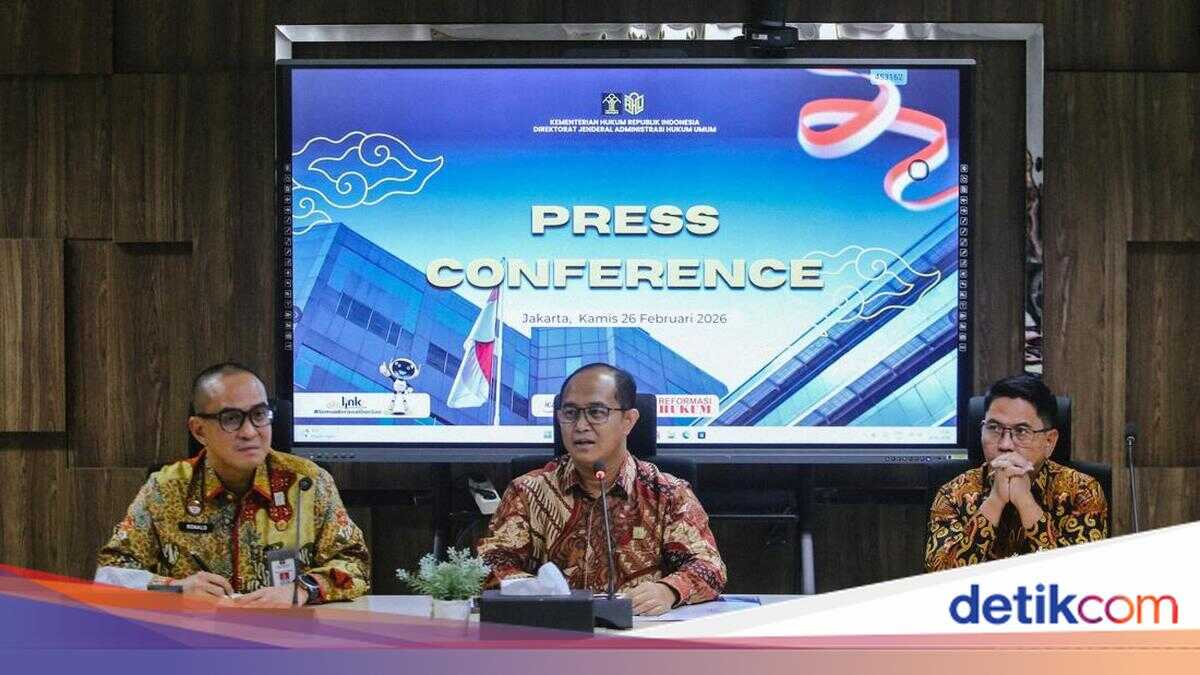
The Directorate General of General Legal Administration at the Ministry of Law (AHU Directorate General) has revealed a rising trend in applications for Indonesian citizenship (WNI) filed by foreign nationals (WNA) year on year. This upward trend has occurred over the past six years.
“Based on data from the AHU Directorate General, particularly the State Administration Directorate which handles citizenship matters, recently—in 2024, 2025, and several years past—requests and interest in becoming an Indonesian citizen have been quite high,” said AHU Directorate General Widodo during a press conference at the Ministry of Law office in South Jakarta on Thursday (26 February 2026).
Widodo stated that in 2020, there were 37 applications from foreign nationals to change their citizenship to Indonesian. This figure steadily increased, reaching its peak in 2024 with 265 applications received by the AHU Directorate General.
“In 2020 there were 37 applications, 29 were approved. Then in 2021 there were 63 applications, 61 were approved to become Indonesian citizens. In 2022, 63 applications with 63 approved. In 2023, 69 applications with 66 approved, so three were rejected,” Widodo explained.
He noted that in 2024 there were 265 applications from foreign nationals seeking to change their status to Indonesian citizens. However, only 20 applications were approved. In total, Widodo stated, there are currently still 700 foreign nationals whose citizenship application files are being processed.
“But what is interesting from 2024 onwards is that out of 265 new applications, only 20 were approved. And in 2025, out of 147 applications, only 2 have been fully processed and approved to become Indonesian citizens,” he explained.
“This means there are many—hundreds—totalling more than 700 currently in processing, completing their documents to become Indonesian citizens. This is how stringent and selective we are; it is not easy to become an Indonesian citizen,” he added.
According to Widodo, married couples from mixed marriages between Indonesian and foreign nationals also increasingly desire their children to become Indonesian citizens. Data from the AHU Directorate General shows 714 applications from children of mixed marriages seeking Indonesian citizenship.
As background, under Law Number 12 of 2006, children from mixed marriages hold limited dual citizenship until age 18. Those with dual citizenship must choose one citizenship by the age of 21 at the latest.
“There are also several reports related to applications—mixed marriages. So there are several aspirations from the community whose children are from mixed marriages, with approximately 714 people filing applications from mixed marriages where one parent is an Indonesian citizen and the other is a foreign national,” he said.
Widodo emphasised that the high number of foreign nationals’ applications to change their status to Indonesian citizens indicates many foreigners increasingly desire to become Indonesian. The rise in citizenship applications also demonstrates foreign nationals’ affection for Indonesia.
“So there are foreign nationals who then wish to become Indonesian citizens, even those whose children were born from mixed marriages are now increasingly seeking to become Indonesian citizens. This shows that their enthusiasm and affection for Indonesia is something we take great pride in and greatly desire,” he said.
The following is data on the rising trend of foreign nationals’ applications to become Indonesian citizens:
2020: 37 Applications, 29 Approved
2021: 63 Applications, 61 Approved
2022: 63 Applications, 63 Approved
2023: 69 Applications, 66 Approved
2024: 265 Applications, 20 Approved
2025: 147 Applications, 2 Approved