
Ministry of Law and Human Rights: Proposed Intellectual Property Tariff Adjustments Must Be Supported by Strong Data
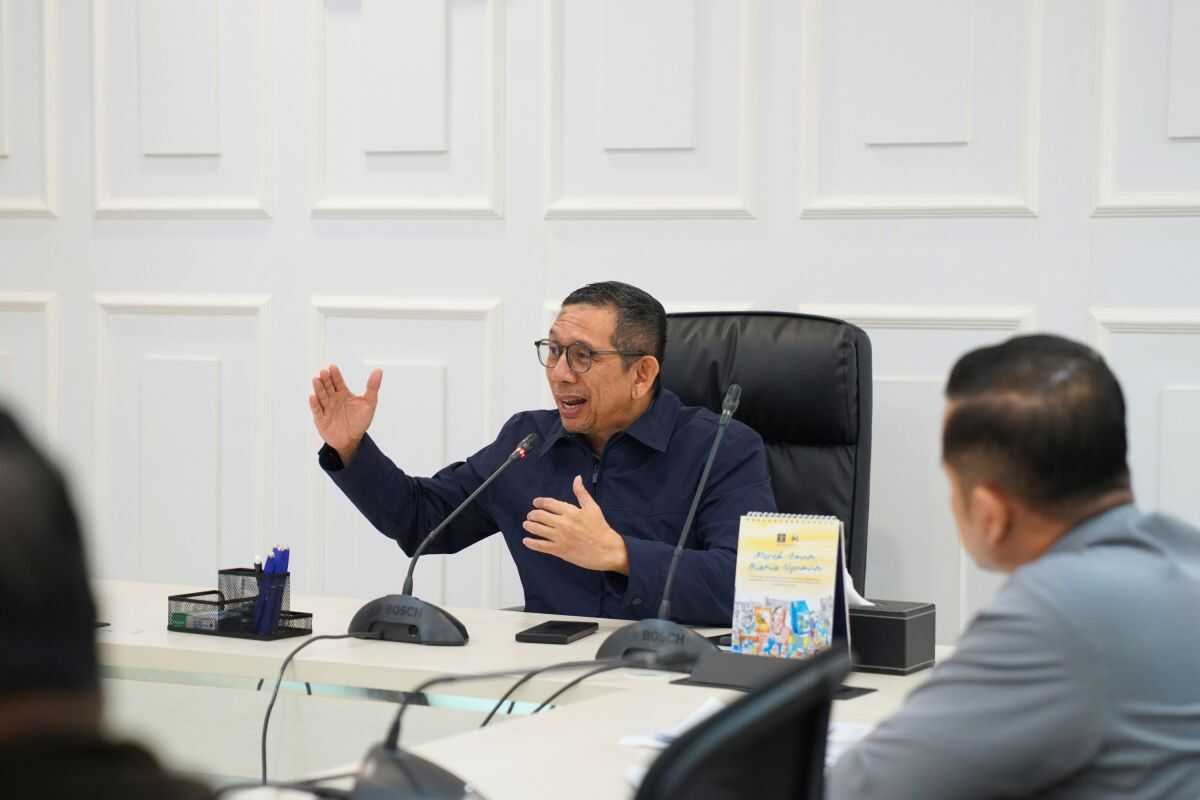
Jakarta (ANTARA) - Director General of Intellectual Property at the Ministry of Law and Human Rights (Kemenkumham), Hermansyah Siregar, has affirmed that proposals for adjusting intellectual property (IP) tariffs must be supported by strong data and comprehensive arguments to avoid creating a perception of burdening the public.
He stated that non-tax state revenue (PNBP) is the driving force of the organization in maintaining the quality of services and protection of intellectual property.
“Therefore, each tariff proposal must be accompanied by clear rationalization, both from the perspective of business processes, international benchmarking, and real operational needs,” said Hermansyah in an internal meeting in Jakarta, Tuesday (February 24), as quoted from a statement confirmed in Jakarta, Thursday.
He conveyed that the protection of intellectual property requires proportional financial support to ensure that services remain professional, transparent, and accountable.
To that end, he emphasized that strengthening tariffs is not merely about increasing state revenue, but rather part of an effort to ensure that the patent, trademark, copyright, industrial design, and other intellectual property service protection systems function optimally and provide legal certainty for the public.
The internal meeting was held to strengthen the arguments for the proposed tariff increase and the addition of types of IP PNBP.
The agenda was carried out as a follow-up to the results of joint discussions with the Ministry of Finance, the Ministry of State Secretariat, and the Coordinating Ministry, which requested strengthening of substantive data, business processes, and tariff rationalization before the proposal is discussed again.
In the meeting, the need for improving the Budget Plan (RAB), preparing comparisons (benchmarking) with other countries, and strengthening arguments based on inflation and service costs since the last tariff was set in 2014 were discussed.
In addition, each technical directorate was asked to prepare detailed explanations regarding service stages, tariff formation, and layering mechanisms for Micro and Small Enterprises (UMEs).
In the technical discussion, the Directorate of Patents, DTLST, and Trade Secrets of the Directorate General of Intellectual Property (DJKI) of the Ministry of Law and Human Rights was asked to clarify the formation of tariffs for accelerating substantive examinations and comparisons of services with relevant comparison countries.
Meanwhile, the Directorate of Copyright and Industrial Design of DJKI Kemenkum discussed the mechanism of quotas for recording creations up to 100 songs in one transaction, including the implications of financial accountability within one fiscal year in order to comply with the State Revenue and Expenditure Budget (APBN) and mitigate potential audit findings.
The meeting also highlighted the importance of preparing detailed standard operating procedures (SOPs), including system simulations and tariff layering mechanisms for UMEs.
The strengthening of the narrative of support for UMEs remains a concern, but it must be accompanied by measurable and fiscally accountable calculations.
Through the meeting, DJKI Kemenkum reaffirmed its commitment to continuously improve the quality of intellectual property protection as a strategic instrument for national economic development.
The public is encouraged to utilize IP services officially and ensure that all works, innovations, and brands they own have obtained legal protection to avoid disputes and piracy.