
Ministry of Labour Outlines Domestic Worker Dispute Resolution Scheme in Proposed Bill
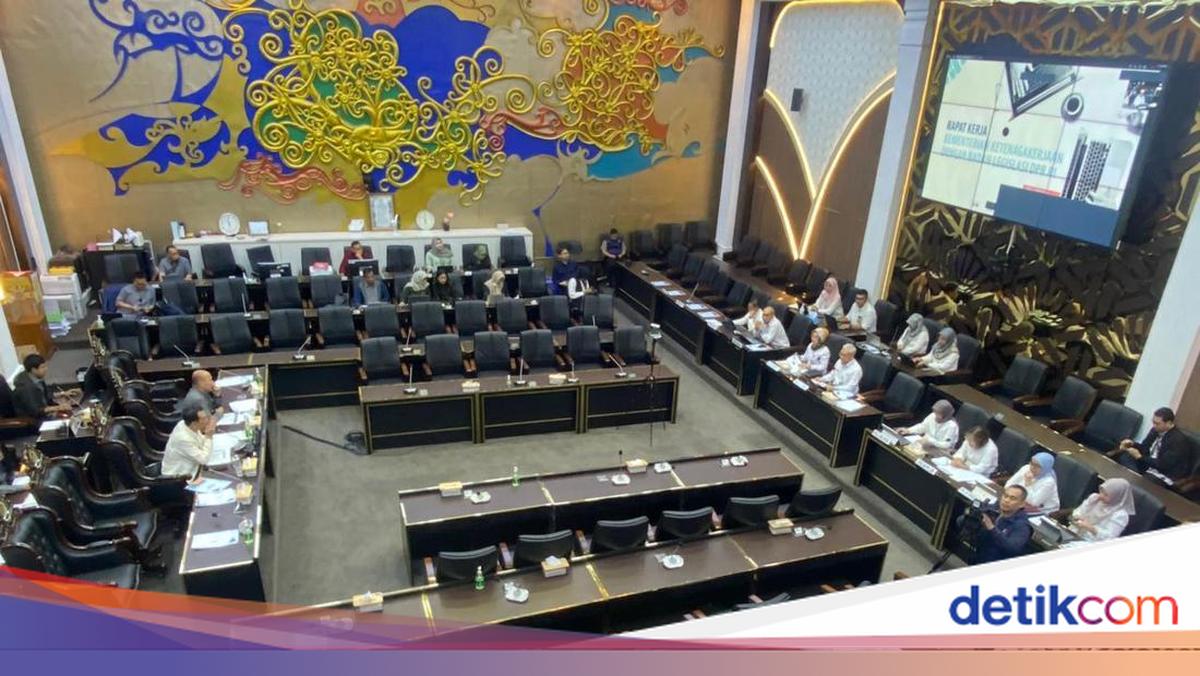
The Secretary-General of the Ministry of Labour, Cris Kuntadi, outlined the dispute resolution scheme between domestic workers and employers under the proposed Domestic Worker Protection Bill (RUU PPRT). He stated that dispute settlement would be prioritised through non-litigation channels outside the courts.
This was presented by Cris during a hearing of the DPR’s Legislative Body (Baleg) discussing the RUU PPRT at Parliament Complex, Senayan, Jakarta, on Wednesday (11 March 2026). Cris indicated two mechanisms for out-of-court settlement: bipartite negotiation between the two parties and resolution through mediation, conciliation, or arbitration.
“For out-of-court settlement through non-litigation, we have two options: settlement through bipartite negotiation between two parties and secondly, settlement through mediation, conciliation, or arbitration,” Cris said.
He explained that in industrial relations disputes, the first step required is bipartite negotiation between both parties for a maximum of 30 working days. If agreement is reached, the outcome will be documented in a joint agreement.
“However, if unsuccessful, the dispute must be registered with the agency responsible for labour matters. This includes the Ministry of Labour, or the labour-handling offices at provincial, regency, or municipal levels,” he explained.
“And if that fails, after 140 working days the matter can proceed to the Supreme Court or cassation. We have not detailed this because the leadership earlier hoped for resolution outside the courts,” he added.
Cris stated that dispute resolution under the RUU PPRT would first be attempted through consultation between both parties. However, if consensus is not reached, the parties are required to report to the neighbourhood association (RT) and village association (RW).
“Therefore, there must be mediation involving the neighbourhood head and village head. If resolved, then there is agreement; if not, the matter goes to the District Court. This is for disputes between employers and domestic workers,” he said.
Deputy Chairman of Baleg DPR Martin Manurung questioned whether this scheme was already operational. Cris stated that the scheme currently lacks implementing ministerial regulations.
“What is in the Ministerial Regulation?” asked Martin.
“Actually, we do not yet have regulations, Chairman. We are drawing from the bill draft,” Cris replied.
Further, Cris explained that the RUU PPRT also regulates dispute settlement between domestic worker placement agencies (P3RT) and employers, as well as between P3RT and domestic workers. Initial resolution, he said, would be conducted through consultation.
However, if agreement is not reached, the matter would proceed with a report to the government agency responsible for labour affairs for mediation.
“Then mediation involving the agency; if accepted then there is agreement; if not, the matter goes to the District Court. And this is what we should try to avoid if consensus is not reached when involving the ministry handling labour matters,” he explained.
Cris acknowledged that currently there is no regulation specifically addressing dispute resolution between domestic workers and P3RT, as this relationship does not fall within industrial relations. However, he assured that subordinate regulations would be promptly created once the bill was enacted.
“The solution is that once this bill becomes law, we will issue regulations derived from that law, likely in the form of a government regulation,” he said.
“This would regulate that the scope of mediators would also handle issues related to disputes between domestic workers and P3RT, between P3RT and employers, and employers and domestic workers,” he added.