
Ministry of Labour: Occupational Safety and Health Experts Help Companies Mitigate Workplace Safety Risks
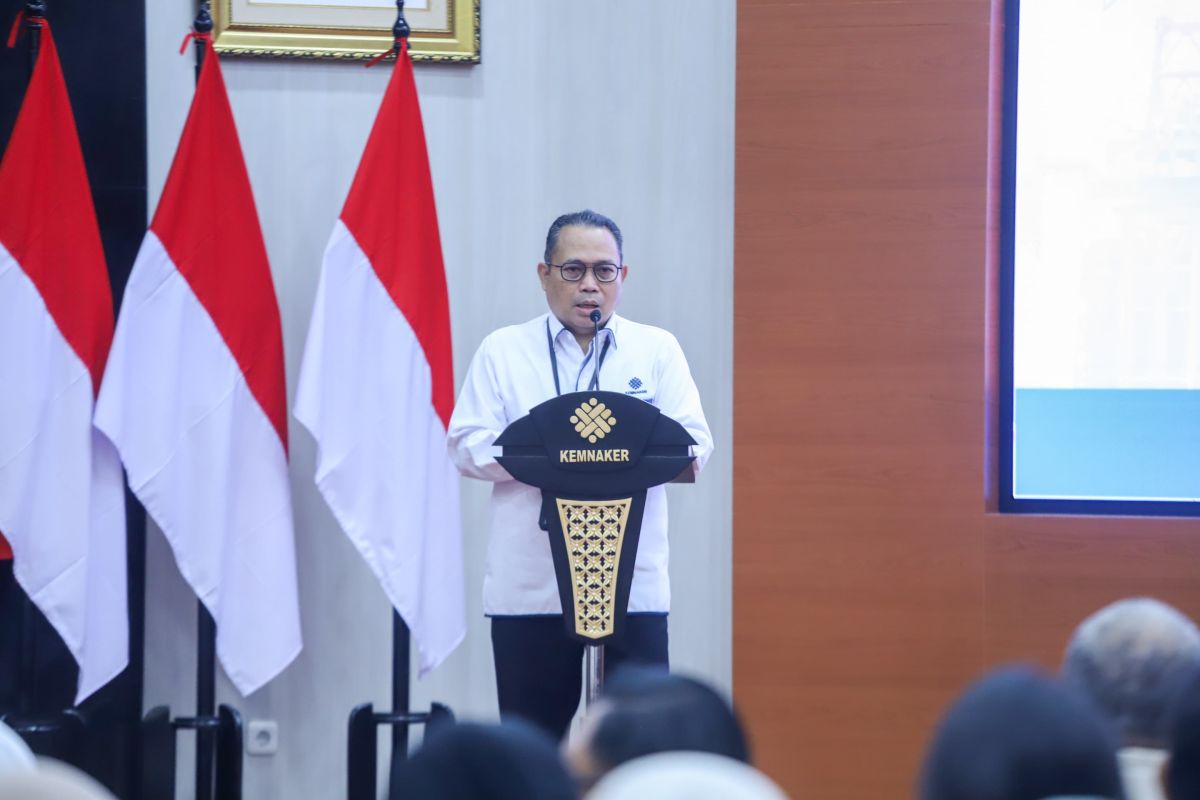
The Ministry of Labour (Kemnaker) has emphasised the importance of qualified Occupational Safety and Health (K3) experts in assisting companies to mitigate risks, identify potential hazards, control risks, and ensure workplace safety and health practices are implemented at work.
“Therefore, the preparation of competent K3 experts is part of efforts to prevent workplace accidents,” said Ismail Pakaya, Director General of Labour Guidance, Supervision and K3 at Kemnaker, in a statement in Jakarta on Monday.
Kemnaker has recorded that 1,565 participants successfully passed the theoretical evaluation for General K3 Expert candidates in Batch 1, held on 11–12 March 2026 across 58 locations.
Ismail stated that the theoretical evaluation is part of the General K3 Expert certification process after participants completed training from 25 February 2026.
“This theoretical evaluation is part of the General K3 Expert certification process. This activity serves as an opportunity to measure how well prospective K3 experts understand K3 principles, K3 regulations, risk analysis, application of occupational safety and health management systems in the workplace, and other K3 materials,” said Ismail.
A total of 2,010 participants registered for the General K3 Expert training and certification programme in Batch 1. Of that number, 1,779 participants took the theoretical evaluation after passing administrative selection, basic K3 examinations, and 12 days of training. Following assessment, 1,565 participants were declared to have passed the theoretical evaluation.
The implementation of the theoretical evaluation involved Occupational Safety and Health Services Companies (PJK3), K3 Centres, and regional Labour offices. Before the examination, participants received explanations regarding examination procedures, assessment mechanisms, and technical implementation.
According to Ismail, the evaluation material was designed to test participants’ understanding of various important K3 aspects that would be applied in the workplace.
“This theoretical evaluation was designed to test participants’ understanding of various important K3 aspects, ranging from hazard identification, risk control, workplace accident investigation, to understanding applicable K3 legislation,” he said.
Before taking the evaluation, participants received training covering K3 regulations, K3 management systems, hazard identification and risk assessment, occupational health, workplace accident investigation, and prevention measures.
The entire training process was provided free of charge. Ismail expressed hope that successful participants would become advocates for workplace safety culture in their respective organisations.
“With the implementation of this theoretical evaluation, it is hoped that prospective K3 experts will be able to demonstrate adequate competence and be ready to contribute to strengthening K3 safety culture in their respective workplaces,” Ismail said.