
Ministry of Industry: Textile and Footwear Industry Ready to Meet Eid Demand
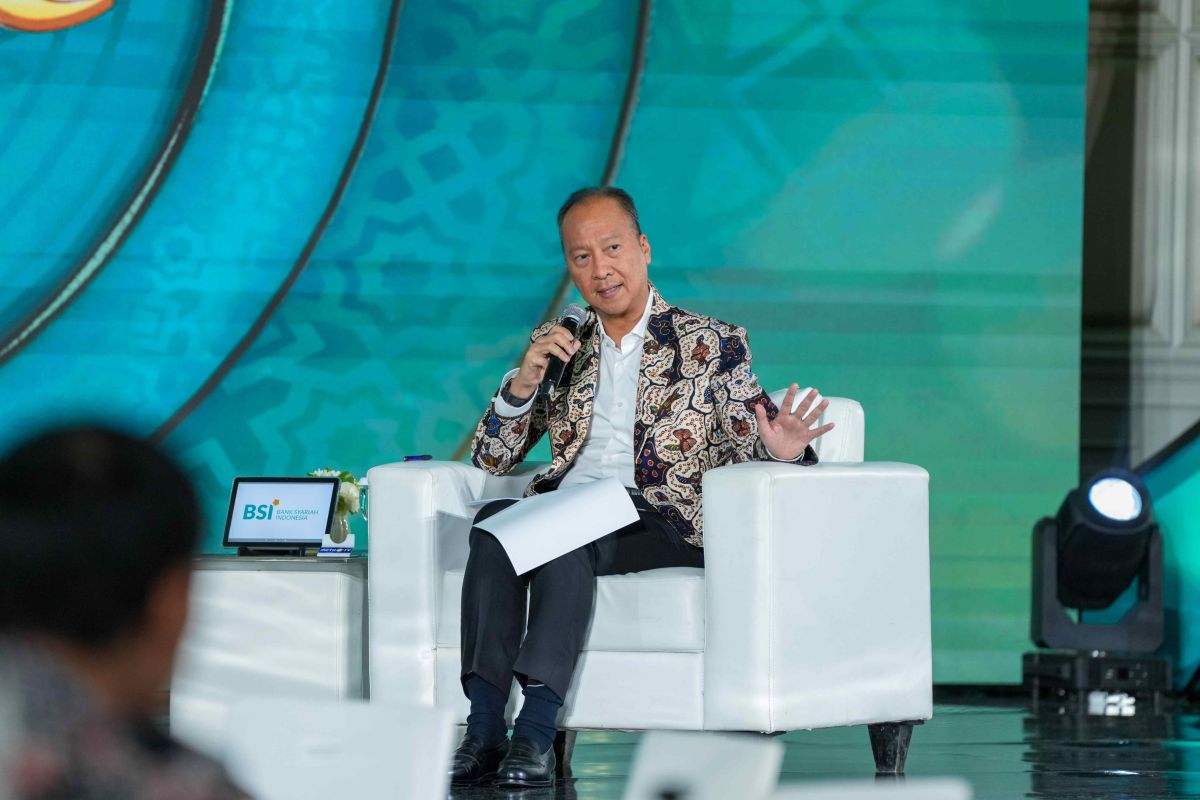
Jakarta — The Ministry of Industry (Kemenperin) has assured that the domestic textile and textile products (TPT) as well as footwear industries are prepared to meet the anticipated surge in consumer demand ahead of Eid al-Fitr 1447 AH.
Minister of Industry Agus Gumiwang Kartasasmita stated in Jakarta on Tuesday that the performance of the domestic TPT and footwear industries is currently stable with adequate production capacity to serve domestic market needs, which typically increase during Ramadan and Eid.
“Every year, the momentum of Ramadan and Eid al-Fitr is accompanied by increased consumption of textile and footwear products by the public. Based on our coordination with business actors and industry associations, the current national production capacity is in optimal condition and ready to meet these needs,” he said.
Agus noted that the TPT and footwear industries represent one of the priority manufacturing sectors characterised by labour-intensive operations and hold significant contribution to the national economy.
In 2025, the TPT industry recorded gross domestic product (GDP) growth of 3.55 per cent annually, with a contribution to national GDP reaching 0.97 per cent.
Rizky Aditya Wijaya, Director of Textile, Leather, and Footwear Industries at the Ministry, stated that the TPT sector continues to fulfil its socio-economic function as a labour-intensive sector with substantial employment absorption.
By August 2025, employment in the sector reached approximately 3.96 million workers, an increase compared to February 2025, which stood at 3.76 million workers.
According to him, this demonstrates that the TPT industry remains a key pillar of employment absorption in the manufacturing sector.
To ensure industry readiness to meet surging demand, he stated that the ministry has undertaken various strategic measures, ranging from monitoring production capacity, strengthening raw material supply, to coordinating distribution and logistics. Regular monitoring of capacity utilisation in the textile, ready-made apparel, and footwear industries is conducted.
Furthermore, coordination with raw material producers including fibres, yarn, fabric, and footwear materials has been strengthened to ensure supply continuity and maintain price stability in the market.
On another front, the government has intensified oversight of illegal secondhand clothing imports or thrifting practices, considered detrimental to the domestic industry, particularly small and medium-sized enterprises.
“We continue to strengthen supervision over illegal secondhand clothing circulation. This step is important to preserve the sustainability of the national textile industry and provide greater space for domestic products to develop in the domestic market,” said Rizky.
Based on reports from industry players represented in the Indonesian Textile Association (API) and the Indonesian Footwear Association (APRISINDO), production in several segments has experienced increases since early 2026.
These increases have particularly occurred in Muslim fashion, sarung cloth, children’s clothing, casual shoes, and sandals, which represent primary consumer needs ahead of Eid al-Fitr.
The Ramadan and Eid momentum also, he noted, has created positive impact on absorption of additional labour to meet the increase in production orders.
Going forward, the Ministry affirms its commitment to continue strengthening the competitiveness of the national industry through improved productivity, technological transformation, application of Industry 4.0, and strengthening of the domestic market.
The Ministry also encourages industry players to leverage digital platforms to expand marketing and strengthen branding of domestic products.