
Ministry of Industry targets Indonesia to become a global hub for furniture manufacturing
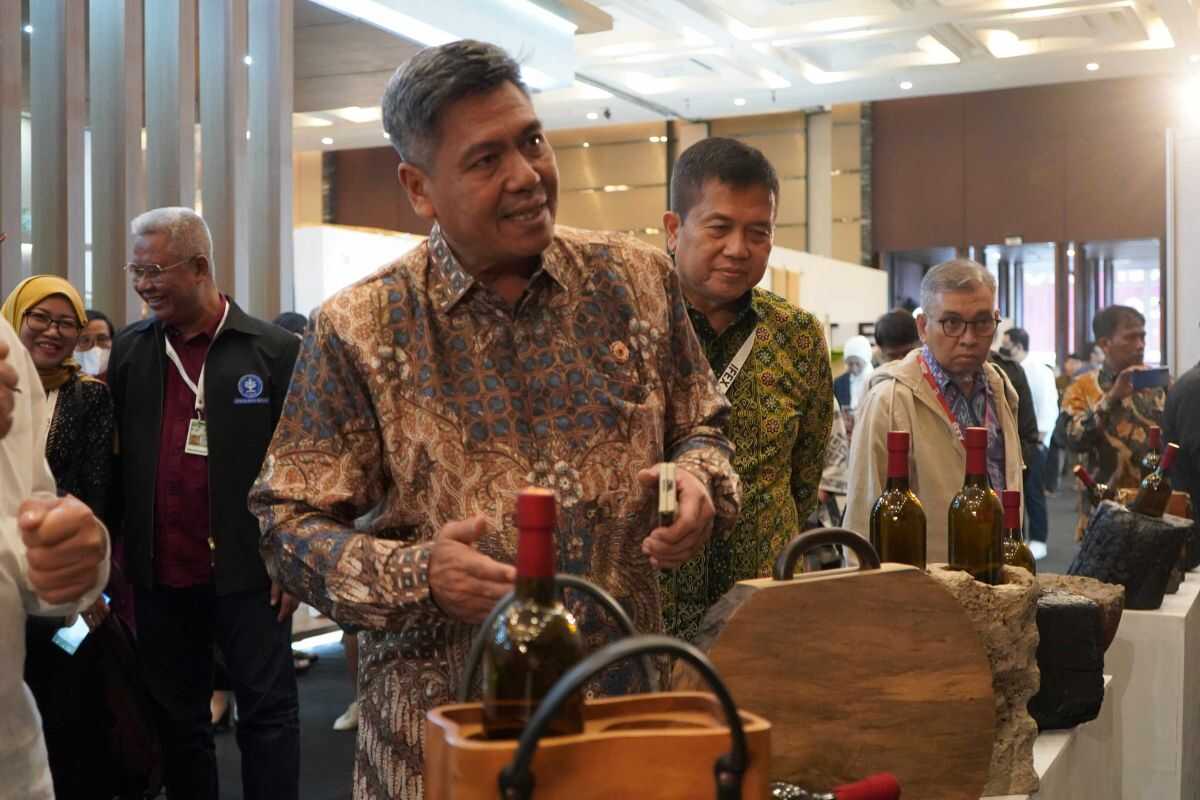
The Ministry of Industry (Kemenperin) aims to make Indonesia a global hub for furniture manufacturing through strengthening sustainable downstream wood processing and improving the competitiveness of the national industry. Minister of Industry Agus Gumiwang Kartasasmita, in a statement from Jakarta on Friday, said the furniture industry is a crucial model of wood downstream processing because it is labour-intensive, capable of creating added value, and providing a multiplier effect for domestic economic growth. ‘The sector also employs hundreds of thousands of workers and is directly connected to the global market, valued at more than USD 736.21 billion. Over the next five years, Indonesia is projected not only to increase production capacity but also to lead in design and sustainability,’ he said. He noted that the sector’s performance has even outpaced national economic growth. According to data from the Badan Pusat Statistik (BPS), the growth of the manufacturing industry in 2025 was 5.30 percent, higher than the national economic growth of 5.11 percent. This achievement marks a historic moment as manufacturing growth again outpaced economic growth after 14 years, the last time being in 2011. The positive performance is also reflected in the contribution of the processing industry to the national Gross Domestic Product (GDP) which reached 19.07 percent in 2025. Globally, Indonesia’s manufacturing position has strengthened with a Manufacturing Value Added (MVA) of USD 265.07 billion, ranking 13th in the world and first in the ASEAN region. One subsector contributing to this performance is the furniture industry. Besides adding value to the national economy, the sector is known as a labour-intensive industry capable of absorbing large numbers of workers and boosting economic activity across various regions. Acting Director General of Agro Industry at the Ministry of Industry Putu Juli Ardika added that the furniture industry is a strategic manufacturing sector that forms a pillar of natural-resource-based downstream processing. ‘We are committed to driving the transformation of the furniture industry not only as producers but also as a global manufacturing hub based on design and sustainability,’ Putu said while opening the Indonesia International Furniture Expo (IFEX) 2026 in Tangerang, Banten, on Thursday (5 March). However, the national furniture sector still faces challenges, including a 3 percent decline in exports in 2025 to USD 1.85 billion and a 6 percent rise in imports to USD 0.82 billion. In addition, challenges arise from geopolitical conditions affecting global logistics and international environmental regulations such as the European Union Deforestation Regulation (EUDR) which require certification readiness. Indonesia is viewed as having strong foundations through SVLK (Sistem Verifikasi Legalitas dan Kelestarian) to ensure national furniture products remain responsible and sustainable. To boost productivity, the Ministry runs the Wood Processing Machinery/Equipment Restructuring Programme. To date, the programme has facilitated 35 companies with total reimbursements of Rp26.1 billion. The programme has demonstrated increases in production efficiency of 10.70%, product quality by 36.28%, and productivity by up to 32.65%.