
Ministry of Industry Strengthens Water Treatment Collaboration for Industrial Zones
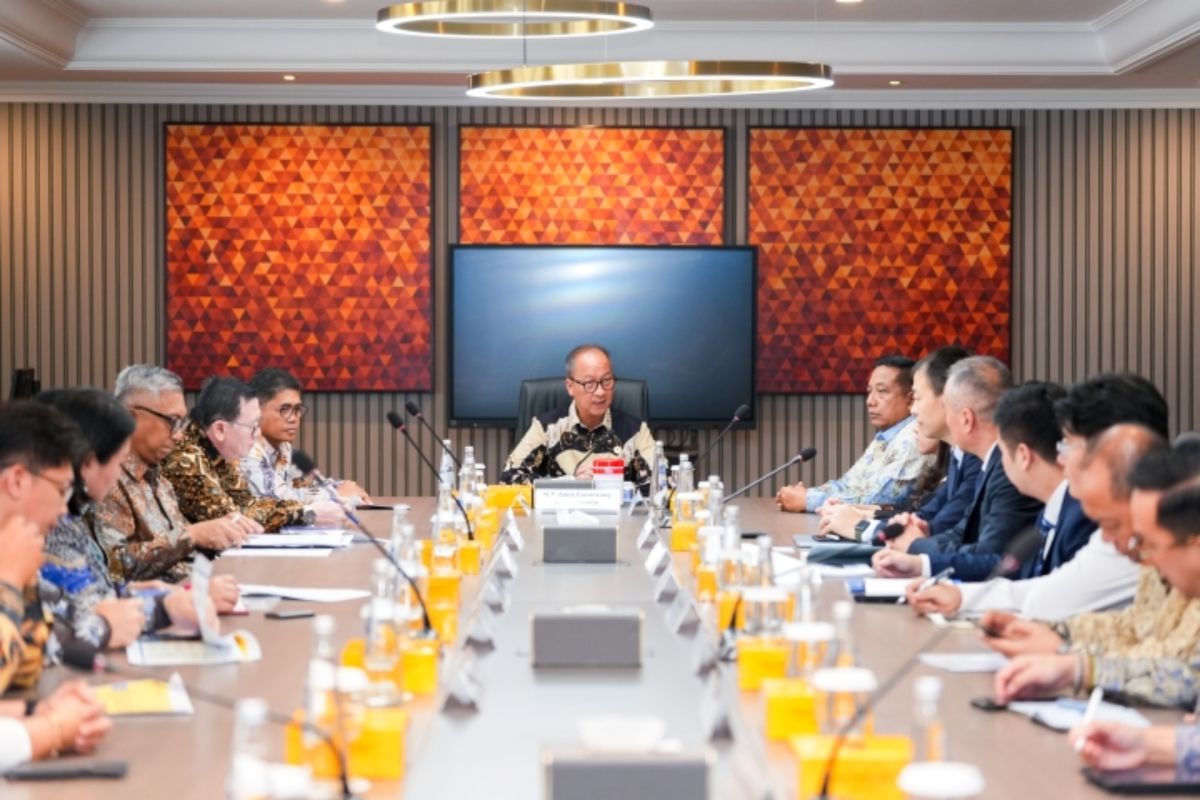
The strengthening of supporting infrastructure, particularly the treatment of raw water and wastewater, has become a crucial priority in the development of green industrial zones. Jakarta (ANTARA) - The Ministry of Industry (Kemenperin) is strengthening collaboration on the use of integrated and circular raw water and wastewater treatment technology for industrial zones. In a statement in Jakarta on Tuesday, Minister of Industry (Menperin) Agus Gumiwang Kartasasmita stated that amid the increasingly rapid growth of industrial zones, the need for clean water and wastewater management has become a crucial aspect in supporting environmentally friendly and sustainable industrial operations. The development of integrated and circular water treatment system technology is seen as a strategic solution to maintain the sustainability of industrial water supply while supporting Indonesia’s green industry and net-zero emissions (NZE) targets. “Industrial zones play an important role in supporting investment, creating jobs, and strengthening Indonesia’s industrial transformation. Therefore, strengthening supporting infrastructure, particularly raw water and wastewater treatment, is a key priority in the development of green industrial zones,” said the Minister. The development of this project was formalised in a memorandum of understanding (MoU) signed by his side with Qiaoyin City Management Co., Ltd., and the Indonesian Industrial Estates Association (HKI), on Monday (11/5). This collaboration is expected to be an initial step in providing more efficient, modern, and environmentally friendly water management solutions for industrial zones and processing industries in Indonesia. Based on Kemenperin data, by 2025 there will be 176 industrial zones in Indonesia with a total area of 98,291.68 hectares. These industrial zones accommodate around 11,970 industrial tenants with a total realised investment value of Rp6,744.58 trillion and absorbing up to 2.35 million workers. The growth of industrial zones, which reached 49.15 percent in the last five years, has also increased the need for reliable and sustainable water and waste management systems. In this collaboration, Qiaoyin City Management Co., Ltd. introduces the latest raw water and wastewater treatment technology called Efficient Denitrogenation Integrated Airlift Loop Bioreactor (DIAB), designed to provide a more cost- and land-efficient industrial wastewater treatment system. In the future, this collaboration will be implemented in five industrial zones with an initial implementation target of six months after the signing of the agreement, and an operational period of up to three years. The Minister emphasised that the project aligns with the government’s commitment to realising a green industrial ecosystem. “There will be five industrial zones as pilot projects in this collaboration, but we are not only looking for a good water treatment system, but also the most effective and easy-to-implement management model,” added Minister Agus. Wan Yiming, representative of Qiaoyin City Management Co., Ltd., stated that through DIAB technology, they are presenting a new way to treat factory wastewater that is far more cost-effective. “This solution can reduce construction costs by up to 20 percent and save land requirements by up to 60 percent compared to conventional methods,” he said. The use of prefabricated systems or ready-to-install components also allows treatment facilities to operate four times faster, making it a more efficient and environmentally friendly solution for industrial zone managers. Meanwhile, HKI General Chairman Akhmad Ma’ruf Maulana welcomed the collaboration positively. According to him, the application of modern raw water and wastewater treatment technology will help industrial zones in Indonesia increase competitiveness while meeting global industry demands that now increasingly emphasise environmental sustainability aspects. He hopes that the pilot project can become a model that can be replicated in various other industrial zones in Indonesia. Director General of Industrial Resilience, Zoning, and International Industrial Access (KPAII) of Kemenperin, Tri Supondy, stated that they are committed to continuing to expand international collaborations and support the application of environmentally friendly technology in Indonesian industrial zones.