
Ministry of Human Rights Urges TNI and Police to Coordinate in Investigating Andrie Acid Attack Case
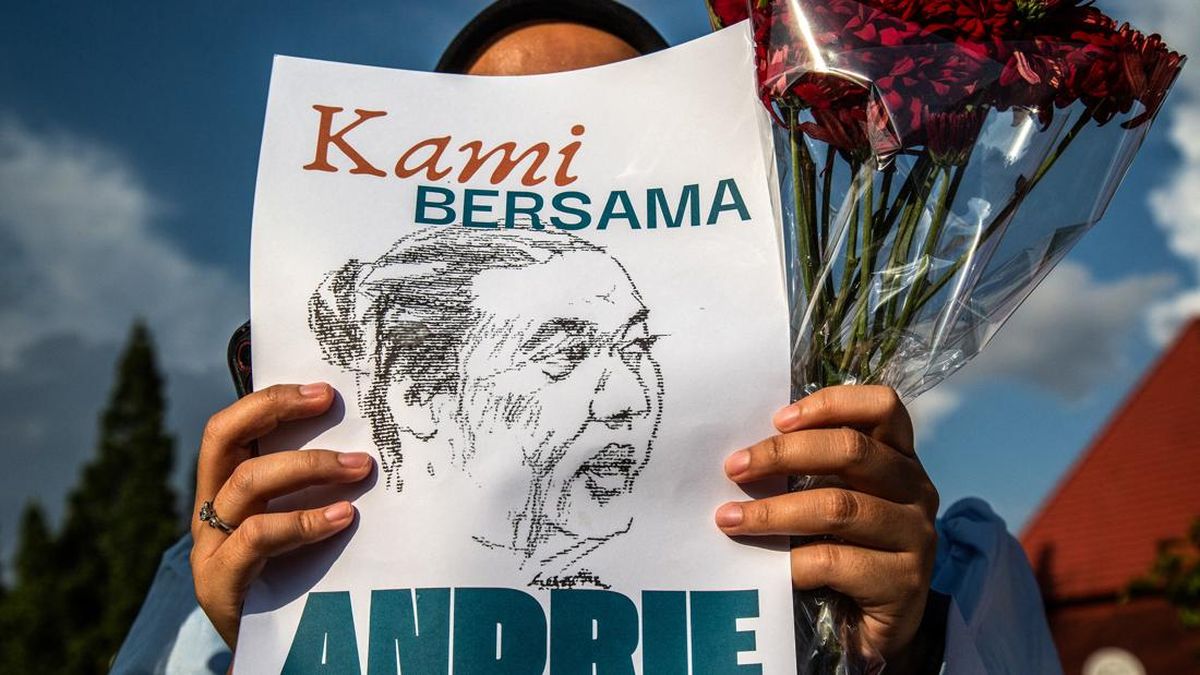
The Ministry of Human Rights states that the handling of the acid attack case on KontraS activist Andrie Yunus will give rise to legal complexities and complications. Director General of Human Rights Services and Compliance at the Ministry of Human Rights, Munafrizal Manan, said this would impact the quality of law enforcement and human rights. “The potential for legal complications and complexities, particularly regarding the absolute competence of the court that will examine and decide this case. To mitigate this potential, the TNI and Polri need to immediately coordinate and synchronise,” Munafrizal stated in a written statement on Thursday (26/3). “Public perception should not arise that there is dualism and competition between the TNI and Polri in handling this case,” he added. Munafrizal said this case clearly has a human rights dimension, thus receiving serious attention from national human rights institutions, international human rights bodies, and human rights activists. He reminded that the handling of this case must genuinely prioritise human rights principles. Law Number 1 of 2023 on the Criminal Code (KUHP) in its considerations has affirmed that national criminal law aims to respect and uphold human rights. Munafrizal said that so far, the police have examined witnesses, analysed CCTV footage, and identified the suspected perpetrator’s identity. On the other hand, the TNI Military Police Centre (Puspom) has detained four suspected perpetrators of the acid attack. According to Munafrizal, this situation will create a legal anomaly if one law enforcement agency has witnesses and evidence but no suspects, while another law enforcement agency has suspected perpetrators but lacks or has minimal witnesses and evidence. “Coordination and synchronisation between the TNI and Polri is important to be carried out immediately to clarify which court will examine and try this case,” he said. Furthermore, Munafrizal mentioned aspirations from the victim’s legal counsel, DPR members, legal experts, human rights activists, and civil society that this case should be examined and tried in the general court, which should be heeded. According to him, an accountable and intervention-free legal process can resolve this case comprehensively, not limited to field perpetrators but also intellectual actors. “The TNI and Polri need to promptly state their position regarding the provisions on connected cases in examining and trying this case as regulated in Chapter XII Articles 170-172 of Law Number 20 of 2025 on the Criminal Procedure Code (KUHAP),” Munafrizal stated. “This is important so that there are not two different judicial institutions carrying out criminal law enforcement independently handling the same substantive criminal case simultaneously,” he explained. Munafrizal views that if there is a legal controversy regarding which court has authority to handle the case, the resolution of differing views can be through the mechanism of jurisdictional disputes at the Supreme Court (MA). The MA is authorised to examine and decide at the first and final level on jurisdictional authority between courts in one judicial environment and courts in another judicial environment. “The Supreme Court can end that legal controversy,” he said.