
Ministry of Human Rights to Form Joint Team with National Police to Internalise Human Rights
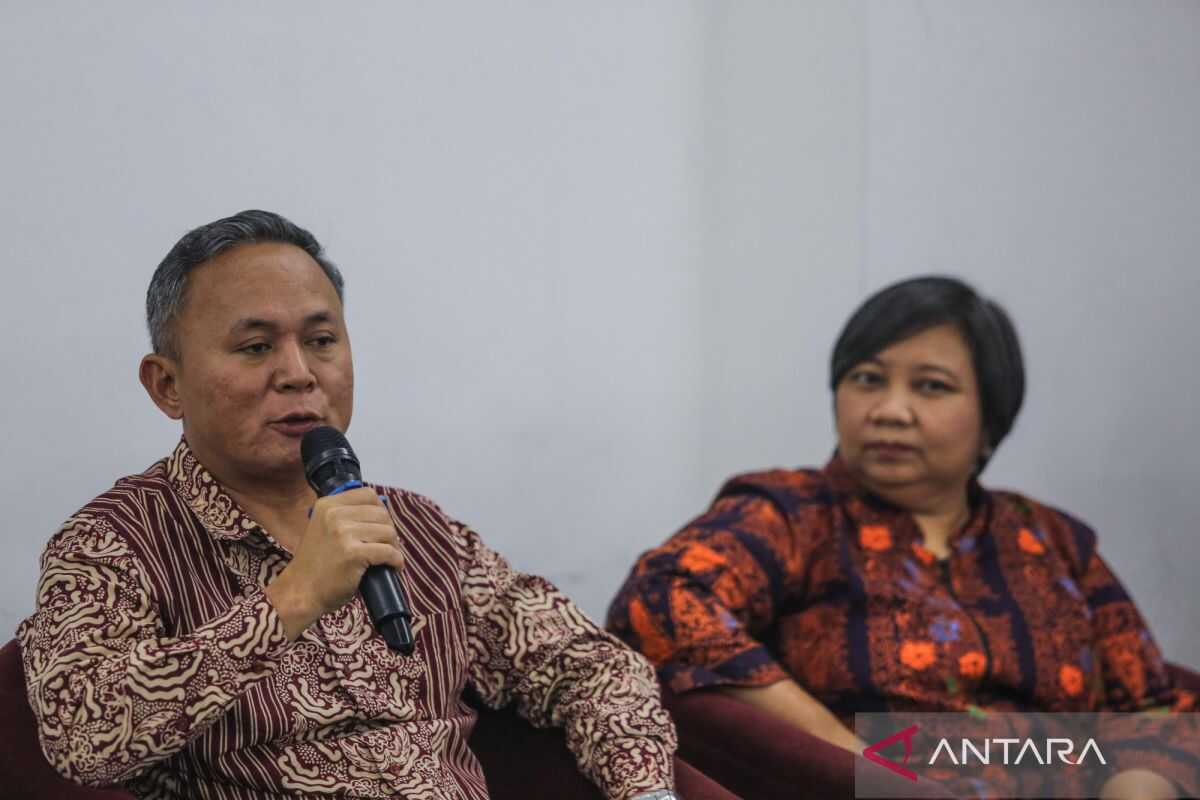
Jakarta (ANTARA) - The Ministry of Human Rights (Kemenham) will soon form a joint team with the Indonesian National Police (Polri) to internalise the values and principles of human rights in order to reform the police force.
Deputy Minister of Human Rights, Mugiyanto, when confirmed in Jakarta on Thursday, said that Kemenham had signed a memorandum of understanding (MoU) on strengthening human rights with Polri. This partnership, among other things, was agreed upon in the form of a joint team.
“We have already signed an MoU with Polri for cooperation in strengthening human rights and other matters. We have initiated a partnership to form a joint team between the Ministry of Human Rights and Polri Headquarters to conduct human rights training,” he said.
He affirmed that Kemenham is ready to assist Polri in its efforts to reform into a human rights-oriented police force. In this context, Kemenham supports cultural and structural changes within Polri.
According to Mugiyanto, the era of police officers enforcing the law using a violent approach is over. Moreover, Indonesia has long ratified the convention against torture.
“Cultural reform is needed so that the police culture is a humanistic culture, does not commit violence, protects, and provides a sense of security,” he said.
Regarding structural changes, Kemenham emphasised the importance of permanently institutionalising human rights curricula in police schools. Mugiyanto believes that this should be strengthened.
“If it is still limited now, it should be increased and made mandatory. It would also be good if, for example, a human rights competency test is required for promotion, and the Ministry of Human Rights will also move in that direction in the future,” he said.
“Including in the structure of the police. For example, there is currently a Head of the Legal Division (Kadivkum), it would be good if there was a Head of the Human Rights Division (Kadivham) or a combined Head of the Legal and Human Rights Division (Kadivkumham), something like that. That is one form that is not only cultural but also structural,” he added.
Within the framework of cooperation with Polri, Kemenham will also review various regulations related to the police. If necessary, Mugiyanto said, they will create a guidebook or pocketbook for police officers that is friendly to human rights.
“For example, for the Criminal Investigation Unit (Reskrim), a guidebook for the Criminal Investigation Unit on how to conduct investigations, how to conduct interrogations, and how to prepare investigation reports (BAP) from a human rights perspective,” he said.
In the international context, he added, the Méndez Principles have set standards and principles for non-violent interrogation. Kemenham will later adopt these principles into the guidebook.
“In the past, there were interrogations involving burning cigarettes on the skin, stepping on feet with a table. Hopefully, that doesn’t happen now. Electric shocks were used in the past. That is not allowed. That is what we will do and we are happy because Polri is also open to it,” he said.
The statement was made by Mugiyanto when asked about allegations that members of the Mobile Brigade (Brimob) had tortured a child to death in Tual, Maluku. In this regard, he said that internal disciplinary sanctions should be accompanied by criminal law enforcement.
“If the actions seriously violate criminal law, then criminal proceedings should be carried out and the process must be carried out thoroughly and transparently so that the public can know,” he said.