
Ministry of Home Affairs: South Sulawesi Ramadhan Leadership Camp Strengthens Central–Regional Synergy within Asta Cita Framework
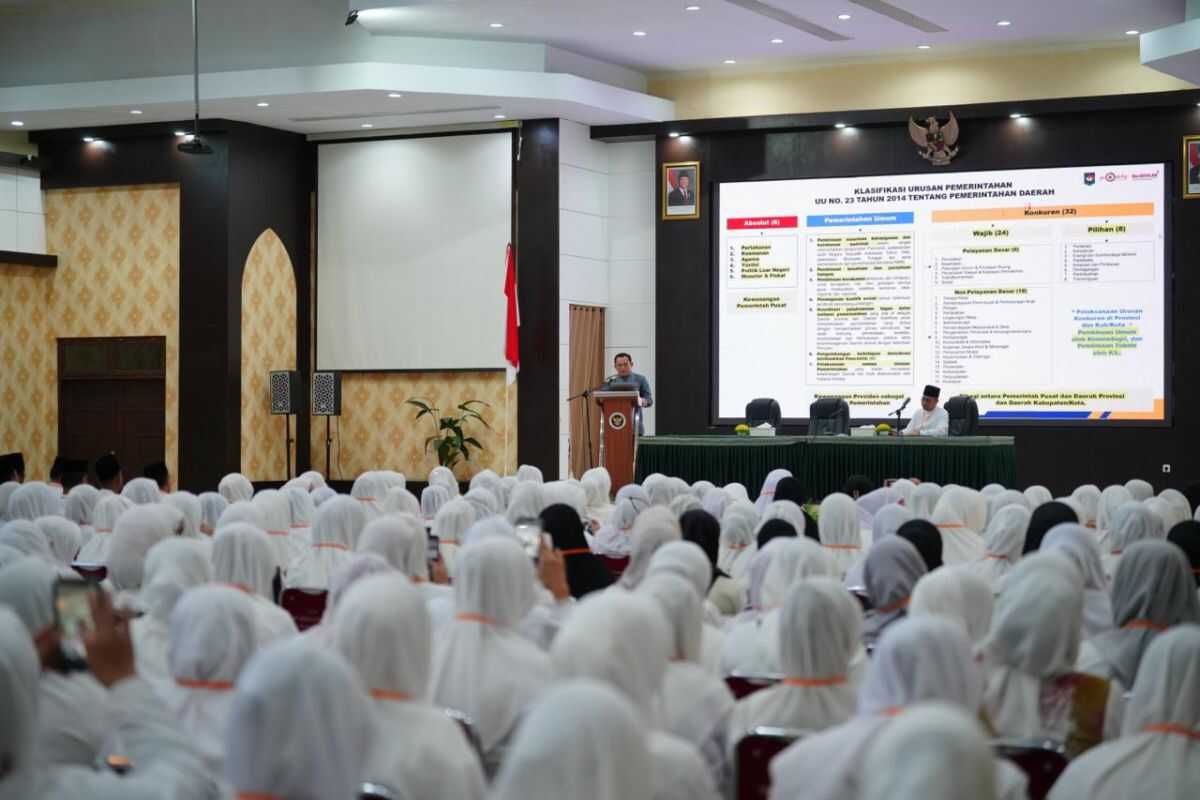
Makassar (ANTARA) - Director General of Regional Autonomy at the Ministry of Home Affairs, Cheka Virgouwansyah, stated that the South Sulawesi Ramadhan Leadership Camp (RLC) strengthens central and regional government synergy within the Asta Cita framework.
Speaking as a resource person at the RLC in Makassar on Sunday, Cheka said the civil service leadership strengthening model implemented by the South Sulawesi Provincial Government deserves appreciation and has the potential to be replicated by other regions across Indonesia.
“I personally and in principle appreciate this Ramadhan Leadership Camp activity,” he said.
“Why not emulate it? Regions certainly have their own schemes and strategies. Gathering executives in a single forum like this is a positive thing,” Cheka continued.
He emphasised that the primary objective of such activities is to ensure all regional government programmes can be executed in alignment with national policy.
“First, we must ensure synergy is maintained. This can be achieved through two things: clarity of policy and effective communication between the central and regional governments. In this way, central directives can be translated and executed appropriately at the regional level,” he explained.
These objectives encompass equitable and fair distribution of regional development, encouraging innovation and breakthroughs in public services, improving the quality of services to the public, strengthening democratic life, and community empowerment.
In addition, regional autonomy is directed towards maintaining harmonious relations between the central and regional governments within the framework of the unity of the Republic of Indonesia.
Regional autonomy also aims to enhance public participation, strengthen the synergy of roles and functions of ministries and institutions as well as regional legislative councils (DPRD) supported by capable regional apparatus, and to foster initiative and creativity at the regional level.
However, Cheka cautioned that the implementation of regional autonomy still faces a number of challenges.
“Nearly all macro indicators, from economic growth and life expectancy to clean water access, have improved overall. The year 2020 posed a major challenge due to the Covid-19 pandemic, when economic growth plummeted and per capita income declined,” he said.
For South Sulawesi, Cheka assessed that the province’s achievements are relatively in line with national trends, and even demonstrate outstanding performance in a number of government affairs.
Based on the general overview of the 2024 provincial government affairs performance evaluation across Indonesia, the education sector in South Sulawesi achieved a very high score of 4.5 (within the highest range of 4.21–5.00). The health sector also recorded a score of 4.5.
Cheka stressed that these achievements must continue to be maintained and improved through understanding the role of each element of government.
“Every element must understand its position and make its best contribution. The ultimate goal of all this is one thing: the welfare of the people,” he concluded.