
Ministry of Home Affairs Emphasises Thorough Planning and Regional Budget Optimisation
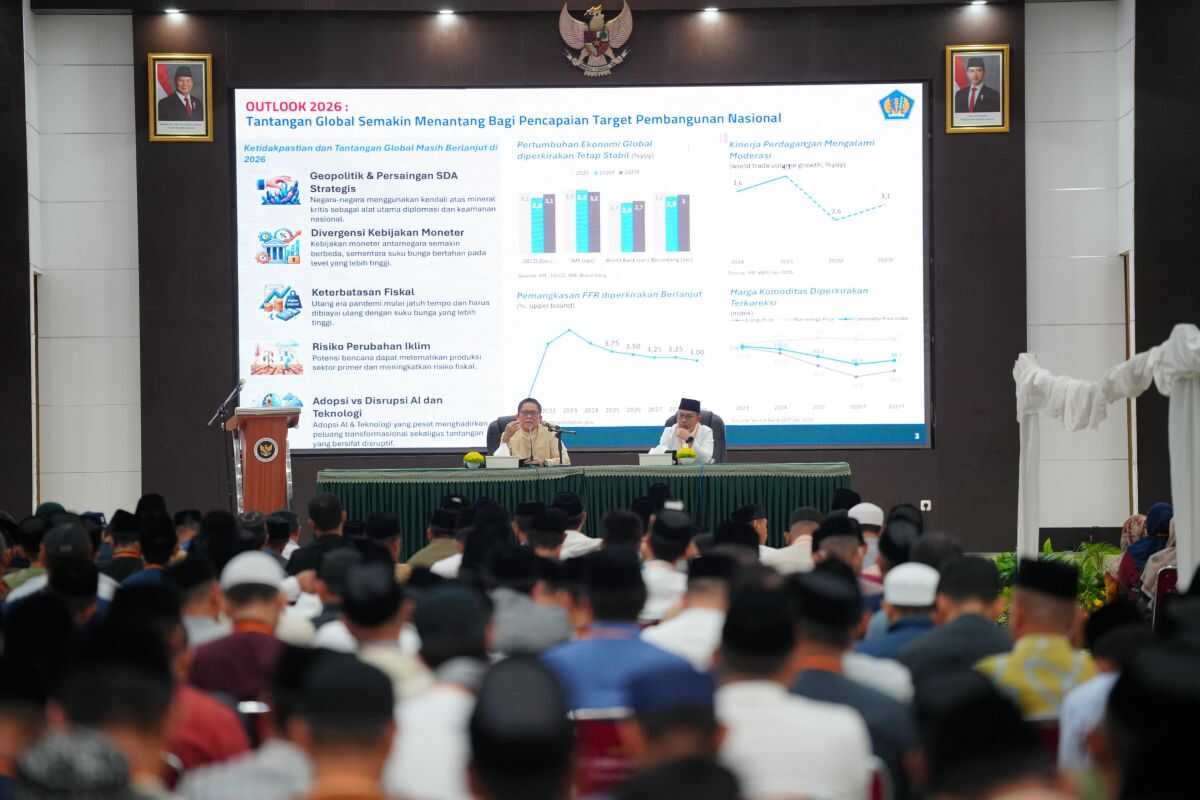
Makassar (ANTARA) – The Ministry of Home Affairs has affirmed that the key to accountable and responsive regional financial management lies in thorough planning, a comprehensive understanding of budgeting across all regional government units, and the optimisation of the regional budget (APBD) amidst increasingly complex fiscal challenges.
The Director General of Regional Financial Development at the Ministry of Home Affairs, Agus Fatoni, stated in Makassar on Wednesday that, constitutionally, the authority to manage regional finances rests with the regional head, whether it be a governor or a regent/mayor.
Therefore, he said, all regional government units (OPD) are obliged to understand the planning and budgeting cycle as an inseparable whole.
“Once we hold office, there is a responsibility. From the planning side, it must be thorough, because it is the planning that is budgeted, what is budgeted is implemented, and what is implemented is accounted for,” he said at the Ramadan Leadership Camp in Makassar.
He emphasised the importance of preparing the plan from the beginning of the fiscal year and adjusting it to the actual needs of each OPD.
In addition, the heads of OPD are asked to understand and translate the vision and mission of the regional head into measurable programmes and activities, so that budgeting is truly in line with the direction of regional development.
In the current fiscal conditions, Agus Fatoni believes that the APBD must be managed to the fullest extent, both in terms of revenue, expenditure, and financing. According to him, revenue optimisation can come from regional original revenue (PAD), transfer funds, and the utilisation of other legitimate potential.
“From the expenditure side, it must be tightened. The principle of efficiency remains relevant, meaning that expenditure should be budgeted for what is truly needed,” said Agus Fatoni.
He also reminded that the state must remain present in emergency and urgent situations. According to him, there should be no excuse for public services to stop simply because of budget constraints, given that the mechanisms for changing the APBD and reallocating the budget are regulated in legislation.
In his presentation, Agus Fatoni outlined at least nine alternative sources of regional financing, ranging from PAD, transfer funds, regional-owned enterprises (BUMD), public service agencies (BLUD), the use of regional assets, regional loans including bonds and sukuk, public-private partnership schemes, corporate social responsibility (CSR), to the budgets of ministries and agencies.
He also outlined four strategic steps to encourage regional economic growth, namely accelerating the realisation of the APBD through expenditure optimisation, innovating PAD without burdening the public, utilising the National Strategic Programme as an opportunity for growth, and encouraging the role of the private sector through easier licensing.