
Ministry of Home Affairs and Public Works Ministry Accelerate Development of Papua's New Autonomous Region Capital Area
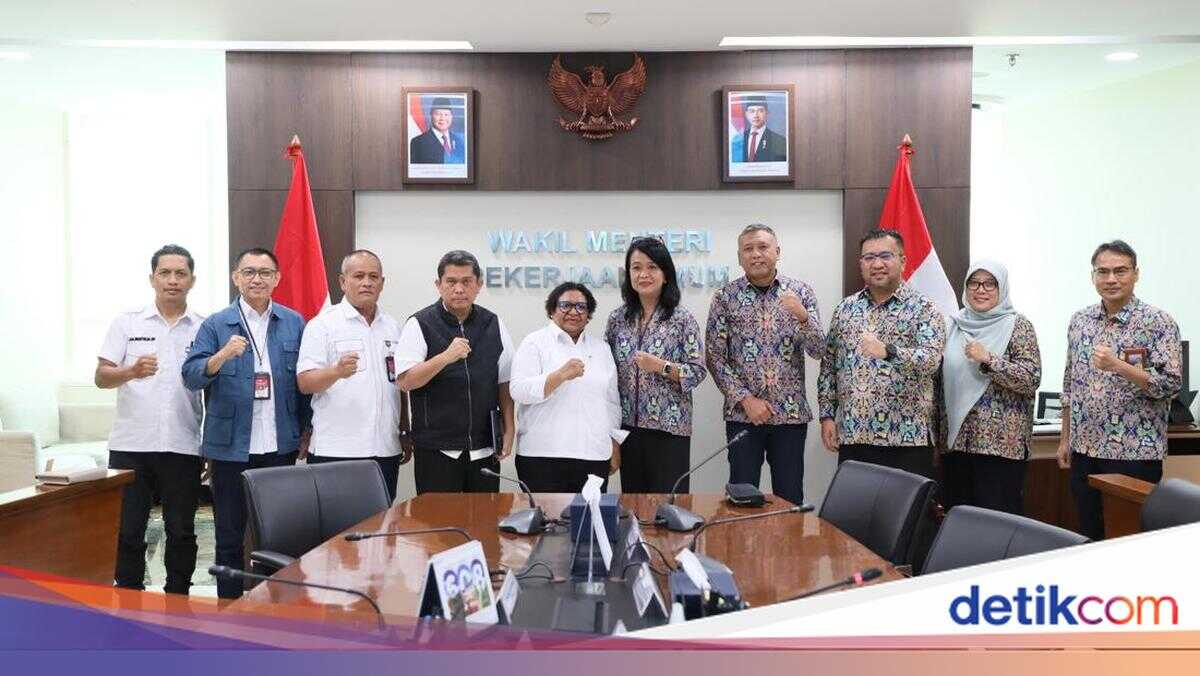
The Ministry of Home Affairs (Kemendagri) together with the Ministry of Public Works (PU) continues to strengthen coordination in accelerating the development of the Capital Area Core Zone (KIPP) in Papua’s New Autonomous Regions (DOB).
Deputy Home Affairs Minister (Wamendagri) Ribka Haluk emphasised the importance of accelerating KIPP development in Papua’s new autonomous regions whilst ensuring legal certainty and synergy across ministries and institutions. The development targets are planned to be completed by 2028.
“There are many programmes being implemented [for KIPP] besides constructing the Governor’s Office, Regional Parliament, and People’s Assembly buildings, as well as sanitation, roads, and several other programmes that we believe will greatly assist our colleagues in the regions,” Ribka stated in a written statement on Wednesday, 25 February 2026.
This was conveyed during a meeting with the Deputy Public Works Minister to discuss KIPP development progress in Papua’s new autonomous regions at the Public Works Ministry office in Jakarta on Wednesday, 25 February 2026.
During the meeting, Ribka commended all parties working hard in carrying out state duties. Based on her field visit some time ago, the progress of KIPP development in several new autonomous regions showed quite significant developments.
Although there remain several matters requiring attention, including legal aspects in certain areas, Ribka ensured that approaches and coordination would continue with governors and relevant parties. This aims to ensure the completion proceeds well.
She also emphasised clarity regarding the possibility of new auctions or other mechanisms relating to the development.
“We request support from the governors of four new autonomous regions, the community, and the regional leadership forums in Papua to collectively provide full support to the Ministry of Public Works and the Ministry of Home Affairs, which continue to accelerate development in the special autonomous regions in Papua,” she said.
Additionally, Ribka highlighted developments in Highland Papua. She stated that on 6 February, discussions were held regarding the focus location of KIPP in Highland Papua. The construction of the Governor’s Office, Regional Parliament of Papua, and People’s Assembly of Papua buildings are targeted to meet all criteria and be implemented this year, with support from the Ministry of Public Works and synergy between central and regional governments.
As KIPP development in the new autonomous regions is part of the National Strategic Project (PSN), Ribka hopes it will eventually be inaugurated by the President or Vice President after all stages and construction are completed.
“Hopefully, the development of these new autonomous regions, which is our great hope, will be inaugurated by the President in 2028,” she added.
Ribka also stressed the importance of clear division of authority between central and regional governments so they can work synergistically. In the near future, the Ministry of Home Affairs together with the Ministry of Public Works plan to visit the regions directly to ensure various obstacles are resolved in an integrated manner.
“We extend our highest appreciation and thanks from the Ministry of Public Works, which remains committed and driving the development of four new autonomous regions with KIPP,” she explained.
Meanwhile, Deputy Public Works Minister Diana Kusumastuti reported that three provinces have shown quite significant development progress. In detail, Southwest Papua is completed, and South Papua is even already operational.
Next, Central Papua is now entering the implementation stage of construction. One other province, Highland Papua, still requires acceleration as it is still awaiting feasibility study (FS) and master plan documents.
In 2026, access to these documents is targeted to be available so that acceleration of KIPP development in Highland Papua can be realised quickly.
“I hope that by 2028, in accordance with our recent meeting with Commission II [Parliament], these can be made operational and hopefully can even be inaugurated by President Prabowo Subianto for the four new autonomous regions in Papua,” she concluded.