
Ministry of Higher Education, Science, and Technology Pushes for Distance Learning for Students in Semester 5 and Above
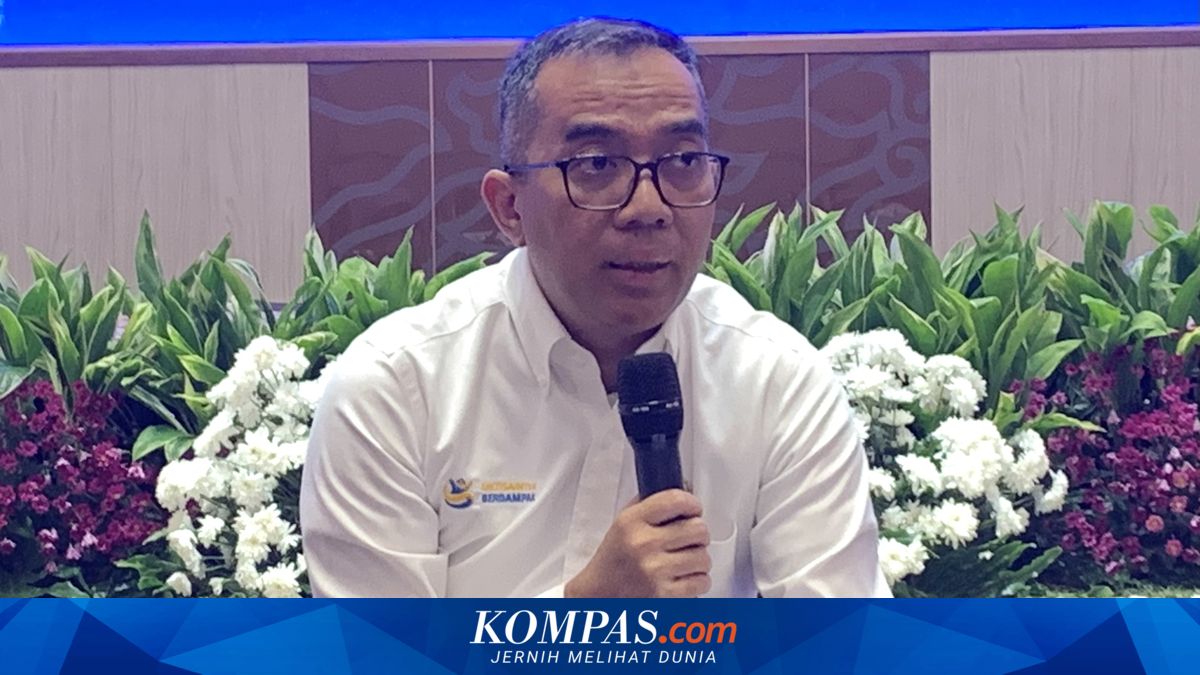
JAKARTA, KOMPAS.com - The Ministry of Higher Education, Science, and Technology is encouraging universities to prepare distance learning (PJJ) for students from the fifth semester upwards to support the government’s policy on energy efficiency.
Indonesia’s Minister of Higher Education, Science, and Technology (Mendikti Saintek), Brian Yuliarto, stated that this is regulated in Circular Letter of Mendikti Saintek Number 2 of 2026 on the Adjustment of Work Patterns and Academic Activities, addressed to both State Universities (PTN) and Private Universities (PTS).
“Of course, the circular we issued to the entire Dikti Saintek family covers both PTN and PTS. Although by law PTS are under foundations, substantively they are under us,” Brian said when met at the Ministry of Mendikti Saintek office on Monday (6/4/2026).
“Why? Because during COVID-19, we learned that digitalisation is important and it makes us more efficient,” he said.
Brian then gave an example: previously, applications for professorships used paper, but now they no longer rely on stacks of physical files.
“I remember professorship applications could fill a container from Bandung. Now it’s all digital,” he said.
“When services become digital, transportation becomes far more efficient. For example, lecturers applying for research don’t need to go to Jakarta; they can do it through the system. This includes scholarship applications and requesting transcripts from the rectorate,” he explained.
Therefore, the Ministry of Mendikti Saintek is promoting PJJ in line with the government’s policy on energy efficiency, both for petroleum fuel (BBM) and LPG.
“Coincidentally, there’s the momentum of the global economic crisis; the President’s directive is to use this momentum for transforming work culture,” Brian said.
First, university leaders are urged to adjust the implementation of academic activities based on the readiness and characteristics of the study programmes.
Then, the adjustment of academic activities as mentioned is carried out as part of efforts to improve the effectiveness and efficiency of higher education delivery, while still considering learning outcomes and the academic calendar.
Finally, distance learning is not applied to courses or academic activities that require practicums, laboratories, studios, clinics, workshops, field practices, or other forms of learning that must be conducted face-to-face.