
Ministry of Health: Safeguard children's hearing health for Indonesia's Golden 2045
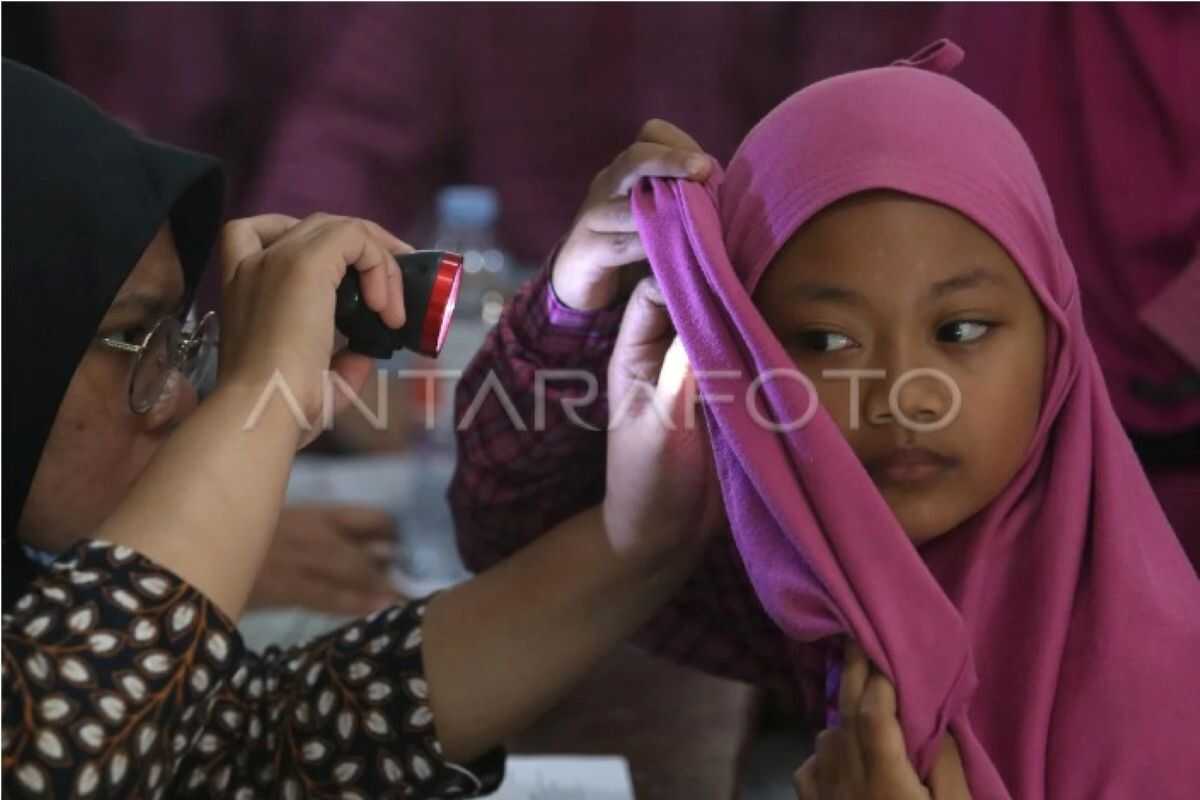
Jakarta – The Ministry of Health has emphasised that children’s hearing health must be protected to achieve Indonesia’s Golden 2045 development targets, as hearing function is directly linked to child development, social abilities, and productivity in adulthood.
Siti Nadia Tarmizi, Director of Non-Communicable Disease Prevention and Control at the Ministry of Health, announced in Jakarta on Monday that the theme for World Hearing Day is “From communities to classrooms: hearing care for all children.”
She stressed that this issue requires attention, as untreated hearing impairment can become a lifelong disability.
“First, if we look at child development, children cannot develop properly without the ability to hear. How will they understand instructions from their parents?” she said.
Second, she noted, children’s language development can be significantly affected, as language acquisition depends on hearing and humans learn through imitation.
“As they continue to develop into adulthood, hearing difficulties will impair their academic performance and social interactions with others. Ultimately, this becomes a burden not only for families but also a financial burden on the state,” she explained.
According to data, approximately 4.1 million people in Indonesia have hearing impairment, with about 51,000 cases (1.24%) experiencing ear disorders. This aligns with the 2013 Basic Health Research data showing three in every 100 people suffer from hearing impairment.
Among the various causes of hearing loss, earwax accumulation is the most common, followed by lifestyle factors.
To protect public hearing health, the ministry has initiated screening programmes and campaigns promoting safe listening practices to prevent hearing loss caused by noise exposure.
“We encourage limiting the volume and duration of earphone and headset use. The formula is 60-60: if the maximum volume is 100, use only 60 percent. And for every 60 minutes of earphone use, rest your ears,” she explained.
She noted that Indonesian youth frequently use earphones to listen to content in noisy public spaces such as LRT and MRT stations without taking breaks, and some even wear earphones while sleeping.
“Our ears will adjust – this is why prolonged earphone use eventually causes hearing loss,” she said.
Nadia also reminded people to maintain overall health, as conditions such as hypertension and diabetes mellitus can worsen hearing function decline.
Fikri Mirza Putranto, an ear, nose and throat specialist from the Indonesian Association of Ear, Nose and Throat Specialists, Head and Neck Surgery (PERHATI-KL), noted that negative stigma surrounding hearing impairment and disability has hindered early detection and treatment efforts.
He emphasised the need for collaboration among professional organisations, the government, and communities to educate the public about the importance of hearing health.
Unlike other conditions such as vision problems, he noted that if hearing impairment is detected early enough, hearing function can be restored.