
Ministry of Hajj and Umrah Deploys Emergency Clinics for Peak Hajj
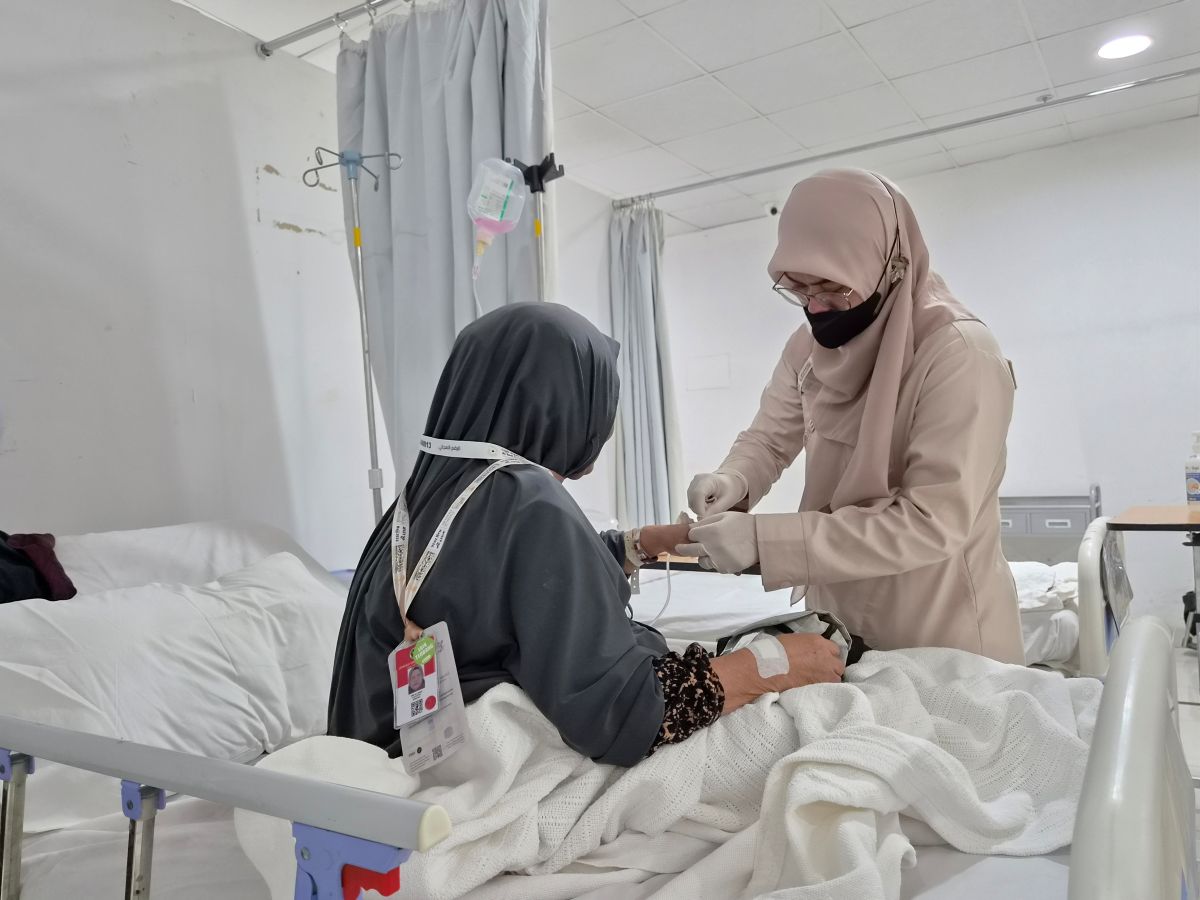
The Ministry of Hajj and Umrah (Kemenhaj) has confirmed the readiness of health infrastructure for the peak Hajj period in Arafah, Muzdalifah, and Mina (Armuzna). One measure prepared is the deployment of emergency clinics at key locations to provide rapid medical assistance for pilgrims.
This was stated by Indonesia’s Hajj and Umrah Minister Mochamad Irfan Yusuf and Coordinating Minister for People’s Empowerment Abdul Muhaimin Iskandar during a visit to the Indonesia Hajj Health Clinic (KKHI) in Mecca on Saturday (23 May).
Irfan said the Amirulhaj delegation’s visit to KKHI aimed to verify the readiness of healthcare workers and evaluate ongoing services during the Hajj season.
He acknowledged this year’s operations face challenges from Saudi Arabia’s strict and evolving health regulations. However, Indonesian healthcare workers have adapted to maintain service quality without violating local rules.
“There are some regulatory challenges here, but our team is adapting to comply with rules while still providing the best service to our pilgrims,” he said.
Regarding medical tactics in Armuzna, Irfan reiterated that the emergency clinics serve as an early intervention before pilgrims require further treatment at Saudi government facilities.
“The clinics handle emergency care but work in tandem with Saudi government hospitals. In certain cases, pilgrims must be promptly referred to hospitals in Saudi Arabia,” he explained.
To support this effort, 1,200 healthcare workers are on standby. “We have around 1,200 healthcare staff. Each group has one doctor and one nurse, and hundreds more at the Hajj Health Unit (PPIH). Insha’Allah, this will serve our pilgrims during Armuzna,” he added.
Separately, Irfan noted a significant drop in sick and deceased pilgrims this Hajj season. He attributed the improved clinical data to stricter health eligibility checks conducted in Indonesia.
“One reason is that health eligibility checks in Indonesia were stricter than last year. As a result, hospitalisations and deaths have dropped sharply,” he said.
Regarding the safari wukuf scheme for elderly and high-risk pilgrims, the government is seeking diplomatic solutions to ensure compliance with local regulations.
“Safari wukuf is not officially permitted by Saudi authorities, but we will explore options that do not breach regulations and continue coordinating with the Saudi government,” he said.
At the same event, Coordinating Minister for People’s Empowerment Abdul Muhaimin Iskandar praised Indonesia’s medical team for their Hajj 2026 services.
“Thank you to the healthcare workers for their resilience in handling Saudi Arabia’s stringent and evolving regulations. Doctors have responded intelligently with appropriate measures,” Muhaimin said.
Muhaimin added that the dynamics of this year’s Hajj would inform regular evaluations to ensure future healthcare management is more adaptive, tactical, and protective for pilgrims.
“Moving forward, the Ministry of Hajj will continue gathering input from field doctors and healthcare workers to make service delivery more effective, efficient, and beneficial for pilgrims,” he said. (H-2)
In addition to physical health, Hidayat urged pilgrims to use hotel rest periods to strengthen spiritual and mental readiness for Armuzna.
As of Saturday (23 May) evening, provisional data showed 78 pilgrims are scheduled for substitution.
Services provided extend beyond administrative matters to include health, religious guidance, psychological support, and humanitarian assistance.
Elderly pilgrim Muhammad Firdaus Akhlan, reported missing from his hotel, has been found deceased and will have funeral prayers at Masjidil Haram.
Indonesian Hajj pilgrim Muhammad Firdaus Akhlan, 72, from group JKG 27, who was reported missing, will have funeral prayers at Masjidil Haram in Mecca.