
Ministry of Forestry Safeguards Mount Ciremai National Park's Role as West Java's "Water Tower"
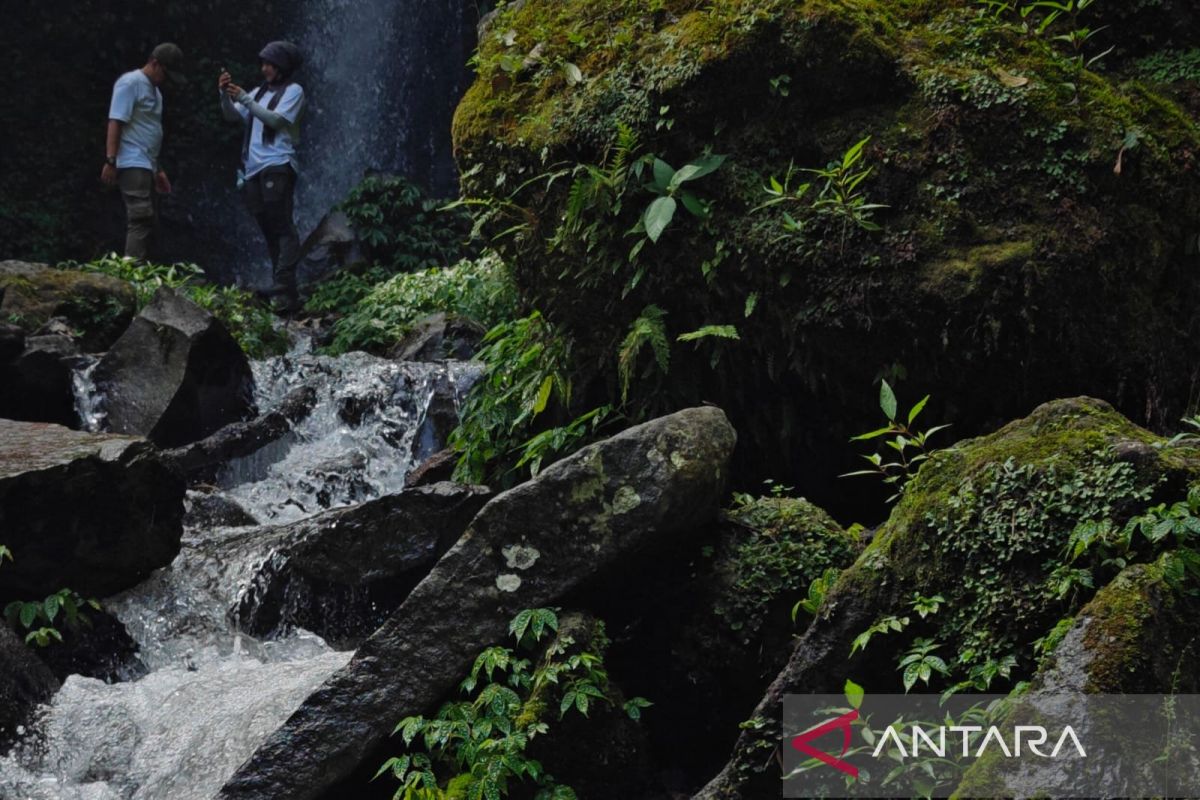
Mount Ciremai National Park is known as the Water Tower of West Java. There are 97 spring points that never dry up, with purity levels so high that the water is drinkable directly from the source.
Kuningan, West Java (ANTARA) - The Ministry of Forestry (Kemenhut) is committed to preserving the forest vegetation cover in the Mount Ciremai National Park (TNGC) area to maintain its vital function as a “Water Tower” for four districts in West Java.
Head of TNGC, Toni Anwar, stated that the 14,841.3-hectare conservation area plays a significant ecological role in ensuring the availability of clean water for communities in Kuningan, Majalengka, Cirebon, and Indramayu districts.
“Mount Ciremai National Park is called the Water Tower of West Java. There are 97 spring points that never dry up, and the water quality is so pure that it is drinkable directly from the source. If the forest conditions change, the surrounding communities will be the first to feel the impact of a water crisis,” said Toni during the “Synergy of Indonesian Women for Indonesia FOLU NET SINK 2030” forum organised by the Ministry of Forestry in Kuningan, West Java, on Tuesday.
In addition to its hydrological function, TNGC is a key habitat for three priority species: the Javan Hawk-eagle, Leopard Cat, and Surili. The presence of these animals serves as an indicator of the environmental health on West Java’s highest mountain.
“The appearance of the Leopard Cat on monitoring cameras or encounters with Surili indicate that the habitat here is still well-maintained. We call them akamsi or the local children, the native inhabitants that we must protect along with their habitat,” Toni remarked.
According to him, the management of the national park is indeed based on community movements. In this case, residents act as the frontline guardians because they realise the reciprocal relationship between preserved forests and economic progress through attractive tourism.
Local residents who were formerly land encroachers in the national park area have now shifted professions to become tourism managers as a form of empowerment. “The reciprocal relationship between preserved forests and economic progress through attractive tourism,” said Toni.
The Synergy of Indonesian Women for Indonesia’s FOLU Net Sink 2030 event was held from 11-13 May 2026 in the TNGC area. The forum was attended by representatives from ministry/institution public relations, non-governmental conservation organisations, and national journalists.