
Ministry of Finance: Domestic Economic Resilience is Key Amid Global Dynamics
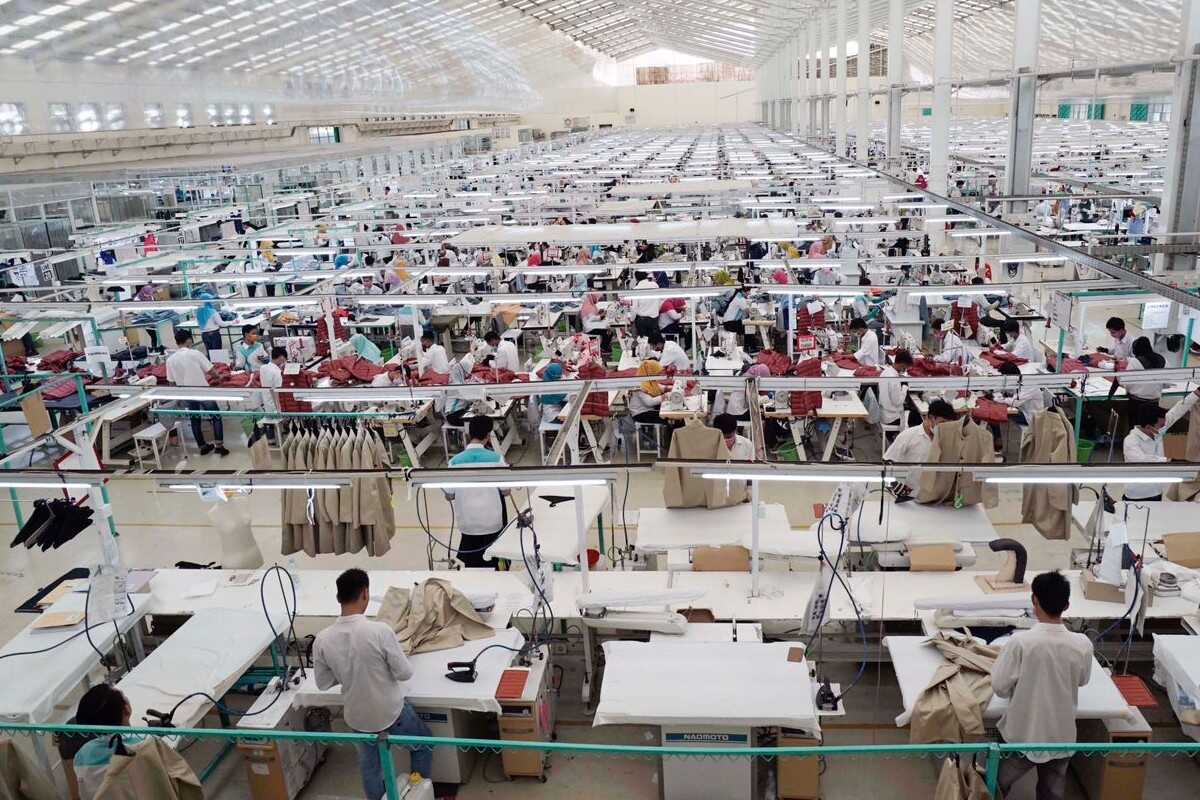
INDONESIA’s manufacturing sector continued its expansive trend in February 2026. The Manufacturing Purchasing Managers’ Index (PMI) rose to 53.8 from 52.6 the previous month, marking the highest achievement in nearly two years. This strengthening was driven by a surge in new demand coupled with significant production growth.
“Domestic economic resilience is a critical asset amid the dynamic global situation. Various efforts to maintain stability and resilience of the domestic economy will continue to be pursued, particularly through fiscal stimulus, investment climate, and job creation,” said the Director General of Economic Strategy and Fiscal Affairs at the Ministry of Finance, Febrio Kacaribu, in a statement on Monday (2 March).
Overall business sentiment remained solid, supported by expectations of strengthened demand and improved price stability.
Manufacturing PMI in several of Indonesia’s major trading partners also showed expansive trends, including Vietnam (54.3), Thailand (53.5), India (57.5), Japan (53.0), and the United States (51.2), supporting prospects for national manufacturing exports. This positive sentiment was further supported by strengthening domestic demand.
In January 2026, the Real Sales Index grew 7.9% year-on-year, driven by increased sales of food and beverages, textiles, and mobility services. Strengthened consumption was also evident from positive motor vehicle sales, with motorcycle sales rising 3.1% and car sales growing 7.0%.
Additionally, public optimism remained intact, reflected in the January 2026 Consumer Confidence Index (IKK) at an optimistic level of 127, up from 123.5 the previous month.
January 2026 foreign trade performance remained stable. The trade balance surplus reached USD 950 million, continuing the strong performance that has persisted since May 2020. The surplus was supported by export performance reaching USD 22.16 billion, or growing 3.39% year-on-year, driven by non-oil exports.
Non-oil export performance was driven by the processed industry sector, which grew 8.19% year-on-year, primarily palm oil, nickel, iron and steel, and high-value-added commodities such as automotive and electronics.
Meanwhile, imports reached USD 21.20 billion, or grew 18.21% year-on-year, dominated by increases in raw materials and capital goods, in line with rising domestic production and investment activities.
On the price front, February 2026 inflation was recorded at 4.76% year-on-year, mainly influenced by the electricity discount policy in early 2025. Excluding the impact of the early 2025 electricity discount, February 2026 inflation is estimated at 2.59%. Based on its components, inflation in government-regulated prices reached 12.66% year-on-year.
Meanwhile, volatile food prices reached 4.64%, triggered by weather disruptions and demand pressures ahead of Ramadan. Rice inflation remained at 3.5% while several other food commodities such as sugar, red chillies, garlic and red peppers experienced deflation.
Core inflation was recorded at 2.63% year-on-year, mainly driven by a 72.95% year-on-year increase in gold jewellery prices. Excluding the gold impact, February 2026 core inflation is estimated at 1.4%. On a fundamental basis, price pressures remained controlled and are expected to normalise from March 2026 onwards.
The Government is committed to ensuring food prices remain affordable during the Ramadan and Eid al-Fitr period through strengthened supply, smooth distribution, and price monitoring, including through the Cheap Food Movement programme and inter-regional distribution facilitation.
Global risks resulting from conflicts in the Middle East will continue to be monitored carefully, particularly following the Israel and United States attack on Iran on 28 February 2026, which was followed by the closure of the Strait of Hormuz.
Risks of disruption to global supply chains, particularly energy and crude oil supplies, as well as increased volatility in global financial markets, are of primary concern. Global trade tensions also have the potential to dampen national export performance through weakened external demand and increased logistics costs.
“The Government will continue to carefully monitor the dynamics of global geopolitics and various risks that could potentially affect the national economy. Indonesia’s external fundamentals remain sound, reflected in the sustained trade balance surplus over 69 consecutive months. The state budget will continue to be managed carefully, including by keeping the budget deficit controlled below 3% of GDP,” said Febrio.
The Government is also continuing to strengthen the policy mix to maintain stability and sustain national economic growth. Risk mitigation efforts are being undertaken through accelerating the sustainability of natural resource downstream processing, increasing the competitiveness of high-value-added export products, and diversifying major trading partners through various international trade agreements.
The objective is to expand market access and strengthen the resilience of Indonesia’s external sector amid increasingly complex global dynamics.