
Ministry of Environment Records Seven Peat Points Prone to Land Fires
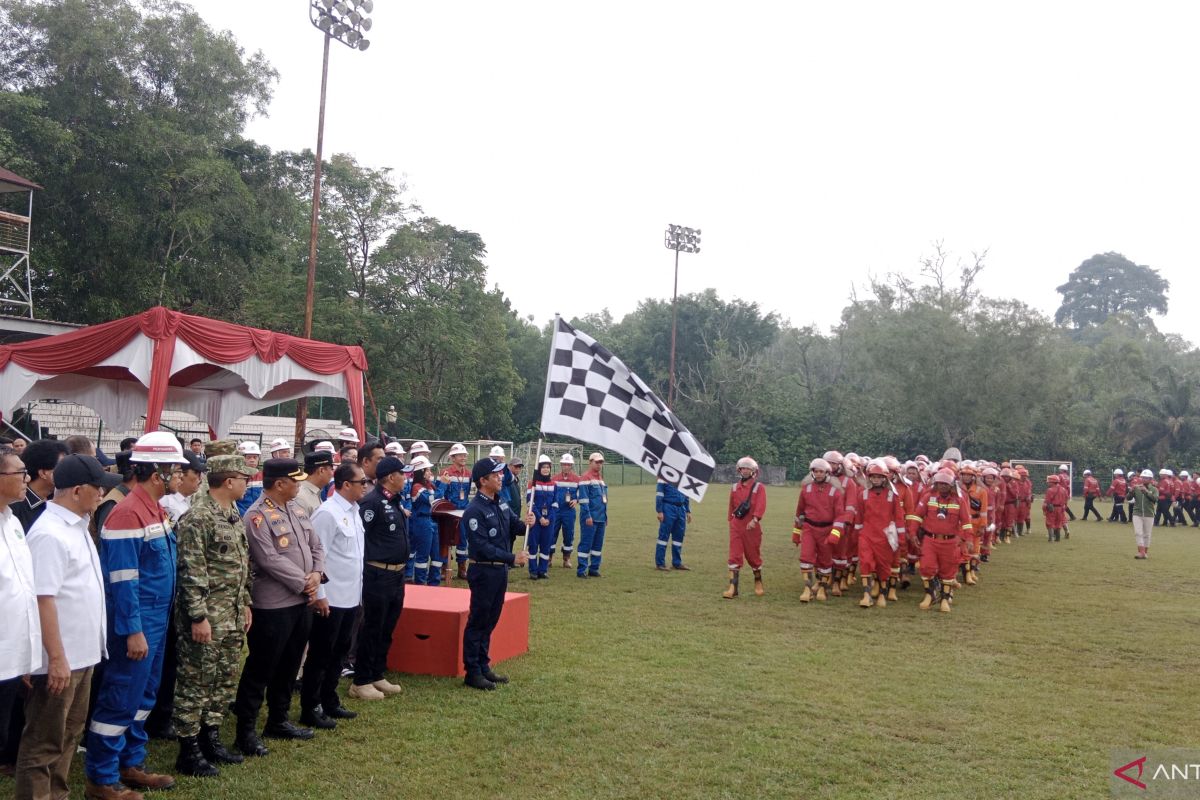
Pekanbaru - Indonesia’s Ministry of Environment has recorded seven main points where peat water levels are critically low, below 80 centimetres from the soil surface, making them highly prone to forest and land fires. Environment Minister Hanif Faisol Nurofiq, during a forest and land fire control briefing at PT Pertamina Hulu Rokan in Pekanbaru on Saturday, stated that Riau province has peat covering nearly half of its land area, rendering it extremely vulnerable to such fires. “This drought potential will be worsened in areas dominated by peat water mangroves. Just one ignition source is enough to trigger severe and large-scale forest and land fires. Therefore, early preparedness is increasingly demanded,” he said. Furthermore, this year’s projected rainfall is expected to be the lowest in the past 30 years at 100 millimetres. In 1996-1997, extraordinary fires destroyed hundreds to millions of hectares of forest, causing significant losses. Therefore, he called for readiness from the Manggala Agni Forest Fire Control Centre, along with firefighting teams from PT PHR, the Indonesian Palm Oil Entrepreneurs Association (GAPKI), and the Indonesian Forest Concession Holders Association (APHI) to carry out forest and land fire prevention measures. “I very much hope this activity does not stop at mere ceremonial measures. We really need to take tactical operational planning steps by increasing meetings at the field level led by mayors and regents in their respective areas,” he stated. This is to detail the mapping of locations with forest and land fire potential where peat water levels are sharply declining. Even in locations where peat water levels cannot be monitored, thus lacking control in fire handling. “Therefore, in vulnerable areas, I want to encourage business owners with concessions in forestry or palm oil plantations—which we know Riau has very large palm oil plantations—to urge concession holders to activate fire brigades and community fire care groups in prone areas,” he said.