
Ministry of Environment and Forestry and UNEP sign enhanced cooperation on REDD+ project
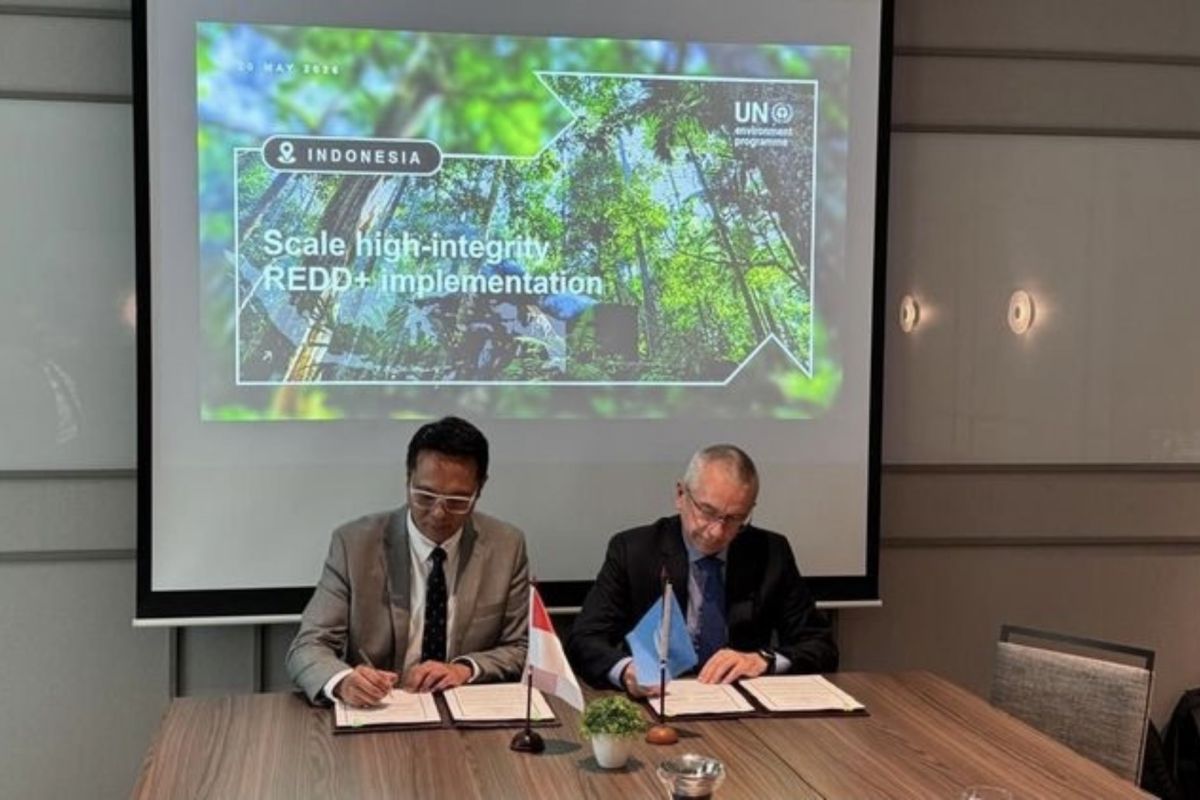
Jakarta (ANTARA) – The Ministry of Environment and Forestry (Kemenhut) and the United Nations Environment Programme (UNEP) formally signed an Implementing Arrangement (IA) for the Reducing Emissions from Deforestation and Forest Degradation (REDD+) project.
Head of the Public Relations and Foreign Cooperation Bureau (HKLN) of Kemenhut, Ristianto Pribadi, said that the IA document is a follow-up to the Memorandum of Understanding (MoU) in 2024 on cooperation in the field of environmental protection and forestry.
‘We express appreciation for the close and constructive cooperation between the two parties during the drafting of the Implementing Arrangement. The agreement reflects a shared commitment to strengthening REDD+ implementation,’ he said in Jakarta on Thursday.
Furthermore, the Ministry of Environment and Forestry regards the partnership with UNEP as aligning with commitments to support Indonesia’s FOLU Net Sink 2030 target and the Nationally Determined Contribution (NDC).
Meanwhile, the Director of the Climate Change Division at UNEP, Martin Krause, said that forests are one of the solutions capable of addressing various challenges, ranging from carbon storage, protecting communities and biodiversity, to strengthening forestry.
Through this partnership, Krause hopes both parties will strengthen collaboration in several strategic areas, including technical support for mobilising results-based financing for the REDD+ project, and enhancing readiness of carbon markets and the implementation of Paris Agreement Article 6.
Additionally, he hopes Indonesia and UNEP can deepen ties in the development of social forestry and community-based enterprises, increase the forestry sector’s contribution to greenhouse gas mitigation, and strengthen safeguards and knowledge-based implementation at national and subnational levels.